Chloe Larson’s 1988 assault
RetributionChloe Larson’s 1988 assault is the foundational trauma behind her later personal and professional conflicts. A masked intruder breaks into her apartment while she sleeps and assaults her; the injuries require an emergency hysterectomy. The crime remains unresolved for years, but its consequences persist in Chloe’s private life and return to the center of the story when she connects the attack to William Rupert Bantling while prosecuting him.
The Night of the Assault
Before the attack, Chloe is hurrying to meet Michael, preoccupied with the answer she expects to give him. As she crosses the courtyard, she feels watched by Marvin, her reclusive neighbor, at his window. She tries to shake off the unease and focus on the evening ahead. The ordinary pressures of her life—her relationship, the bar exam, and her studies—make the violence that follows a rupture in an otherwise recognizable routine.
Later, after Michael has left, the assailant waits outside Chloe’s apartment. At 1:32 a.m., wearing a clown mask, he enters through a living-room window with a broken latch. Chloe is asleep after an exhausting day and is dreaming anxiously about the bar exam when she hears a voice above her. Confused for a moment by the collision of dream and reality, she realizes an intruder is in the room. He restrains and gags her, then assaults her through the night, until sunrise.
Medical Consequences and the Investigation
Chloe is found the next morning by a friend and taken by paramedics to Jamaica Hospital in Queens. She has lost a great deal of blood, and the severe injuries to her uterus make an emergency hysterectomy necessary to stop the bleeding. Doctors expect her to recover from the other wounds as well, but the surgery leaves a lasting consequence: she cannot have children. The hospital’s account of her recovery cannot undo the bodily and personal loss caused by the attack.
At first, a police guard remains outside Chloe’s room, and Detective Harrison visits daily. By Monday, however, the guard has been reassigned because Chloe is no longer considered in imminent danger, and the detective’s visits have become brief daily calls. Chloe suspects that even those will soon stop as the case is displaced by new arrivals. The investigation’s diminishing presence compounds her sense that the assault has not only changed her life but may also be slipping from institutional attention.
Isolation, Memory, and Blame
Chloe’s hospital room fills with flowers, but she does not want to speak with most callers or let acquaintances see her bandages. She does not want to recount the attack, yet ordinary conversation feels impossible too. Apart from Marie, she avoids visitors. The assault has separated her from the life she remembers as normal, and she does not know how to recover it.
More than a decade later, reading the old police and hospital records brings the event back with painful clarity. Chloe recalls details of the attack while struggling to remember ordinary recent events. A statement by Marvin blames her clothing and behavior for what happened. Although she understands that his claims are the words of a perverted and unreliable person, they renew guilt and shame that she has fought for years. Her experience in therapy has included learning not to blame herself; the documents show how readily victim-blaming can reopen that struggle.
The records also place Chloe’s assault among a pattern of masked attacks on women in their homes. The assailant entered first-floor apartments at night, restrained and gagged the women, and left them with serious injuries. He used masks, including a clown mask, and a knife to terrorize his victims; the specific instruments of abuse varied. Investigators found no physical evidence linking him to the scenes. Chloe’s recognition of the attacker rests instead on intimate personal details he knew about his victims—information that made the crimes feel personally targeted even when the scenes offered no forensic identification.
The Assault Returns to Court
The old case becomes newly consequential when Chloe is prosecuting William Rupert Bantling. Lourdes Rubio tells her that the defense has filed a motion to suppress evidence from the stop and intends to seek Chloe’s removal, arguing that her judgment may be clouded. The motion turns Chloe’s unspoken past into a threat to her role in the current prosecution, while Bantling’s presence makes the conflict immediate.
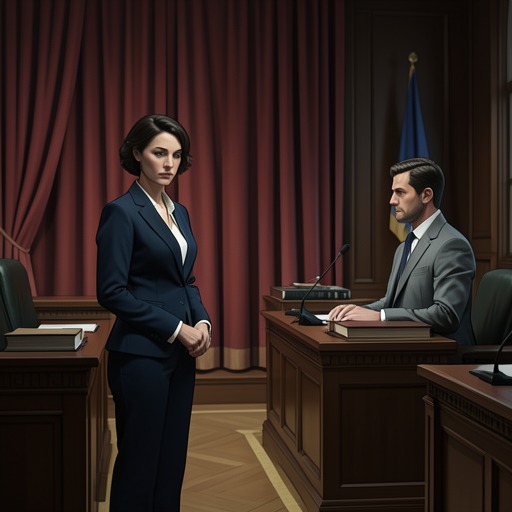
In court, Bantling raises the old rape and claims he was Chloe’s attacker. Chloe then tells Judge Chaskel that she was violently raped while a law student in New York and that her assailant was never caught. She says Bantling obtained the information from old police reports and public records, and denies that he was the man who attacked her. Her disclosure exposes the personal history on which the conflict-of-interest challenge rests, in a courtroom where the revelation is heard by everyone present. The assault thus returns not merely as a memory but as a public test of Chloe’s credibility, judgment, and ability to continue the case.