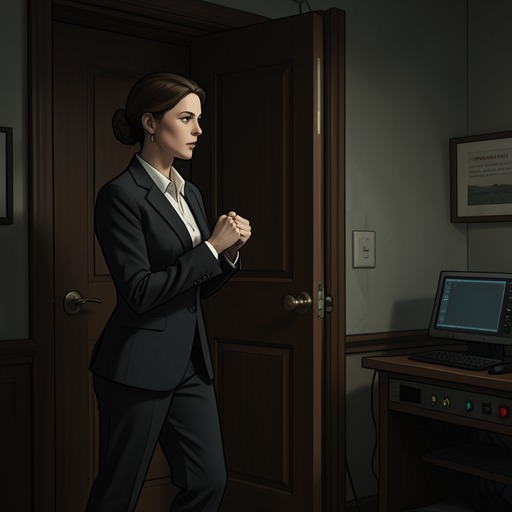
William Bantling Murder Trial
RetributionThe William Bantling Murder Trial is the courtroom culmination of the investigation into the Cupid murders and a contest over how much weight the jury could place on a chain of circumstantial evidence. The prosecution’s case appeared to falter under challenges to the Jaguar evidence and the legality of the stop, then changed dramatically when investigators found victims’ hearts and photographs in Viola Traun’s mobile home. The verdict resolved Bantling’s guilt in Anna Prado’s murder, while the trial also forced prosecutor C.J. Townsend to address her own history of assault in open court.
Investigation and the case before trial
The case against Bantling drew on evidence that seemed to connect him to the victims and to the methods used in the murders. At clubs where victims had last been seen, waitstaff recognized Bantling as a frequent customer, often accompanied by a different young blonde woman. They could not, however, place him with any victim or reliably put him at the right club on the night of a disappearance. The distinction between a pattern that raised suspicion and evidence tying him to a particular crime would become central at trial.
The investigation had also assembled extensive records about the missing women. Families provided photographs, and investigators arranged the victims’ portraits on The Wall in the order of their disappearances, with crime-scene and autopsy photographs beneath them. Boxes held police reports, interviews, financial records, diaries, letters, photographs, and other private materials. These records helped reconstruct individual lives and timelines, but they also made the women’s intimate histories part of the state’s investigative file.
C.J.’s own past complicated her role. Years earlier, after she was sexually assaulted while a law student in New York, she underwent emergency surgery that left her unable to have children. Detective Harrison told her the assault was not her fault, but the investigation made little visible progress; she called regularly for updates as the case drifted toward cold-case status. When she later read a former neighbor’s degrading account of her conduct, old self-blame returned despite her understanding that his accusations were abusive and unjustified. Those experiences form the personal history behind the courtroom conflict, not evidence that Bantling had committed the earlier crime.
Jury and opening arguments
The jury of five women and seven men was sworn shortly before the courthouse closed early for the Christmas holiday. Its members ranged from a twenty-four-year-old deep-sea-diving instructor to a seventy-six-year-old retired bookkeeper. All lived in Miami; although they had heard of or read about the Cupid murders, they said they had not formed an opinion about Bantling’s guilt and could judge the case impartially. Florida juries were not sequestered, so the jurors went home during the trial.
C.J. gave a concise opening for the prosecution. Lourdes Rubio then urged the jury to separate the disturbing nature of the allegations from proof of the defendant’s guilt. She emphasized the presumption of innocence and argued that the jurors might have been influenced by the prosecution’s vivid account and by the public label of serial killer. Her presentation framed the case as a test of whether revulsion could be kept distinct from evidence. After hearing her, C.J. recognized that the prosecution’s case was in serious trouble.
Doubts about the prosecution’s evidence
The defense developed reasonable doubt through concrete alternative explanations and challenges to the investigation. It presented testimony that Bantling’s Jaguar had been at a tinting shop over two days and had remained overnight in an unsecured lot, where more than ten employees could access it. The owner said no one had looked in the trunk after Bantling dropped off the car. That testimony gave the defense a basis to contest the prosecution’s reliance on evidence associated with the vehicle.
The defense also drew on Bantling’s reputation as a taxidermist, a craft recognized by the American Taxidermy Association. Its witnesses addressed the use of a number-five scalpel in taxidermy and argued that blood evidence could have an explanation connected to the work. In combination with the contested vehicle evidence, this testimony weakened the prosecution’s effort to make each item in its case point in only one direction.
The legality of the stop was another fault line. In questioning Officer Chavez, C.J. confronted his account directly, and the physical layout of the streets contradicted his claim that he had kept the Jaguar in sight: Sixth Street was one-way and not a through street, while cement pilings prevented the turn his account required. Lourdes later sought to suppress evidence from the stop and formally asked that C.J. be removed from the case, arguing that her judgment was clouded. The possibility of exclusion and the challenge to the prosecutor’s impartiality put both the evidence and the conduct of the prosecution under pressure.
Discovery changes the trial
The decisive reversal came when Dominick Falconetti and Manny Alvarez located Viola Traun’s mobile home in Key Largo. A civil contempt warrant connected Bantling to his late aunt’s property, and the trailer-park owner allowed the investigators to enter under the property’s circumstances. Dominick took care to establish their right to be there and said they needed a warrant before searching further. In the kitchen freezer, they found the victims’ hearts along with photographs of victims on a metal gurney, some showing them during their torture or deaths. The discovery supplied evidence far more direct and difficult for the defense to explain away than the disputed material from the Jaguar.
C.J. reopened the prosecution’s case on Wednesday. After Dominick testified, the jury saw Anna Prado’s heart preserved in an evidence bag and viewed the photographs recovered from the freezer. The room’s response marked a sharp change in the trial: jurors who had avoided looking toward Bantling now recoiled from the new evidence; two men wept and three women became physically ill. Anna’s mother again had to be escorted from the courtroom in distress. The exhibits did more than intensify the emotional force of the case: they connected the evidence found at the trailer to the victims and to the prosecution’s account of Bantling’s crimes.
During the lunch recess, Dominick charged Bantling with ten additional counts of first-degree murder and lodged ten more arrest forms at the Dade County Jail, in case the jury acquitted him in the case then being tried. Lourdes waived Bantling’s right to a first-appearance hearing, and later announced that he would not testify. His earlier confidence gave way to visible strain, accompanied by quiet disputes between him and his lawyer at the defense table.
Verdict and courtroom disclosure
On January 5, 2001, the jury found William Rupert Bantling guilty of first-degree murder in Anna Prado’s case. The jurors avoided looking toward him as the verdict was read. The finding answered the charge before them; it did not itself resolve the additional murder counts filed during the trial.
After the verdict, Bantling publicly accused C.J. of having been raped by him years earlier. C.J. told Judge Leopold Chaskel that she had indeed been violently raped while a law student in New York, but denied that Bantling was her attacker. She said he had learned about the unsolved assault through old police reports and public records and was using the claim to suggest impropriety and prejudice. Lourdes, having read the police reports and spoken with C.J., told the court she did not support Bantling’s accusation. The disclosure exposed the personal stakes C.J. had kept bound to the prosecution, even as she denied that the defendant’s claim was true.
The trial’s movement—from a vulnerable circumstantial case, through reasonable-doubt arguments, to evidence recovered in the freezer—makes its verdict a consequence of changing proof rather than courtroom certainty from the outset. Its final confrontation also places two questions beside each other: whether Bantling murdered Anna Prado, and whether the prosecutor could be made to appear compromised by a claim about her own victimization. The jury’s guilty verdict resolved the first question in the state’s favor; the courtroom disclosure made the second part of the trial’s public aftermath.