Bantling’s Motion to Suppress Evidence Hearing
RetributionBantling’s Motion to Suppress Evidence Hearing tests the legal foundation of the case against William Rupert Bantling: the stop of his Jaguar and the search of its trunk. Defense counsel Lourdes Rubio must show that the stop was unlawful, while prosecutor C.J. Townsend knows that the evidence discovered afterward may be lost if the challenge succeeds. As Officer Victor Chavez’s account falters under questioning, the hearing becomes a contest not only over what happened on the road, but over the integrity of the prosecution that depends on it.
Background and Stakes
The case began with an anonymous tip claiming that a black Jaguar carried cocaine. C.J. presses Chavez on how little the caller had supplied: no driver description, license plate, explanation of how the caller knew, or further detail that would make the allegation reliable. A car and an unsupported claim of drugs, she argues, were not enough to justify a stop. Chavez says he acted because the Jaguar was about to leave the jurisdiction; C.J. counters that he had already lost sight of it on Sixth Street. The route and street layout make his account harder to accept: Sixth was a one-way dead end, and cement pilings prevented the turn he would have needed to make to keep the car in view.
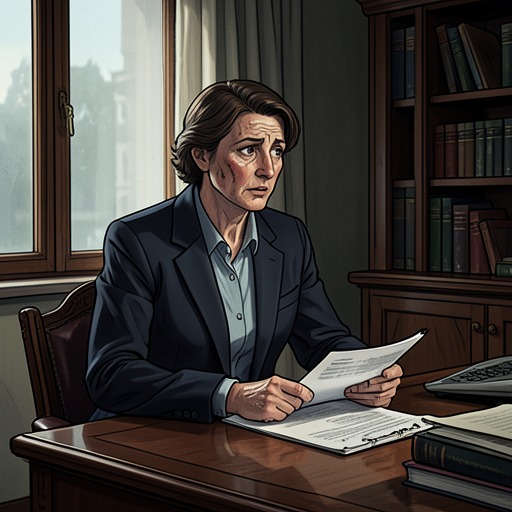
The stakes are especially high because the stop led to the trunk search and the discovery of Anna Prado’s body. C.J. understands that if the search is ruled unlawful, the resulting evidence may be excluded. In her earlier private reckoning, she recognizes that without the search there would have been no body, no case, and no police search of Bantling’s home. That search had produced further evidence linking him to the murders. The suppression motion therefore threatens more than a single piece of evidence: it may sever the chain that brought Bantling before the court.
Chavez’s Testimony Under Pressure
Judge Leopold Chaskel opens the hearing by identifying Rubio’s motion to suppress the stop and subsequent search. Because the defense has brought the motion, Rubio bears the burden of proving that the stop was improper; the prosecution does not have to establish its validity for her. Her first witness is Chavez, the officer whose conduct is at issue. As Rubio approaches the witness box, Chavez realizes that his account may not withstand examination.
Chavez testifies that he saw Bantling’s Jaguar speeding south on Washington Street toward the MacArthur Causeway. He says he followed it, watched it make an unsafe lane change without signaling, noticed a broken taillight, and then pulled it over. He describes seeing what looked like blood on the bumper, smelling marijuana, and asking to search the trunk. After Bantling refused, Chavez says he called for a police dog and backup; the dog alerted, and the officers opened the trunk.
Rubio tests that narrative against the route Chavez claims to have taken. When she asks how he got back onto Washington Street to follow the Jaguar, he says he went up Sixth to Collins, then up Fifth and past Washington to the causeway. The account sits uneasily beside the geography and the earlier suggestion that he had lost sight of the car. Rubio also asks what Chavez actually suspected he would find in the trunk. He initially answers that he was not sure, then says he stopped Bantling for speeding and traffic violations. His explanations shift between traffic enforcement and the later suspicion of contraband.
The Tip and the Fracturing Account
Rubio’s questions bring the anonymous tip back to the center of the hearing. She asks whether Chavez thought from the start that the Jaguar was carrying drugs. C.J. objects, but Judge Chaskel allows the question. Chavez denies that the tip influenced him and insists that speeding was the reason for the stop. C.J. objects again when Rubio asks what his instincts suggested might be in the trunk and what someone else had told him could be there. The sequence makes plain that C.J. knows about the tip, and that she is trying to prevent the questioning from exposing the prosecution’s vulnerable starting point.
Rubio then asks directly what Chavez expected to find. He answers that he was looking for drugs or weapons, though he had not been sure which, and points to the dog’s reaction as confirmation that something was wrong. The hearing thus separates the grounds Chavez gives for stopping the car from the suspicions that may have shaped his actions. A dog alert and what officers later found cannot, by themselves, erase the questions about whether the initial stop was justified.
The surrounding circumstances sharpen the credibility problem. In a later account of the hearing, Chavez’s confidence is tied to his public image as the officer who caught Cupid. He had been drinking at the Clevelander when strangers asked him about the arrest, and he boasted about the case to a woman there. That earlier boasting becomes consequential when the courtroom account he presents does not comfortably align with what the examination reveals. Rubio presses; C.J. repeatedly objects; and the officer’s explanations leave the stop’s original basis increasingly unsettled.
Outcome and Consequences
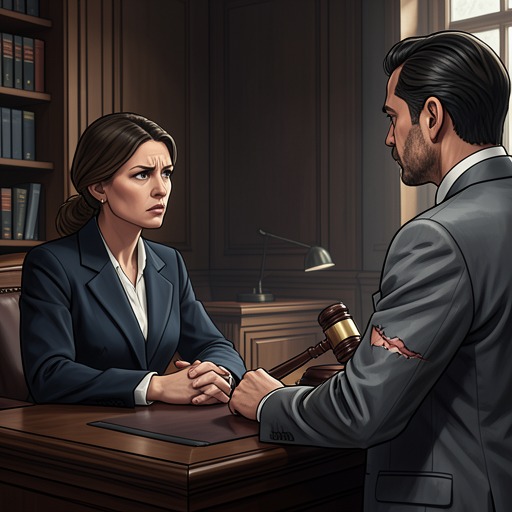
Bantling rises during the hearing to call Chavez a liar and says that the court needs to know something. Judge Chaskel refuses to hear an unsworn interruption, directs Bantling to sit, and tells him that anything the court needs to know must come through counsel. The moment heightens the personal tension in the courtroom, but Bantling does not get to disclose anything at the hearing. Rubio ends her questioning without pursuing the exchange further.
The motion is ultimately denied. Afterward, a colleague tells C.J. that she won the motion, while criticizing Chavez’s performance and saying that he needs preparation before testifying at trial. C.J. answers that both she and his sergeant have tried to improve him. The immediate result preserves the prosecution’s ability to use the evidence gathered after the stop, but it does not make Chavez’s account more convincing or remove the concerns that the hearing has exposed.
For C.J., the victory is compromised by what she has already chosen to do. She has accepted that the stop lacked probable cause and that the search was therefore legally vulnerable. She nevertheless helped maintain the prosecution’s position because she believed that losing the search evidence would allow Bantling to escape accountability for the murders. The hearing gives that compromise a public, procedural form: the state retains its case, but the officer whose conduct supports it has been shown to be unreliable. Its outcome preserves the prosecution while leaving the conflict between legal integrity and the desired result unresolved.