Miami-Dade County
RetributionMiami-Dade County is both the landscape of the Cupid murders and the arena in which authorities try to make sense of them. The contrast between crowded South Beach nightlife and remote discovery sites gives the case its geographic pattern, while local investigative and legal institutions determine how that pattern is pursued and contested.
Crime Geography
Over eighteen months, eleven women disappeared into the Miami night, many last seen around the packed clubs and nightlife of South Beach, including the area around Ocean Drive and Washington Avenue. The disappearances began amid crowds and public activity, but the women’s remains were later found at widely separated locations across Miami-Dade County. The sites included an old sugar refinery in the Everglades, a foreclosed house in Liberty City, and an abandoned supermarket in Kendall. The spread of locations made the crimes difficult to read as a single sequence, even as the recurring pattern made clear that the discoveries belonged to a larger investigation.
Nine bodies had been found by the time the task force’s history is described. The shared features of the crimes pointed investigators toward a serial offender, whom they called Cupid, but the individual sites varied. Some women appeared to have been killed where they were discovered; others had been killed elsewhere and brought to their final locations. The places therefore mattered not simply as points on a map, but as parts of a changing method that investigators could compare. In one especially remote former military complex beside the Everglades, a silo and warehouse stood far from a main road and witnesses. The site was protected by fencing, warning signs, and a locked gate, with the nearest gas station more than five miles away. Investigators spent five days processing it, but earlier searches nearby had yielded no useful trace evidence. The isolation made the location difficult to investigate and underscored the killer’s ability to choose sites away from ordinary public scrutiny.
The Task Force and Its Map
The investigation was organized from a conference room at the FDLE Miami Regional Operations Center, made available at the governor’s request as headquarters for the Cupid task force. The Florida Department of Law Enforcement supplied practical support, including an analyst, office equipment, and a part-time secretary. The task force brought together twelve officers and detectives from five agencies: the Miami Beach Police Department, the City of Miami Police Department, the Miami-Dade Police Department, the North Miami Police Department, and the state investigative agency.
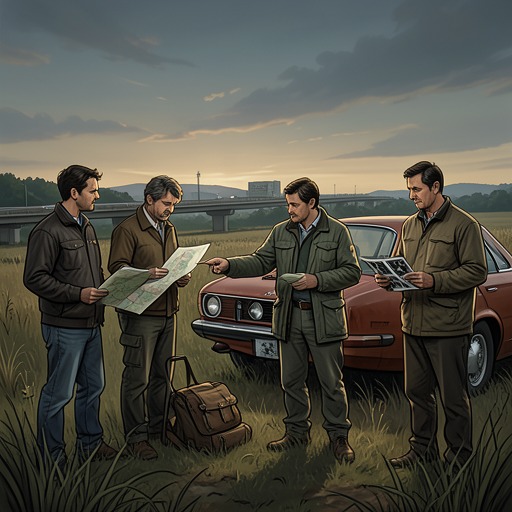
The room’s physical arrangement recorded the investigation’s growth. At first, a standard-sized corkboard served as the central display. After eight months, with six women missing, three bodies found, and no leads, Dominick Falconetti joined the task force and replaced it with a larger board. The room’s law-enforcement decorations gave way to The Wall, a display of the victims’ photographs. Maps of South Beach and Miami-Dade County stood opposite it, marked with red pins for disappearance locations and blue pins for discoveries. Their separation made a central investigative problem visible: the women vanished from a concentrated nightlife area, while the places where they were found were scattered across the county. The map gave investigators a way to test connections without making the distances themselves an explanation.
The case files surrounding those displays widened the investigation beyond crime scenes. Boxes held police reports, interviews, leads, and personal records belonging to the victims, including financial documents, diaries, date books, letters, photographs, and emails. Taken together, the maps and records made Miami-Dade a field of both geographic and personal inquiry: investigators sought patterns in where the women had been last seen, where they were found, and what their lives might reveal about their final contacts.
Courts, Jurisdiction, and Custody
Miami-Dade County’s legal institutions became part of the case as soon as it moved from investigation toward prosecution. A grand jury indicted William Rupert Bantling for first-degree murder in Anna Prado’s death in less than an hour. News of the indictment brought a press crowd to the marble steps of the Dade County courthouse, where the state’s public response was scrutinized even as federal officials pressed for control of the Cupid case. The courthouse thus marked both a procedural turning point and a public contest over who would direct the prosecution.
The dispute over Morgan Weber’s discovery site gave the county’s jurisdiction a more immediate, physical consequence. After her remains were found in a fishing shack in the Everglades, C.J. Townsend investigated whether the shack stood on federal land or county property. She used a land survey to establish that the site was in Miami-Dade County, then threatened trespassing and obstruction-of-justice charges when federal officials sought access. The federal agents withdrew from the scene, although the conflict left the relationship between the state and federal authorities openly strained. Here, the county was not merely the setting for a crime: identifying the land’s legal status determined which authorities could proceed at the scene.
The Dade County Jail supplied another consequential setting. Because of the security surrounding Bantling, C.J. went there rather than arranging to meet him at the courthouse or her office. The jail’s controlled doors, cameras, and maximum-security floor framed a meeting in which his presence affected the proceedings around him. Later, defense attorney Lourdes Rubio brought C.J. a motion to suppress the stop and said the defense would ask a judge to remove her from the case, raising questions about C.J.’s judgment and her continued role as prosecutor. The jail therefore became a place where custody did not settle the case’s underlying disputes; it concentrated them.
Narrative Significance
Miami-Dade County’s importance rests on the way its distinct settings pull the story in opposing directions. South Beach is a public world of crowded clubs where women can disappear amid other people; remote county sites leave investigators with distance, silence, and few immediate leads. The task force’s map tries to hold these spaces together, while the courthouse and jail translate investigative uncertainty into arguments about evidence, authority, and responsibility. Across those settings, the county becomes the material shape of the investigation: a place investigators must map, search, and legally claim before the pattern of the crimes can be pursued in court.