Luciferianism’s Reversal of Good and Evil
SatanLuciferianism’s Reversal of Good and Evil is presented as a secret doctrine that exchanges the conventional moral roles of Lucifer and Adonaï: Lucifer is identified with goodness and truth, while Adonaï is assigned the opposing position. The concept matters not only as a theological inversion but as a claim about worldly power: in the account Aurelio overhears, serving Lucifer is said to bring wealth, authority, honor, and freedom, while those who do not serve him are left with poverty and suffering. The novel introduces the doctrine as something concealed from ordinary adherents, then connects it to a broader explanation of modernity and Freemasonry.
The overheard doctrine
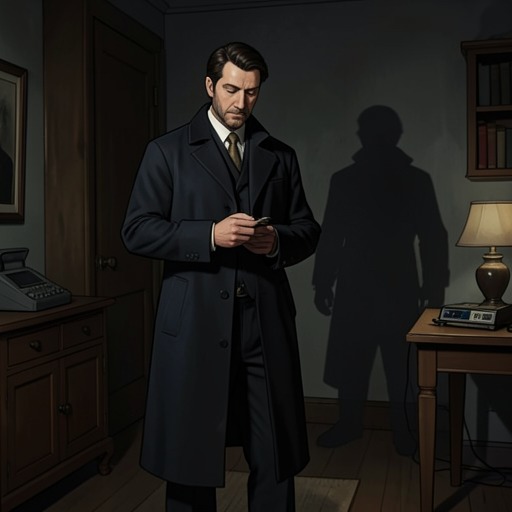
One evening in Florida, Aurelio notices two men speaking apart behind palm trees. The dimness prevents him from making out their faces, but their silhouettes and voices seem familiar. One is a leader of the sect; the other is a regular participant in its rites, who always appears masked. Aurelio thinks he hears the name Lucifer, approaches quietly, and listens without drawing attention to himself. The scene gives the doctrine its first force as a secret heard rather than a teaching openly explained.
The masked man states that esoteric teaching identifies Lucifer as a god, the god of good and truth, and Adonaï as the reverse. He describes this identification as the secret of the great initiates. The point is not simply that the two figures have been assigned unfamiliar attributes: the speaker presents the reversal as privileged knowledge, withheld from those outside the innermost circle. Aurelio’s partial uncertainty at first, followed by his clear hearing of the masked man’s statement, makes the revelation a movement from suspicion to confirmation within the scene.
The doctrine also proposes a division between those who serve Lucifer and those who do not. As Rodrigo later recounts Aurelio’s experience, the men say that Lucifer rules the earth and that his followers obtain wealth, power, honors, and freedom to act as they choose. Others, by contrast, receive poverty, misery, suffering, and enslavement. This account makes moral inversion a theory of social fortune as well as a reversal of religious names: worldly success is presented as evidence of allegiance, while hardship marks those outside the favored group. The novel reports this claim as part of the sect’s teaching, not as an independently established explanation of how power works.
Rodrigo and Loïc interpret the reversal
When the Florida episode is discussed, Loïc calls the inversion typical of modern times since what has been called the Enlightenment. Rodrigo agrees that the sect has reversed the meanings of God and Satan, and says that its members keep this supposed secret from ordinary Freemasons. Their exchange frames Aurelio’s encounter as more than an isolated ritual disclosure: the doctrine is interpreted as part of a wider historical tendency to overturn inherited religious distinctions. Loïc supplies the historical characterization; Rodrigo links it directly to the sect’s claim about Lucifer’s rule and rewards.
That difference in emphasis matters. Loïc names a broad period and tendency, whereas Rodrigo describes an esoteric hierarchy separating initiates from the uninformed. The conversation does not provide a detailed account of how the Enlightenment produced the doctrine, nor does it establish that Freemasonry as a whole accepts it. Instead, it places the claim within an argument about secrecy, modernity, and the reversal of moral categories. The distinction between an asserted hidden teaching and the larger organization in which Rodrigo locates it becomes especially important in his subsequent explanation.
The Masonic context in Rodrigo’s account
Rodrigo describes Freemasonry as internally varied, with different rituals, lodges, and obediences. He names the Grand Orient of France, the United Grand Lodge of England, and the Scottish Rite as influential bodies. According to his account, some lodges require belief in God, also called the Great Architect, while others, including the Scottish Rite as he describes it, do not require such belief. This qualification complicates any reading of the Florida conversation as a statement about all Freemasons: Rodrigo explicitly depicts a diverse institution, even as he connects one strand of its history to the doctrine Aurelio heard.
He traces the Scottish Rite’s expansion in the United States during the nineteenth century to Albert Pike, a publicist and former Confederate general who became the lodge’s Grand Commander. Rodrigo identifies Pike’s Morals and Dogma of the Ancient and Accepted Scottish Rite as a book that became a foundational text for American Freemasons. He then points to an 1889 meeting of Masonic grand masters in Paris, where Pike, according to Rodrigo, declared that Lucifer was God for a true initiate just as Adonaï was the God of the Bible, with Lucifer assigned goodness and truth and Adonaï their opposite.
Evidence, secrecy, and narrative function
Loïc reacts with disbelief and asks whether Pike really made the declaration. Rodrigo insists that it is not rumor, describing it as documented by American historians, and says that it corresponds to what Aurelio heard. The exchange places two kinds of evidence beside one another: Aurelio’s direct but clandestine hearing of a ritual conversation, and Rodrigo’s appeal to historical documentation. The parallel strengthens the narrative connection between the sect’s teaching and Pike’s reported words, while the claim about documentation remains Rodrigo’s assertion within the dialogue.
The concept’s narrative work depends on preserving that distinction. The book gives the inversion a clear formulation and supplies it with historical and institutional context, but the reader encounters these claims through characters recounting and interpreting them. Secrecy becomes part of the doctrine’s structure: the truth is said to belong to initiates, while the public or ordinary member is excluded. At the same time, the account resists treating Freemasonry as a single undifferentiated body by emphasizing its differing lodges and beliefs. Luciferianism’s reversal therefore functions as both a theological proposition and a contested explanation of power, presented through a chain of overhearing, interpretation, and reported historical evidence.