Banfield Shrine Disaster
ShrineThe Banfield Shrine Disaster, remembered as Black Sunday, is the collapse of the pilgrimage gathering at the Shrine of the Holy Virgin in St. Joseph’s field. More than 20,000 people came to witness the service and Alice Pagett; the day ended with 158 dead, many injured, and the healings associated with Alice Pagett apparently undone. The catastrophe turns a ceremony organized around hope and shared religious expectation into a scene of mass flight, while leaving its causes contested and its survivors with incompatible memories of what happened.
The Pilgrimage and Its Expectations
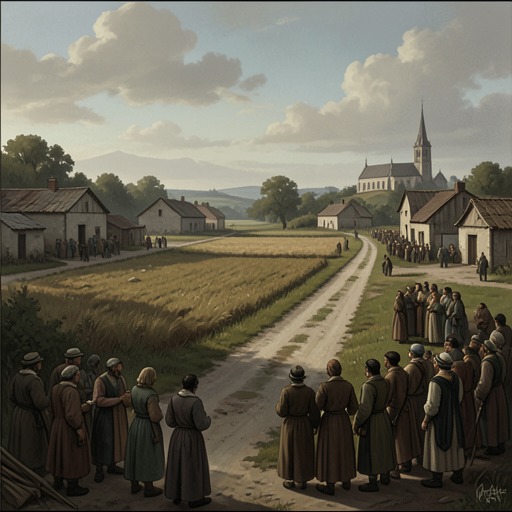
The gathering began amid an atmosphere already charged by rumor and anticipation. On the Sunday of the disaster, traffic and village activity were unusually heavy, and a crowd moved toward St. Joseph’s Church. Gerry Fenn arrived with Sue and Ben. He carried an Olympus camera and a microcassette recorder, prepared to document whatever might happen, while still expecting that nothing spectacular would occur. At the church gate, the crowd was dense enough that Sue had to keep Ben close to prevent him being jostled.
The people in the procession and queue included believers, curious visitors, and families accompanying sick or disabled relatives. Gerry Fenn noticed a teenage girl with involuntary movements consistent, in his judgment, with a disorder he had encountered while reporting in a Brighton hospital. Nearby, a boy in a wheelchair was surrounded by family; his mother’s expression held both sadness and desperate hope. Such individual scenes gave the crowd’s expectations a human cost: people had come not only to look at Alice Pagett, but also hoping for relief from illness and suffering.
By the later open-air service, the field had become a carefully arranged site for a mass gathering. Ben ran among the benches as the crowd filled the space, while stewards, ushers, and young priests tried to manage the influx. The invalids’ wheelchairs struggled over churned earth, and the organizers recognized that a separate area would be needed at future services. The gathering’s scale and its practical arrangements stood alongside the more devotional hope that Alice Pagett’s holiness might reach those who had come to see her.
The Service and the First Signs of Crisis
The service exposed the tension between religious ceremony and uncertainty about the claims surrounding Alice Pagett. Monsignor Delgard looked out across thousands of expectant faces, including those of sick people who seemed to regard him with hope. He feared that they would be disappointed and wished the day would end the expectation of miracles. Yet he also questioned his own doubt: Alice Pagett appeared sincere, and he could not easily dismiss what he had witnessed before. Bishop Caines was present, while George Southworth watched the crowd.
As the service began, Alice Pagett watched Monsignor Delgard, but her gaze seemed directed past him toward the tree. Elsewhere, the crowd’s arrival was presented publicly as a sign of faith: a procession led by Bishop Caines, followed by priests and nuns, brought Alice Pagett into the field before thousands. The broadcast account described people travelling from Banfield and farther afield, including some who said that the events had brought them toward a deeper religious understanding. This public framing of the gathering as a shared act of faith would soon be broken by events no orderly ceremony could contain.
The disaster first announced itself through a series of failures and disturbances. The ground trembled; lights fluctuated and burst; a sudden wind extinguished the candles; and the crucifix fell from the altar. Sue and Ben were caught among people rushing from their places. The nuns nearby tried to move together, while others struggled to reach safety with sick companions. Television and film equipment became dangerous to handle, and photographers were forced to drop cameras that had become too hot. The crowd had gathered as an audience and congregation; now the same concentration of people made escape difficult.
Panic, Collapse, and the Opening Earth
The field’s exits could not absorb the crowd’s flight. People converged on the three available routes, forming blockages as those behind continued pressing forward. A wide gate intended for lorries and equipment gave way under pressure, and people fell in the crush around it. Police at the central entrance were swept aside. Those who reached the surrounding hedges found them difficult to pass, while the press entrance was too narrow for the surge. Outside the grounds, people who had not entered felt danger approaching, and some vehicles would not start as they tried to leave.
Paula was helping her frail mother through the rows when they fell during the upheaval. When the shaking stopped, Paula understood that her mother had died. The sudden stillness did not restore order: the altar was burning, and Paula saw Rodney Tucker collapsed nearby. As anger displaced her numbness, the earth opened. The fissure widened along the central aisle, revealing a depth from which figures appeared to climb. Paula recognized people struggling near the chasm, including Tucker and his wife. His wife slipped toward the opening; Tucker pulled away from her, and Paula then rushed at him. They fell together into the widening gap.
The disturbance also reached St. Joseph’s Church. George Southworth fled inside, where the shaking cracked the masonry and scattered pieces from the building. The floor split, and figures emerged through the opening. In the field, the entity associated with Alice Pagett appeared as Einor. Molly Pagett ran toward the figure and touched its charred body; fire spread over her, and she remained motionless. The eruption of the earth and the fire at the altar made the violence of the catastrophe inseparable from the revelation that the apparent child-saint had become something other than the figure the crowd had come to venerate.
The Burning Shrine and Its Aftermath
Gerry Fenn was left on the platform as the fissure extended toward the shrine. Einor approached him, but her attention turned toward the Shrine Oak when a radiance appeared at its base. Gerry Fenn prayed. Lightning struck the tree; flames spread through its branches and trunk, and the oak began to fall. Sue and Ben pulled Gerry Fenn away from the platform. As they escaped, the burning tree fell onto the shrine and the figure beneath it. The central structure collapsed into the fire, the tremors stopped, and rain began to fall. The ending thus comes not through the restoration of the pilgrimage but through the destruction of its centerpiece and the apparent defeat of Einor.
The human consequences were severe. More than 20,000 pilgrims had attended, and 158 were killed in the panic. Some died in the crush, others during the flight or in the fire; many more were seriously injured, and some invalids’ conditions worsened. People who had previously been healed at the shrine found their illnesses and disabilities returned, as if Alice Pagett’s death had cancelled the cures. Some witnesses reported that the ground had opened, but many remained confused for weeks, while hundreds or possibly thousands remembered little beyond a fierce storm and their escape.
Competing Explanations and Significance
Afterward, no single account resolved the disaster. Public explanations included an electrical storm, a possible underground disturbance, Alice Pagett’s uncontrolled paranormal powers, and a bomb planted beneath the shrine. The electrical explanation was widely favored, although it did not account for all the reported effects on film and photographic equipment; no seismic evidence supported the underground-eruption theory. These alternatives placed the event between natural disaster, mass panic, and supernatural violence without settling the question for its witnesses or the public.
The disaster also exposed the material interests built around the pilgrimage. George Southworth had expected the shrine to turn Banfield’s decline into prosperity, and the gathering’s scale seemed to confirm that commercial promise. In the catastrophe, however, the crowd that made the site successful became vulnerable to its bottlenecks, while the service’s language of communal faith gave way to fear and flight. Gerry Fenn later left the Courier and refused offers from larger newspapers; he considered writing a definitive account only if it could be presented as fiction. His reluctance reflects the event’s final uncertainty: it was witnessed by thousands, yet remained difficult to report as a settled, credible explanation.