Anonymous Polaroid photographs sent to Dom and the Blocks
StrangersAnonymous Polaroid photographs sent to Dom and the Blocks are not merely reminders of people they cannot place. Their stark images—faces emptied of expression, bodies confined to motel beds, an ordinary family posed outside Room 9—form a scattered visual record of the suppressed events at the Tranquility Motel. As the recipients compare the pictures with rooms, dates, and one another’s partial memories, the photographs make it harder to treat their missing past as an accident, even while leaving the sender’s identity and motives uncertain.
Arrival and Effect
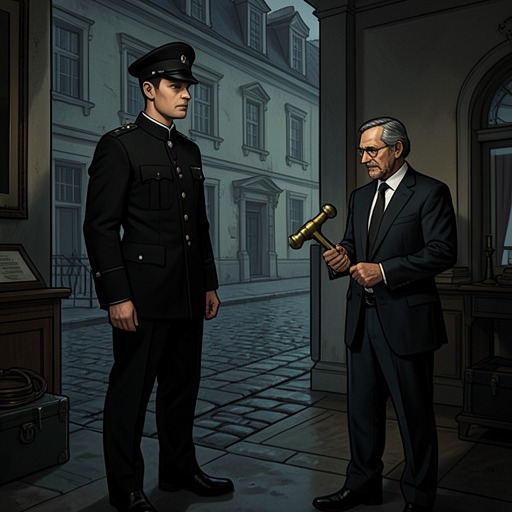
One packet reached Dom in an unmarked envelope bearing a New York City postmark. It held two Polaroids and no explanatory note. The first showed a young priest seated stiffly beside a writing desk, with a suitcase nearby. His posture was upright, but his eyes and expression seemed lifeless. Dom knew of no connection to him, yet the photograph made him tense. The second picture affected him more strongly: a silver-blond young woman lay in a narrow bed, restrained by straps, with an intravenous needle in her wrist. Dom recognized her as someone he had met, though he could not recall where. Her helplessness and empty stare stirred the same fear he felt after sleepwalking episodes.
The pictures unsettled Dom enough to change how he handled even ordinary communication. Rather than call from his hotel room, he used a service-station pay phone to reach Parker Faine at a pay phone in Laguna Beach. Parker had collected Dom’s mail and reported that nothing strange had arrived there. After the photographs, both men considered caution and paranoia difficult to distinguish. The images did not explain what had happened, but they made the possibility of surveillance or a deliberate warning feel immediate.
Faces Without Memories
When Dom later entered Zebediah Lomack’s house, he found his name written beside lunar images alongside the names Ginger Weiss, Faye, and Ernie Block. The sight of those names brought the anonymous photographs back to mind. He wondered whether the priest was Ernie and whether the restrained blond woman was Ginger or Faye. These were questions, not identifications: the images intensified his sense that the people were linked without restoring the memories that would explain how.
The photographs’ impact depends on that gap between recognition and recollection. Dom can respond physically to the woman’s image and feel that the priest matters, but he cannot retrieve the shared history that might make either response intelligible. At Lomack’s house, a dark memory stirs and then recedes before he can grasp it. The pictures therefore operate as clues without serving as complete testimony. They sharpen the pressure to remember while exposing how little the recipients can trust their own sense of familiarity.
A Motel Record Takes Shape
After Dom returned to the Tranquility Motel, he told Ernie Block and Faye Block about his discoveries. They recognized the priest’s picture as having been taken in one of their motel rooms. The close view of the woman showed almost none of the room, but one corner revealed a floral-patterned bedspread like those used in some units until ten months earlier. A detail too small to explain the scene nevertheless tied the image to the motel’s material past.
The Blocks had received a photograph of their own. Ernie remembered finding it in a plain envelope on December 10, before Dom had flown to Milwaukee. The picture showed a man, a woman, and a child standing in sunlight outside Room 9, dressed in shorts, T-shirts, and sandals. Neither Faye nor Ernie recognized them, though Ernie felt he ought to remember them. Dom reasoned that the summer clothes and sunshine pointed to the weekend of July 6, two summers earlier, and that the family might have been among those involved in whatever happened. He also proposed that the unknown correspondent wanted them to think about, and remember, these people. That interpretation remains a hypothesis, not a message spelled out by the photograph.
The mail waiting at the motel produced two further images. One showed Calvin Sharkle, a long-haul trucker known to the Blocks, lying in a motel bed with an intravenous line and a blank stare. Faye recognized him; Ernie explained that he regularly stopped at the Tranquility Grille and sometimes stayed overnight. The next photograph showed Dom himself in a motel bed, also with an intravenous line and the same vacant expression. Unlike the family portrait, these images placed recognizable members of the motel community in a state of apparent incapacitation. Their likenesses turned private unease into a pattern involving several people.
Evidence Against the Substitute Past
The photographs acquire force alongside what Dom and the others learn about altered memories. Ginger Weiss’s supposed recollections of ordinary activities during her time at the motel falter when Pablo Jackson presses for detail: she cannot remember the movies she supposedly watched, and her repeated answers remain flat and anxious. Pablo concludes that the recollections are artificial, designed to cover the period in which she was actually at the motel. He believes the false memories are less convincing than genuine ones and fears that confronting the hidden memories too abruptly could send her into a coma or worse. The pictures are not themselves a complete account of that process, but they supply visible counterparts to the possibility that people were held and later made to remember a fabricated interval.
That possibility becomes concrete again when Parker Faine finds members of the Salcoe family lying with blank eyes and earphones connected to a tape recorder. A soothing recording supplies an account of ordinary days at a hotel, while Parker understands that new false memories are being implanted to cover another brainwashing session. The scene echoes the Polaroids’ juxtaposition of apparent passivity and concealed coercion. It shows that images of victims and manufactured recollections belong to the same machinery of concealment, even though the photographs do not reveal who took them or how they were obtained.
The anonymous sender’s purpose remains uncertain. Dom speculates that the person may have participated in erasing the group’s memories, may have been troubled by what was done, and may be afraid to disclose what they know directly. The photographs support the narrower conclusion that someone is directing the recipients’ attention toward people, rooms, and a shared period they cannot remember. Their evidentiary power lies in this tension: they look like records of particular bodies and places, but they cannot restore the testimony withheld from the people pictured. By prompting comparison among the priest, the restrained woman, the Room 9 family, Calvin, and Dom, the images help the survivors reconstruct a collective history from traces that the conspiracy has left behind.