Backpack nuclear weapons
StrangersBackpack nuclear weapons are the tactical devices at the center of the final crisis at Thunder Hill: instruments that Leland Falkirk intends to use not merely to conceal a secret but to destroy the facility and everyone in it. Their importance lies in the distance between stored potential and imminent catastrophe. Kept behind layered authorization, the bombs become accessible through a system Falkirk has altered; once assembled, two of them turn a political and military conflict into a countdown measured in minutes.
The arsenal and its safeguards
Thunder Hill’s munitions room contains a range of conventional weapons, but its most consequential store is a separate, heavily protected vault. Entry requires palm identification, and the original safeguard demands that three of eight authorized people present their palms in sequence within one minute. The arrangement makes access a collective responsibility rather than a privilege exercisable by a lone officer. Oversight by VIGILANT, however, gives that security system a second, less reassuring aspect: Falkirk has designed a new program that makes him the sole keeper of the tactical nuclear arsenal.
The contents are physically divided. Twenty backpack-bomb frames hang from wall pegs, while their primary detonators are kept in drawers and their binary explosive packages sit in lead-lined cabinets. This separation makes the arsenal a collection of components awaiting assembly, not a row of ready-to-use bombs. The vault’s procedures and the distinct storage locations suggest layers of protection; Falkirk’s software change concentrates control in one person, turning the system’s apparent safeguards into a means of unilateral access.
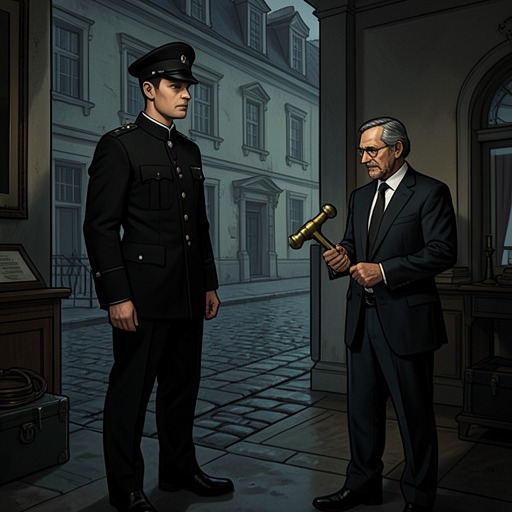
The weapons also have a precise material scale. DERO training has familiarized Falkirk with nuclear devices that terrorists might plant in American cities, and he knows how to assemble, arm, and disarm bombs across several designs. He takes the components and two frames from storage and assembles two weapons in eight minutes. Each weighs sixty-nine pounds. With one strapped over each shoulder, he leaves the vault bent beneath their weight. The objects that had been secured by palm readers, authorization rules, and separated components are now carried through Thunder Hill by a single man.
From secret arsenal to threat
Falkirk’s decision to use the bombs follows his conviction that the crisis is an existential struggle. He believes the people who have gained unusual powers may carry an alien infection, and argues that public disclosure would prevent the government from using violence to contain it. Foster Polnichev disputes that interpretation, seeing the powers as potentially beneficial rather than evidence that the people must be destroyed. The backpack weapons give Falkirk’s position its ultimate practical expression: if he cannot control or contain the perceived threat, he will destroy the people and the place together.
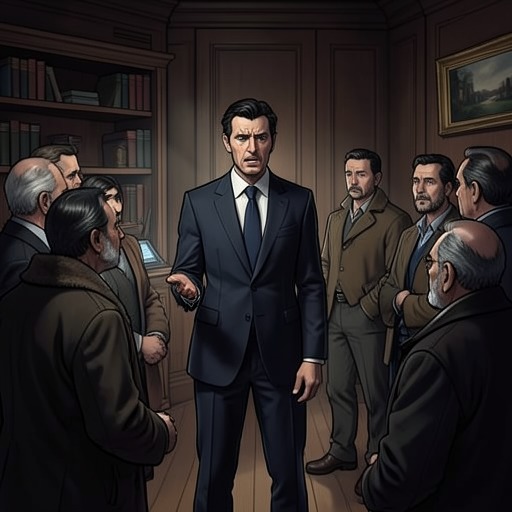
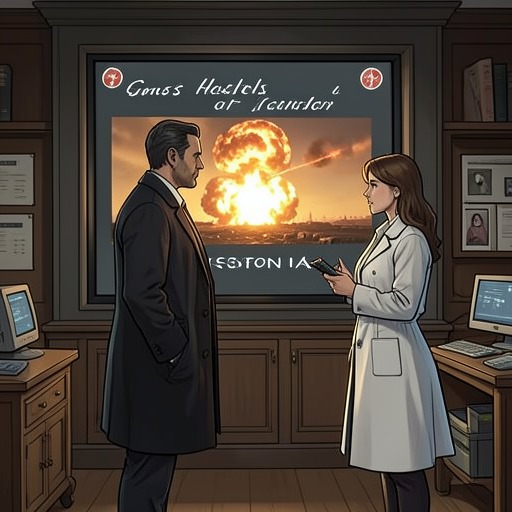
His plan is also shaped by the setting. In Thunder Hill’s main cavern, he places one weapon where a nuclear blast could bring down the rock above and leave no refuge for anyone on that level. He believes the explosion would kill even an adaptable alien lifeform. The second bomb is positioned outside the door near the confrontation. When Doctor Bennell realizes Falkirk has reached the tactical weapons, the Colonel confirms that one bomb is outside the door and the other in the main chamber below; fewer than three minutes remain. The arsenal’s former remoteness has vanished. Its parts, once stored separately behind multiple controls, now dictate what everyone can do next.
The countdown and its interruption
Dom Corvaisis responds by assigning the bombs: Brendan Cronin is to take the device outside the door, while Dom goes for the one downstairs. The urgency is sharpened by the warning that the bombs cannot be disarmed. Brendan kneels beside his device with one minute and thirty-three seconds left. As the countdown continues, Parker Faine joins him and reaches toward the detonator. His power pulls it out of its niche and into his hands, severing the part that appears to connect the device to its nuclear operation.
That intervention does not make the danger disappear. The clock keeps counting, and Alvarado warns that the detonator itself contains a conventional explosive charge. Dom takes control of that second problem: sensing that the timer must still be stopped, he wills its illuminated numerals to freeze at three seconds. Parker, believing his power has run out, throws the detonator toward the far wall and drops to the floor. It explodes overhead. Dom initially fears that Brendan has failed to stop the other bomb, but recognizes that a nuclear detonation would have brought down the ceiling. The scene distinguishes the catastrophic blast the group has prevented from the smaller explosion that still occurs.
Significance
The bombs are not simply weapons in storage; they make the conflict over secrecy tangible. Earlier, the Army’s cordon around the supposed toxic spill on Interstate 80 and its use of DERO personnel pointed toward an event being guarded as highly classified. At Thunder Hill, Falkirk’s nuclear arsenal reveals the scale of the force available to preserve that secrecy—and the extremity of his belief that concealment has become inseparable from saving the species. His control of the weapons turns institutional security into personal power.
The climax also reverses the logic of the arsenal. Falkirk relies on a system designed to concentrate authority and on the apparent impossibility of stopping an armed device. Yet the bombs are halted not by the safeguards or procedures that govern the vault, but by the powers of the people Falkirk means to destroy. Parker extracts the detonator; Dom stops its timer; Brendan confronts the second device. The remaining explosion preserves the scene’s danger without undoing the decisive outcome: the nuclear weapons fail to produce the annihilation Falkirk intended.