Feit’s Search for the Area 51 Saboteurs
StrikeA search reaches the work detail
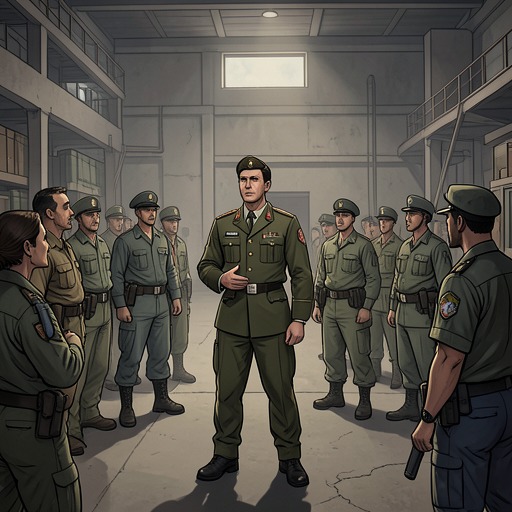
The search takes shape inside a camp where prisoners are watched and assigned work. A jeep pulls up near Tucker’s group, and Major Bova steps out. He exchanges salutes with their supervisor, then asks to inspect the workers. His manner is formally courteous, but the inquiry is specific: three people who arrived the day before. The supervisor responds that prisoners come and go too often to keep track. Bova accepts the answer without dropping the search, saying that if the individuals are there, they will be found.
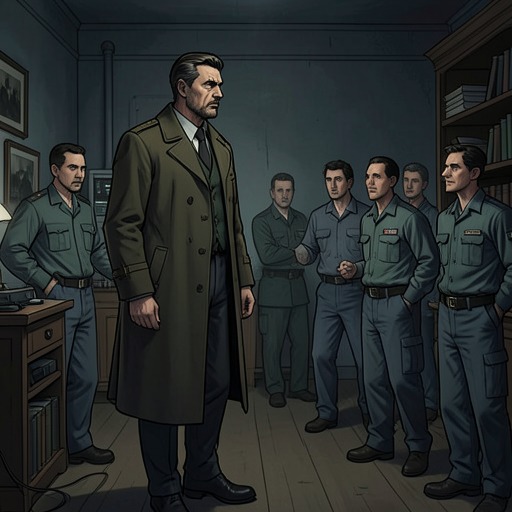
The scene turns on the gap between the supervisor’s account of the camp and the danger Tucker recognizes. Another officer steps from the jeep: short-haired, clean in his fatigues, and standing straight as he looks over the prisoners. Tori Sleeper’s whispered reaction confirms the tension before Tucker fully understands it. The visitors are hunting the three saboteurs responsible for destroying the entire Retro fleet of planes at Area 51. The act that had seemed like a distant military victory has followed its participants into the labor detail; the question is no longer what they did, but whether they can conceal who they are.
Recognition and a narrow opening
As Major Bova and Colonel Feit move down the line, Tucker, Tori Sleeper, and Kent Berringer have no workable escape plan. Attacking the officers, bargaining, or simply running would not solve their predicament. The inspection is bringing the searchers closer, and the trio is standing among other prisoners without a prepared hiding place. Their helplessness is broken when Scottie steps out of line and calls attention to the man Colonel Feit is about to inspect.
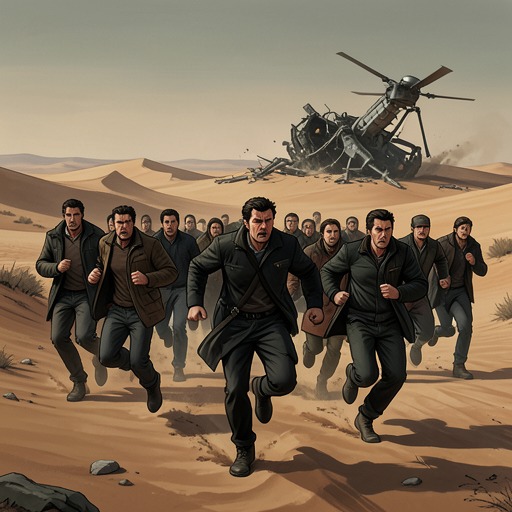
The entire line turns to look. Colonel Feit and Major Bova turn as well. That shared shift of attention is the opening: Tucker grabs Kent Berringer and Tori Sleeper by the hand and pulls them from the group. They sprint to the lumber they have been stacking and press themselves against its far side, choosing the closest cover available rather than a secure hiding place. They drop into the sand, backs against the boards, breathing hard and listening. The lumber cannot take them out of the camp or end the search; it can only interrupt the officers’ line of sight long enough for the inspection to pass them by.
Scottie’s diversion and the prisoners’ risk
From behind the lumber, the trio hears the confrontation continue. Scottie objects that she has been doing her own work and Tucker’s, then directs the officers to take her instead. Tori recognizes what is happening: Scottie and the prisoners are creating a distraction for the newly arrived children, giving them time to hide. The act is an intervention on the trio’s behalf, not a rescue that guarantees their safety. Tucker hopes Scottie and the other prisoner will not suffer for it, a hope that keeps the cost of the deception present even while it works.
The camp’s wider disorder gives this maneuver a telling context. Elsewhere, smoke rises in several black clouds, fires burn between buildings, and a crowd of hundreds gathers with arms locked, chanting for water. The explosions appear arranged to make noise rather than damage the buildings. Soon orange-clad prisoners quietly board a bus from nearby barracks: the apparent protest is a diversion for a prison break, with the crowd accepting risk so a smaller group can get away. This separate escape exposes the same tactic in a larger form: a visible disturbance draws the guards while others move under its cover. Scottie’s intervention is smaller and immediate, but it too depends on coordinated misdirection rather than a direct confrontation with the authorities.
The inspection passes; the threat remains
The wait behind the boards stretches through another minute and then another. Sweat runs into Tucker’s eyes, but he does not dare wipe it away. The trio hears the jeep’s engine start and the vehicle drive off. Only then do they exchange hopeful looks; Tori cautiously peers around the lumber and gives them a thumbs-up. The search has moved on without identifying them, but the event offers no evidence that Major Bova and Colonel Feit have abandoned their pursuit. Its outcome is temporary concealment, not freedom.
A later moment of apparent hopelessness sharpens the episode’s contrast. As the prisoners are being taken along, Tucker catches a nearby soldier’s eye and sees him raise a hand over his heart. Tucker stops in surprise. The gesture does not explain the soldier’s intentions or resolve the danger, but it interrupts the uniform hostility of the march and leaves open the possibility of sympathy inside the military structure that is holding the prisoners.
The larger chronology makes the search one piece of a conflict extending far beyond the camp. In a later account set five kilometers away and three hundred years into the future, Colonel Pike leads a small group through the Bridge city toward the dome. Airman Eric Lewis, Airman First Class Olivia Kinsey, and the civilian nuclear engineer Liger accompany her; giant black planes stand in a queue, waiting to travel into the past. That distant scene does not alter the immediate result of the inspection, but it frames the saboteurs’ capture risk within a history moving between eras. At the camp, the essential contest is still local and physical: guards scan a line, prisoners redirect their attention, and a stack of lumber buys three fugitives the seconds they need.