Postwar U.S. labor unrest
TrumanPostwar U.S. labor unrest was a nationwide series of labor conflicts that turned the transition from wartime production into a test of economic and political authority. Strikes reached across major industries, disrupting production and transportation while Harry S. Truman struggled to satisfy neither labor nor management with his proposed remedies. The crisis became more than a contest over wages: as successive stoppages constrained coal, steel, freight, and everyday travel, it raised the question of how the government could assert the public interest when both sides possessed substantial power.
Background and the first wave
The unrest was already growing when Truman called for reasonable wage increases through collective bargaining, then faced pressure from Democrats and Republicans to take a harder line. He asked Congress to prohibit strikes in large national industries for thirty days while a fact-finding board assessed the situation. The proposal satisfied none of the parties involved—not labor, management, or Congress—and did not prevent a major stoppage. In the meantime, 175,000 General Motors employees at plants in nineteen states walked out. Their strike lasted more than three months, establishing the scale and duration of the conflict.
The steel dispute that followed exposed the limits of presidential mediation. The steelworkers’ union, headed by Phil Murray, sought a wage increase of 19½ cents an hour; the companies, represented by Benjamin Fairless of United States Steel Corporation, offered 15 cents. After a lengthy White House meeting on January 12, 1946, Murray agreed to postpone a strike for a week. At a further meeting on January 17, Truman proposed an 18½-cent increase. Both sides were given until noon the next day to consider it. Murray accepted, but Fairless refused. On January 19, 800,000 steelworkers left their jobs at more than 1,000 mills, making the stoppage the largest strike in the country’s history.
A strike wave across industries
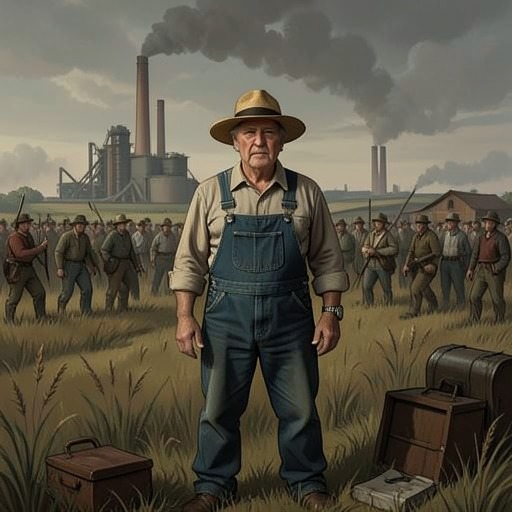
The steel strike formed part of a much wider breakdown in industrial work. By the time it began, some 200,000 meatpackers were also on strike. Glass workers, telephone workers, coffinmakers, and employees of General Electric had walked out as well. In Pittsburgh, a strike by 3,500 electric-company employees shut plants affecting another 100,000 workers. Streetcars stopped running and office buildings closed. The disruptions reached beyond the workers and firms directly involved: even Pittsburgh’s mayor, a Democrat long regarded as a reliable friend of labor, appealed by radio for strikers to return to work and described the situation as a disaster.
When asked about the steel strike, Truman argued that neither labor nor management should be allowed to exercise power without limit, and that government had to assert the power of the people. But the government’s previous steel intervention had not settled the larger conflict. The eventual settlement gave workers higher wages and raised steel prices, a combination expected to spur further inflation. Truman’s 18½-cent proposal had been made before his own fact-finding board reported, and its figure became a benchmark others sought. The strike ended, but its resolution intensified the problem of rising costs and did little to improve the administration’s standing.
Coal and the widening economic effects
The General Motors strike continued, and John L. Lewis’s decision to take miners out of the mines spread the effects of labor conflict through the industrial economy. The miners’ dispute concerned a proposed welfare fund financed by a five-cent royalty on each ton of coal produced. With coal unavailable, steel plants banked their furnaces; Ford and Chrysler closed, freight loadings fell by 75 percent, and Chicago was ordered to cut electricity use by half. A dispute over wages and the proposed fund thus compounded the earlier steel stoppage, showing how a strike in one essential industry could constrain production elsewhere.
The conflict between Truman and Lewis was also personal and political in character. Truman remembered Lewis’s conduct before the Truman Committee and the wartime strikes he had called, and privately regarded him with deep hostility. When Truman questioned the legality of the proposed miners’ welfare fund, Lewis publicly challenged Truman’s knowledge of the law. Their exchange sharpened the confrontation, but the practical stakes extended well beyond the two men: as coal shortages affected steel, automobile production, freight, and electricity, the possibility of a nationwide railroad strike became more alarming still.
The railroad stoppage and its significance
The railroad strike brought an unprecedented national disruption. Until then, the country had never experienced a total railroad stoppage. Of the 24,000 freight trains normally operating, fewer than 300 ran; of 175,000 passenger trains, only 100 moved. Rush-hour travelers were stranded in New York and Chicago, while long-distance trains in the West stopped at small stations and left passengers far from their destinations. The stoppage interfered with urgent family journeys, medical travel, funerals, and the movement of performers and sports teams. People sought other ways to travel, while motionless freight cars and idle coal shipments made the interruption visible in rail yards and city stations.
The cumulative sequence—from the long General Motors walkout to steel, coal, and rail—made labor unrest a test of how a national economy could function when crucial industries stopped together. Truman’s attempts to mediate wages and delay strikes had not reconciled labor and management, and the steel settlement carried its own inflationary cost. The railroad crisis, in particular, revealed the reach of a stoppage that could halt ordinary movement as well as commercial supply. The account presents the unrest not as one isolated labor dispute, but as a connected crisis in which industrial dependence magnified each conflict and made the government’s role, and its capacity to act, a central question.