Utopian religious toleration and pluralism
UtopiaUtopian religious toleration and pluralism combine broad freedom of belief with rules intended to protect civic peace. Raphael describes a society in which different communities worship in different ways, yet share some ideas about divine power and the afterlife; citizens may advocate for their faith peacefully, but not inflame others against rival beliefs. The arrangement is neither a single compulsory creed nor unrestricted religious liberty: it protects disagreement while setting limits on public conduct and political participation.
A varied religious landscape
The account opens with religious diversity both between cities and within them. Some Utopians worship the sun, the moon, or planets; others revere notable people of the past as divine beings. The more numerous and wiser group, Raphael says, worships one eternal, invisible, infinite, and incomprehensible deity, understood as the source and governor of all things. Although they disagree over which object of worship represents the supreme being, they share the view that one highest power made and governs the world. They use the name Mithras for this divine essence, even when their understandings of it differ.
Religious change occurs gradually rather than through a stated campaign of compulsion. Raphael reports that people move away from diverse superstitions toward the religion most widely regarded as best. He also describes a brake on that movement: when advocates of abandoning established worship suffer misfortune, others may interpret it as divine punishment and become afraid to leave the old practices. The account thus places religious variety within a society where belief can shift, but where fear and interpretations of providence shape that change.
Christian conversion and the terms of persuasion
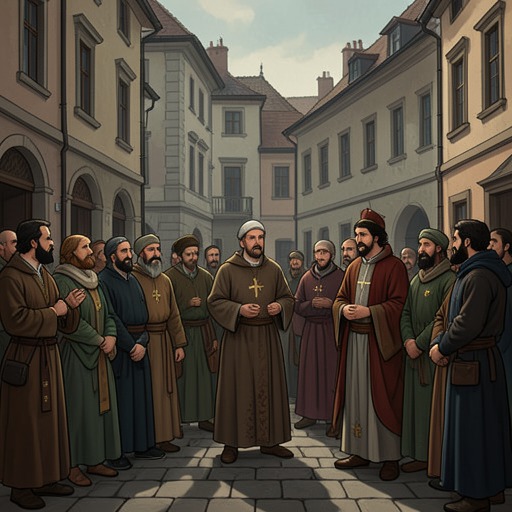
The travelers’ account of Christ’s teaching, way of life, and miracles, together with the steadfastness of the martyrs, makes many Utopians inclined to Christianity. Raphael leaves open whether this response comes from divine inspiration or from the appeal of communal ownership, which he associates with the life of Christ and his followers. Several Utopians receive baptism. The travelers cannot administer the other sacraments because none of the four surviving members of their party is a priest; the newly baptized are instructed about those rites and strongly desire them. They discuss whether a priest chosen among themselves could perform priestly duties without authority from the Pope, but have not yet made that choice when Raphael leaves.
Conversion does not, in itself, license hostility toward other religions. Those who have not converted do not frighten converts or treat them badly, and Raphael says only one person was punished on this account during his stay. The newly baptized man publicly promoted Christianity with such heat that he condemned the other forms of worship and their adherents. After trial, he was banished for stirring up sedition, not for disparaging another religion. The distinction is central to the law as Raphael presents it: religious difference and advocacy are permitted, while conduct that turns advocacy into public conflict is punishable.
Utopus’s law and its rationale
The rule dates to the founding of the state. Before Utopus conquered the inhabitants, religious disputes had divided them so deeply that separate groups fought one another rather than unite against him. After his victory, he made a law allowing each person to follow the religion of choice and to persuade others by argument and amicable, modest means. Reproach and violence were forbidden; those who used them could be condemned to banishment or slavery.
Raphael gives the law both a political and a religious justification. Utopus sought to prevent recurring disputes and irreconcilable hostility from damaging public peace. He also considered it presumptuous to decide too quickly that every religious difference was false: different forms of worship might come from God, who could inspire people in different ways and accept variety. Even if only one religion were true, Utopus reasoned, its truth should emerge through argument addressed to a gentle, unprejudiced mind, rather than through force. Violent controversy, on this account, risks smothering even a true and holy religion beneath superstition.
The policy therefore protects freedom of conscience while regulating how convictions are expressed. It does not treat every religious claim as equally true; instead, it makes persuasion, rather than coercion, the proper means of testing competing claims. Its confidence rests on the expectation that truth can prevail when debate is allowed to proceed without threats and tumult.
Boundaries of tolerance and public worship
The law does not extend to every belief or consequence. Utopians who think that souls die with their bodies, or that the world is governed by chance without providence, are regarded as unfit for full civic standing. They are not punished merely for holding these views, since people cannot simply make themselves believe what they choose, and forcing concealment would encourage dishonesty. But they receive neither honors nor public office, and are not entrusted with public responsibilities. Their views are also kept from public debate, although private discussion with priests and other serious interlocutors is permitted and encouraged. The account connects this restriction to a civic concern: someone who expects no consequences beyond the law might disregard communal rules whenever deception or force could serve personal appetite.
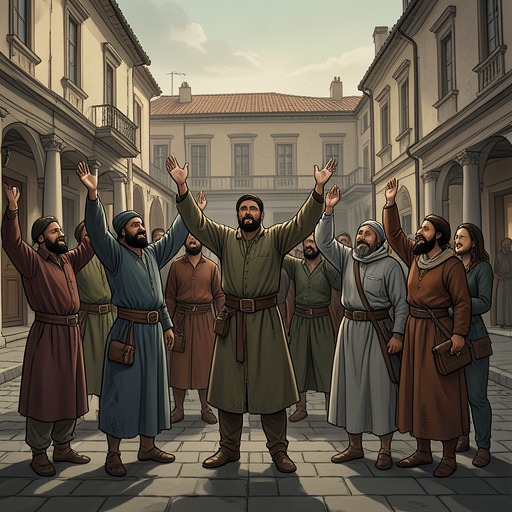
Common worship accommodates the diversity that remains. Utopian temples are spacious but deliberately dim, because priests believe moderate light gathers the mind and encourages devotion. Public services contain nothing that contradicts the different sects’ beliefs; each group performs its distinctive rites privately. The temples have no images of God, leaving worshippers free to form their own understanding, and public prayers are composed so that people of different persuasions can use them without betraying their convictions. Mithras serves as the shared name for the divine essence, not as a requirement that every worshipper hold an identical account of it.
Narrative significance and unresolved tensions
Raphael’s description makes religious plurality part of a wider portrait of Utopian order, but the closing conversation prevents the portrait from becoming an unqualified endorsement. After Raphael finishes, More’s narrator says that some Utopian customs and religious ideas seem absurd to him. He nevertheless commends the constitution in general and says that there are features of the commonwealth he would rather see adopted than expects to see adopted. His reservation matters: the society’s institutions are presented through a traveler’s report and a dialogue, while the narrator signals both attraction and distance.
Within that frame, the law’s achievement and its limits remain visible together. It replaces the earlier condition in which religious factions fought separately with regulated persuasion, toleration of conversion, and shared public forms of worship. Yet it also disciplines speech that threatens civic peace and withholds office from people whose views are judged incompatible with the commonwealth’s moral assumptions. Utopian religious toleration is thus a structured pluralism: it seeks peace not by erasing all differences, but by defining which differences may be publicly expressed and what conduct crosses the line into sedition.