Utopian beliefs about the afterlife
UtopiaUtopian beliefs about the afterlife shape more than private hope: they inform public standing, everyday conduct, and the ways the living remember the dead. The Utopians regard the soul as enduring beyond bodily death, expect happiness for the good, and treat the deceased as continuing members of a moral community whose presence can encourage virtue and restrain wrongdoing.
The soul, providence, and civic standing
The Utopians’ confidence in an afterlife rests on a wider conviction that the world is governed by providence rather than chance. Their religious traditions vary, but their established public order rejects the claim that the soul dies with the body or that the world has no wise governing power. They consider such views a degradation of the soul and a threat to civic life: someone who fears only the law, they reason, may break it whenever deceit or force can satisfy an appetite. The concern is therefore not merely whether a doctrine is true, but what kind of conduct its adherents may be trusted to uphold.
That concern produces a boundary within an otherwise tolerant religious order. People who hold these beliefs are not punished or forced to disguise their thoughts, since the Utopians accept that belief cannot simply be chosen at will and regard compelled dissimulation as a form of fraud. But they are excluded from honors, offices, and public trust. Their arguments are also kept from public advocacy, especially before ordinary people, while private discussion with priests and other respected men is allowed and even encouraged. The policy combines latitude for personal conviction with a firm judgment about eligibility for civic responsibility.
The Utopians do not treat every belief about nonhuman souls as dangerous. Many think that animals possess immortal souls, though these are far beneath human souls in dignity and incapable of the same degree of happiness. This position places animal souls within a graduated conception of the afterlife rather than equating them with human destiny. More broadly, their religious life contains disagreement about particular beliefs while retaining a shared commitment to a divinely ordered world.
Happiness after death and the meaning of a death
The Utopians are almost universally persuaded that good people will be infinitely happy in another state. Their expectation alters the customary meaning of bereavement: they pity the sick, but do not mourn the dead in the same way, and they reserve their deepest unease for someone who appears unwilling to leave life. They interpret reluctance at death as a bad omen, perhaps indicating that a guilty soul fears what awaits it. This is an interpretation of the dying person’s state, not simply a measure of the survivors’ grief.
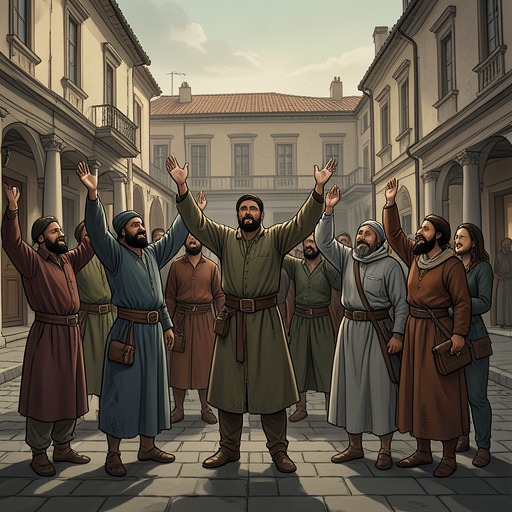
A death approached cheerfully and hopefully receives a contrasting response. The Utopians do not lament such a person; they sing hymns while carrying the body out, commend the soul to God, and conduct themselves with gravity rather than sadness. They burn the body and erect a pillar at the place of the pyre, inscribed in honor of the deceased. After the funeral, they speak of the person’s good life and worthy actions, returning especially to the serenity shown at the hour of death. The manner of dying thus becomes part of the community’s evidence about how a life has been lived and how its end has been understood.
When the dying person instead seems fearful and unwilling, the funeral is quiet and sorrowful. The mourners carry the body in silence, pray that God will be merciful toward the departed soul’s errors, and bury it. The contrast is deliberate: one death is marked by song, cremation, and a public memorial; the other by subdued mourning and interment. The Utopians’ rites make their hopes visible, while also leaving room for apprehension about the moral condition of an individual soul.
The dead among the living
The dead are not, in Utopian understanding, cut off from human society. The Utopians believe that good people remain present among the living, although invisible because human sight is imperfect. They suppose that the dead can hear what is said about them and that their affections and other good dispositions grow rather than diminish after death. Since departed friends would wish to see those with whom they shared close bonds, the Utopians conclude that the dead continue to observe the lives of those they loved.
This conviction gives remembrance a practical force. Honoring good people is regarded both as an encouragement to imitate their example and as an acceptable form of worship. The belief that the dead are attentive also strengthens confidence in undertaking affairs, since the living trust in their protection. At the same time, the imagined presence of ancestors restrains misconduct: a person’s actions remain visible to those whose virtues the community remembers. The afterlife is therefore not only a future destination but an active moral relation between generations.
Religious plurality and the Christian possibility
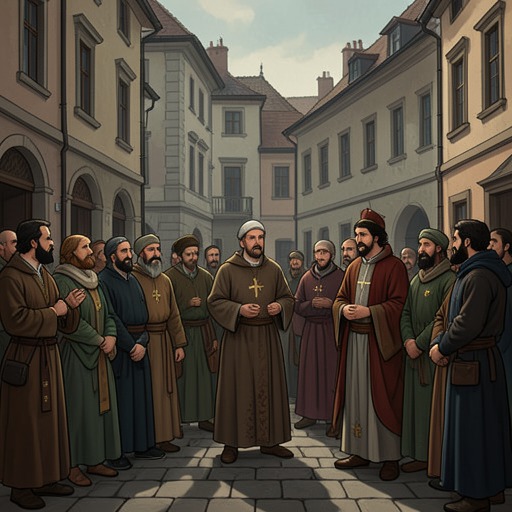
These beliefs exist within a society of multiple religions, where different communities worship different objects or understand the divine in different ways. Many of the wiser Utopians worship one eternal, invisible, infinite, and incomprehensible deity, while religious disagreements persist over the identity and form of divine worship. Their common religious framework includes the conviction that the world has a maker and governor, and that a life beyond death carries moral consequences.
The account of Christ and the martyrs made some Utopians especially receptive to Christianity. They were drawn to its teaching and example, including the community of goods they associated with Christ and his followers. Many received baptism, but the surviving visitors who instructed them were not priests; the new converts therefore could not receive the other sacraments, which required priestly administration. They were taught about those rites and strongly desired them. Some Utopians debated whether a priest selected from among themselves could perform the priestly functions without authority from the Pope, and appeared inclined to choose one, though they had not done so when the narrator left.
The newly baptized did not, as a group, encounter punishment for adopting Christianity. One convert was banished after repeatedly preaching in a heated manner, condemning the other religions and denouncing their adherents. His punishment was for inciting sedition, not for disparaging their religion. The episode shows how the Utopians distinguish religious conviction from conduct that threatens public peace: belief is protected, but aggressive provocation falls outside the protection of their toleration. Their expectations of providence and posthumous reward consequently belong to a larger system in which religious freedom, civic responsibility, and social concord remain closely connected.