CAMP
VinelandCAMP is the organized cannabis-eradication campaign whose escalating operations turn the rural districts around Vineland into contested territory. Through aerial reconnaissance, contracted forces, and the destruction of crops, it presses into places where growers have long relied on distance and difficult terrain for protection. Its impact is felt not only in raids, but in the anxious decisions that precede them: whether to harvest, where to move a crop, and how long a community can remain beyond the reach of the authorities.
Organization and Methods
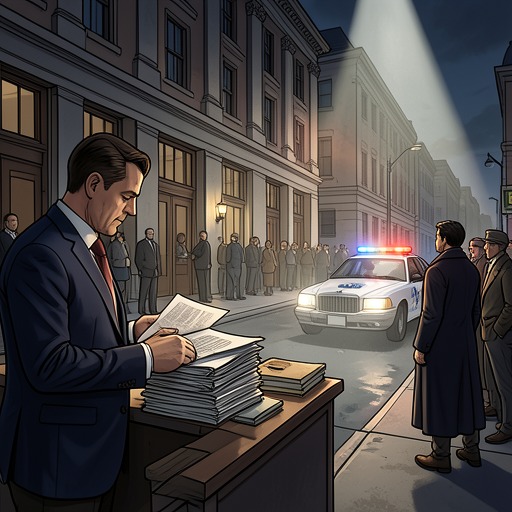
CAMP operates through a widening anti-drug effort that brings together public agencies and outside personnel. In Vineland County, small unmarked aircraft conduct reconnaissance over cultivation areas. Those involved include former pilots, anti-drug activists, government consultants, and off-duty deputies and police officers, working under contract with CAMP. Karl Bopp, a former Luftwaffe officer who has become a US citizen, leads this aerial force. For weeks, crews assemble each morning near Vineland Airport, waiting for the signal to begin a major operation.
The campaign’s reach grows across seasons. As CAMP intensifies its destruction of cannabis crops, more state and federal agencies join the effort, and legal pressure expands through grand-jury subpoenas. Local political allies and places regarded as safe are gradually brought under government control. This accumulation of surveillance, enforcement, and legal pressure makes the campaign more than a series of isolated crop seizures: it steadily narrows the room in which growers and their supporters can operate.
Holytail and the Pressure to Harvest
Holytail, a secluded valley in northern California, becomes a focal point of that pressure. Its climate suits cannabis cultivation, and its difficult road access has helped make it a refuge for growers. After the 1964 landslide, travel requires detours along both sides of the river, as well as ferries that may not be available and bridges said to be haunted. The remoteness that once offered protection also makes the community vulnerable to uncertainty: residents cannot know when the campaign will manage to reach them, only that its attention is drawing closer.
The sheriff of Vineland County, Willis Chunko, has had Holytail on his blacklist for years, though entering the valley is unusually difficult. His repeated public appearances on television, showing him beside seized plants or burning a crop, make eradication a spectacle as well as an enforcement activity. Yet people in Holytail receive warnings whenever he is on the way. Their lookout network reaches Vineland: some watchers wait near the sheriff’s office with coins ready to make calls; others monitor patrol radio traffic or watch the ridgelines with binoculars and repurposed fishing-boat radar.
As the crops grow, the prospect of an operation becomes a practical dilemma discussed among growers at Piggy’s Tavern. Waiting may improve the harvest, but also gives CAMP more time to destroy it. Frost, heavy rain, and fear complicate the calculation. The decision to harvest is therefore not simply agricultural: it is a wager against weather, surveillance, and the likelihood that government forces will arrive before the crop can be moved.
Terrain, Surveillance, and Local Resistance
The landscape shapes both sides of the conflict. Roads, river crossings, ridges, and bridges determine where officials can travel and where residents can keep watch. Near Shade Creek, for instance, Vato and Blood have to cross a partly ruined bridge that has been under repair since the Seventh River flood damaged it in 1964. Work crews and heavy loads periodically block the surviving passage, forcing travelers to wait. The damaged infrastructure is not described as a CAMP installation; it illustrates the precarious routes through which people move in this region, where even ordinary travel depends on gaps in an unreliable network.
In Holytail, local warning systems counter the aerial advantage of CAMP’s contractors. Watchers at the sheriff’s office, along roads, and on mountain heights transform dispersed terrain into a connected field of observation. That network does not end the campaign or make the valley invulnerable. It does, however, help explain why the sheriff finds the area so difficult to enter and why the growers’ decisions remain tied to local knowledge of roads, weather, and approaching aircraft.
Raids and Consequences
The pressure becomes visible in the recurring destruction of crops. Smoke rises over Vineland’s green hills, while television broadcasts show Willis Chunko moving through cannabis fields with a chainsaw and promising to eradicate the plants. Zoyd Wheeler is advised by his lawyer, Elmhurst, to stay away from Holytail while CAMP is attacking the cultivation sites. The advice reflects a legal danger as well as a physical one: appearing to belong to the drug-growing world may bring a person before a court.
Despite that warning, Zoyd has spent the preceding two weeks helping move harvested sinsemilla buds and whole plants before they can be burned. The work takes place at night, during evasive runs in powerful Dodge trucks along old logging cuts, rough roads, and unstable bridges between Holytail and the highway. Zoyd is not merely watching a distant campaign; he has become part of the effort to salvage the harvest, even as the risk of being identified threatens his freedom and his attempt to regain his seized home.
The campaign’s consequences extend beyond the fields. In Shade Creek, CAMP saboteurs make daily incursions as Brock Vond’s forces camp near Vineland Airport and long-range patrols travel up the Seventh River and through surrounding valleys. These are related pressures in the same anti-drug environment, but the account distinguishes the CAMP incursions from Vond’s military presence rather than treating them as a single operation. Together, they make the valley feel increasingly exposed, and the arrival of a film crew that includes a Drug Enforcement Administration agent seeking Frenesi Gates adds another source of alarm.
Narrative Significance
CAMP’s power is represented through a combination of routine and threat: morning aircraft briefings, televised crop burnings, subpoenas, and the daily uncertainty of whether a remote valley will be raided. Its reach is formidable, but not seamless. The campaign depends on roads and aircraft, while the communities it targets use terrain, communication, and timing to delay or evade it. That contest makes space consequential: remoteness is neither a guarantee of safety nor an empty backdrop, but a temporary resource that both sides try to control.
The harvest dilemma also gives the campaign a slow, accumulating force. Before any decisive arrival, surveillance and legal pressure alter the rhythms of cultivation, make neighbors into watchers, and turn a choice about when to gather crops into a choice about how much risk to accept. CAMP thus appears not only as an agency-directed effort to destroy cannabis, but as a growing system of observation and enforcement that changes everyday life in the places it seeks to bring under control.