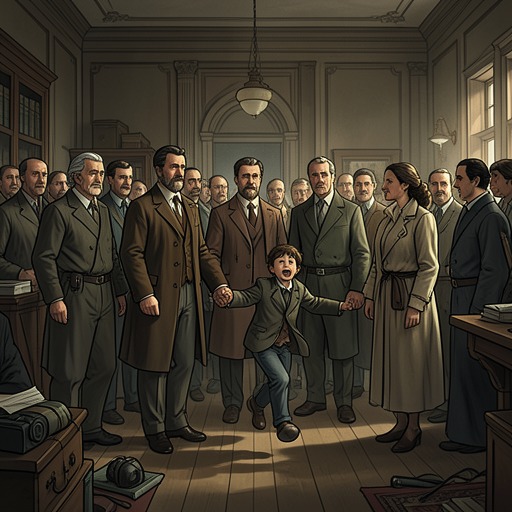
Frenesi Gates and Flash: Shared Life and Partnership in Facing Danger
VinelandFrenesi Gates and Flash are partners in a shared domestic life that is also entangled with their work as external collaborators in a federal protection network. When people like them begin disappearing from a computer list, their intimate routines become the setting for a practical, anxious reckoning: they must consider whether the system meant to shelter them is instead abandoning its own informants.
A household bound to precarious work
Flash calls Frenesi from the field office where he works. His call is not to explain a delay—he does not usually announce when he will be late—but to ask whether she has received visitors. Frenesi reports that the sheriff has just delivered a check in person, an unusual enough visit to register as a warning sign. Flash tells her to cash it as soon as she can, yet his immediate concern is what else may have happened at the house.
The exchange shows how their working lives enter the home without ceremony. The check is both an ordinary household matter and an object Flash suspects may be counterfeit; the sheriff’s visit may be routine service or something more troubling, but the scene supplies no explanation. Frenesi’s question about whether she should pack comes from reading the danger in the call rather than from any explicit instruction. Their relationship includes this quick translation of incomplete information into possible action.
Reading danger in one another
Frenesi knows Flash’s voice well enough to hear a slight, partly controlled tremor in it. She treats that change in tone as a dependable omen: the danger is serious, even if he is trying not to alarm her. Her readiness to ask about packing, and his insistence that she first cash the check, reveal different immediate responses to uncertainty. He tries to manage the next practical step; she seeks to establish whether they need to leave.
Flash does not give her a full account during the call. He says that many people they know have vanished from the computer, and Frenesi later decides not to repeat that information to Barbie, who is visiting with her son. Instead, she invents an explanation involving the check and shares computer-related horror stories over coffee. The concealment is temporary and cautious, not evidence that Frenesi misunderstands the stakes: she has already recognized them in Flash’s voice. Their partnership thus depends partly on keeping knowledge close until they can judge who should hear it.
Domestic routine and guarded intimacy
The warning arrives amid the noisy movements of family life. Justin runs up the outside stairs with his friend Wallace, while Wallace’s mother, Barbie, follows behind. Frenesi briefly grabs her son and tries to kiss him, but the kiss lands on his bare arm as he rushes past toward the alcove he uses as a room. The missed kiss is a small, concrete measure of how little the household pauses for a composed exchange, even as danger presses in from outside.
When Flash arrives, Barbie and Wallace are preparing to leave. He greets Barbie by theatrically inspecting her left hand, pretending to check whether she is still married; she answers with a joke about Edgar Hoover still being dead. The easy teasing places Flash’s alarm beside a familiar social performance. After the visitors depart, Frenesi raises the missing names and asks who is absent from the computer. Flash examines the check, suspects it is false, and she promises to exchange it after dinner.
Their conversation has to accommodate Justin. Once the cartoons end, his parents offer him a comparatively pleasant half-hour of attention rather than beginning a discussion they do not want to have in front of him. The narration likens the exchange to an alien-invasion video game: Flash launches complaints at changing speeds, while Frenesi tries to deflect them before her defenses are dismantled. The image presents their disagreement as a familiar, active exchange, but the underlying subject is not a game. They are trying to speak about an alarming list without exposing their son to its implications.
The list and the threatened protection network
Flash brings home a hastily compiled list and reads it while Frenesi prepares dinner. She takes frozen pepperoni pizzas from a nearly empty freezer—already partly thawed—and makes a salad; he opens a beer and goes through the names. The people listed include former prisoners from Long Bihn, former grand-jury professionals, debt collectors, high-end prostitutes recruited to trap clients, informants with photographic memories, people with no blood crimes, people who have written bad checks, cocaine users, and sexual predators. Their varied histories make the group less a coherent community than a collection of people who have had reasons to seek federal protection. Some, at least, have found refuge under its wing.
At dinner, Flash says he sees two possibilities. Frenesi understands him to mean that the missing people may be dead or hiding from someone who wants them dead. Because Justin is eating with them, neither parent says that possibility aloud. Frenesi proposes another: perhaps they have disappeared in the opposite direction, resurfacing and re-entering the world. Flash asks why that would happen. Justin suggests that their funding may have been cut, drawing on television coverage of spending reductions and disputes between President Reagan and Congress.
Flash wonders whether people are being dropped from the program because they cost too much to support. Frenesi recognizes the possibility as part of a long-established system: informants, spies, and special collaborators are set against one another, competing for a shrinking share as special-service funds decline. At the same time, the Justice Department’s continuing contact with organized crime means that the list is negotiable, though never openly described that way. Flash rejects the idea that the situation is ordinary in scale. Waving the printout, he sees a mass removal, not a routine adjustment.
Partnership under unresolved threat
The episode gives Frenesi and Flash no certainty about what has happened to the missing people, whether the check is genuine, or whether either of them is about to lose protection. Its pressure comes instead from the way uncertainty passes through their relationship: a coded tremor in a voice, a request to cash a check, a list read over beer and improvised dinner, and a frightening possibility left unspoken at the table. They remain partners in interpreting an opaque system whose records may determine who is sheltered and who has vanished from view.
Their shared life is neither separate from their work nor reducible to it. Frenesi’s care for Justin, her guarded conversation with Barbie, and her ability to recognize Flash’s alarm all occupy the same evening as the threatened collaborators on the printout. Flash’s teasing manner and his attempt to identify practical explanations coexist with his fear that the scale of the deletions is catastrophic. The scene leaves their immediate future unsettled, making their mutual attentiveness—not any confirmed rescue or escape—the clearest evidence of how they face danger together.