Sasha Gates and Hub Gates: A Partnership Riven by Political Disputes
VinelandSasha Gates and Hub Gates are bound by a wartime courtship whose apparent intimacy rests on a difference they only gradually recognize: Sasha takes their conversations as political engagement, while Hub values the time spent with her without sharing her politics. Their marriage carries that mismatch into a home marked by argument and silence. Through Frenesi Gates’s recollections, the couple’s relationship becomes both a family history and a small-scale version of the betrayals and disputed narratives that shaped Hollywood during the blacklist era.
Courtship in wartime
Sasha and Hub’s romance begins near the end of the Second World War, when the radio repeatedly played Artie Shaw’s record “Frenesi.” The music became part of the origin story their daughter inherited: Sasha and Hub were falling in love as the war was ending, and Frenesi’s name commemorated that record. Frenesi imagined their first meeting in a crowded dance hall, among sailors, smoke, coffee, and music, as a brief moment of shared youth amid difficult times. Sasha would later qualify this romantic picture: she recalled being confused, a woman with political ideas surrounded by men, rather than simply inhabiting the carefree dance Frenesi pictured.
The wartime setting gave their meeting a concrete form. Sasha had become a singer at the Full Moon; Hub, then an electrician’s mate third class, arrived in San Francisco with a ship assigned to the Pacific. His cruiser reached Okinawa, where a kamikaze struck it after fifteen minutes of battle, sending it back to Pearl Harbor for repairs. By the time the ship was ready again, the war had ended, and Hub was eager for romantic adventure. The convergence of Sasha’s work as a performer and Hub’s return from military service set the stage for a relationship formed in the transition from wartime mobilization to peacetime life.
Listening, politics, and misrecognition
Sasha remembered Hub as the first man who let her think aloud. In her account, being listened to helped her thoughts take shape: the injustices she had witnessed no longer appeared only as abstractions or as an impersonal sweep of world history. She began to understand them as acts committed by particular human beings against other living people. That change in perspective mattered to her politically, and she associated it with the space Hub seemed to give her in conversation.
Hub remembered the same closeness differently. He said that he would have listened even if Sasha had read him Trotsky’s complete works, because he wanted to spend time with her. Sasha had believed she was speaking with a serious political thinker; Hub admitted that his thoughts were instead those of a sailor on leave. The difference is not that he refused her attention, but that the attention did not signify the political agreement she took it to signify. Sasha said it took her years to understand how thoroughly she had been mistaken, and she concluded that Hub had never had a political cell in his body. Their affectionate teasing keeps this recognition from becoming a simple repudiation of the romance, but it makes the limits of their shared understanding unmistakable.
A marriage under political pressure
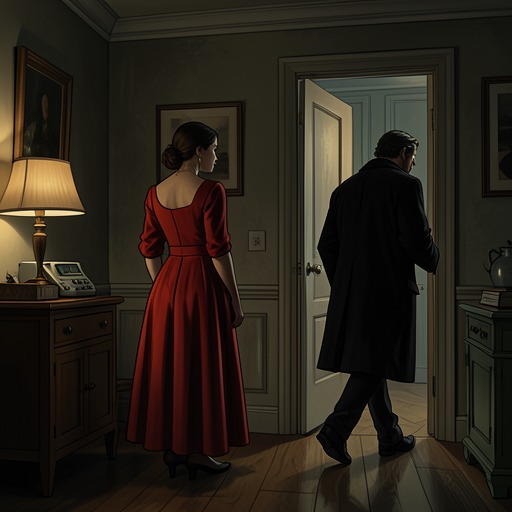
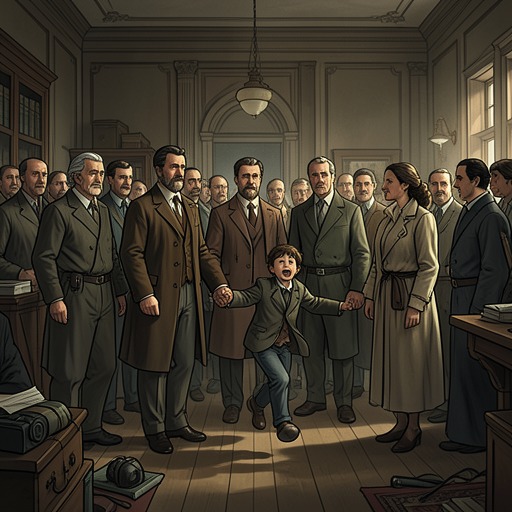
The mismatch between Sasha’s convictions and Hub’s lack of political commitment became harder to contain in the atmosphere of Hollywood’s anti-Communist terror in the 1950s. Frenesi grew up amid telephone taps, cars parked askew, schoolyard insults and fights, blacklists and graylists, secrets kept or betrayed, and adults who fought while children tried to infer what was happening. As the household telephone operator, she had to remember false names and who used them with whom. When Sasha was out of work or Hub was fired from a film, the couple exchanged looks but said little. Frenesi learned that it was safer not to get in their way.
The couple’s disagreements could become physically noisy: arguments Frenesi had witnessed ended in shouting and the throwing of cutlery, household objects, vegetables, and other food. She watched them as if editing alternating shots of two performers. Their arguments also followed a repeated pattern. Sasha and Hub revisited the past, particularly the blacklist years, then returned to silence about it in the present. Friends of Hub had betrayed friends of Sasha, and each spouse had suffered more than once because of the same political operator. Their conflict was therefore not simply a difference of opinion: it was entangled with loyalties, betrayal, professional vulnerability, and the difficulty of agreeing on what had happened.
History as an unfinished family argument
For Sasha, the blacklist era looked like the film industry continuing by political means. She believed that people invented different accounts of events to improve their own standing and discredit others. She compared the historical record to a repeatedly revised screenplay: characters and facts were exchanged, sincere speeches flattened or removed, and each new version altered what could be remembered. In her image, the Hollywood of the 1950s had become a silent film, a story repeatedly rewritten in which nobody spoke.
That judgment helps explain why the past remained active in the marriage rather than settling into shared memory. Sasha saw political history as vulnerable to the same manipulation as a studio script; Hub’s personal and political distance from her experience did not supply a common account to replace it. Frenesi’s position between them is significant: she remembers their competing versions, their domestic outbursts, and the silences that followed, while noticing the way they staged their disagreements like scenes. Their partnership thus joins affection and misunderstanding without resolving the tension between them. What began with Hub listening to Sasha becomes, for their daughter, a lasting lesson in how intimacy can coexist with incompatible understandings of politics, history, and the past.