Fiction

Fiction(100)

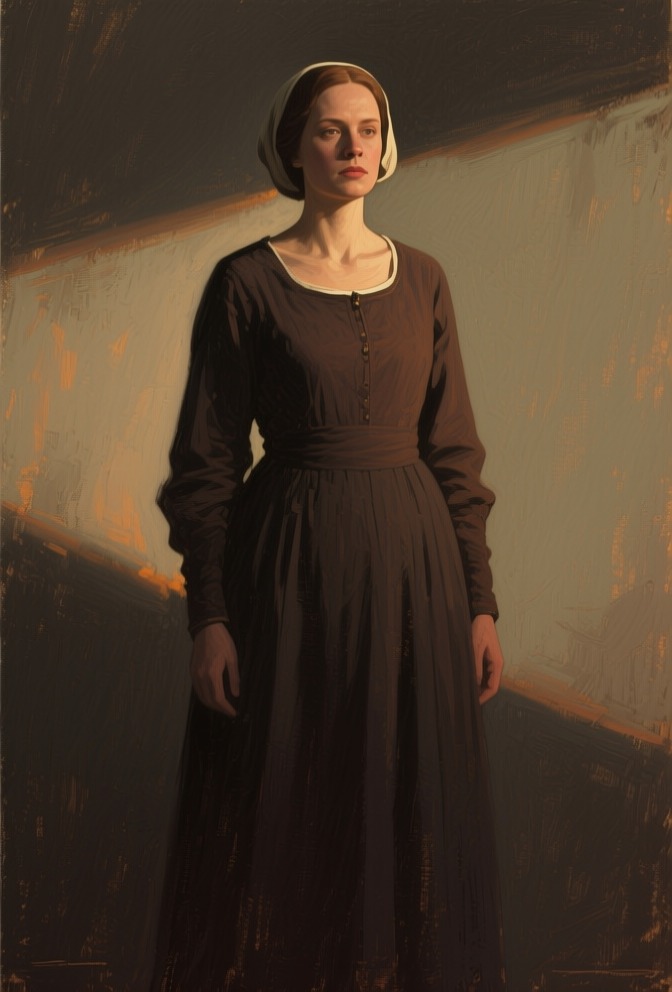
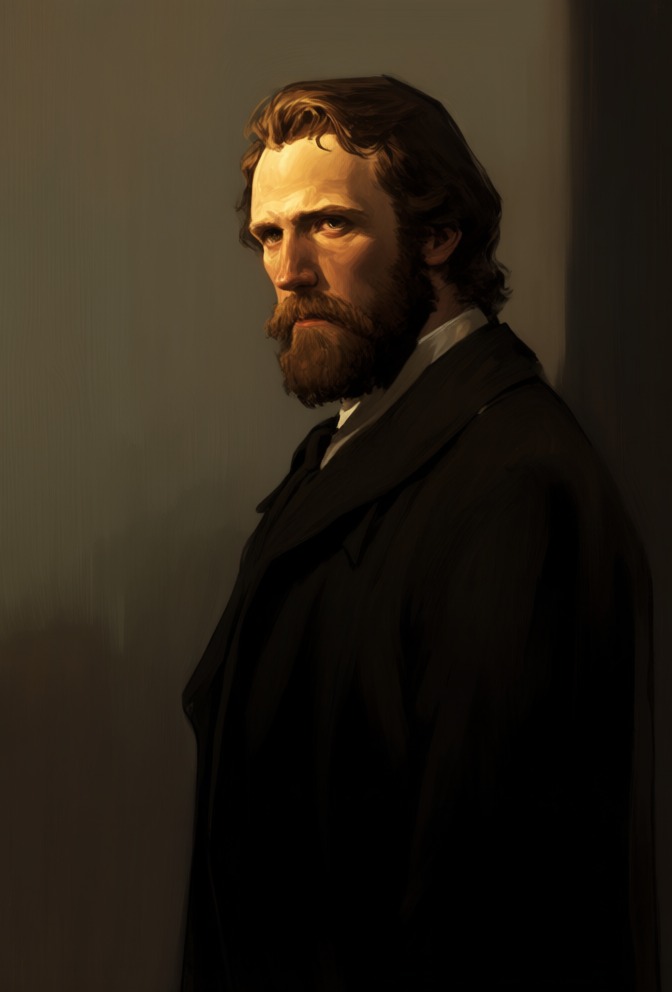
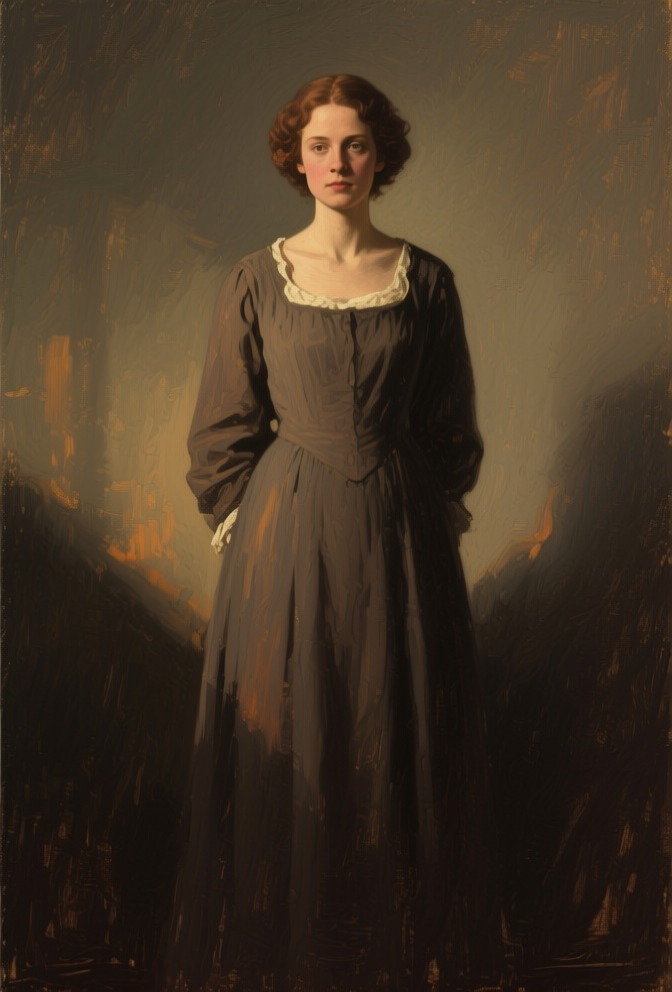
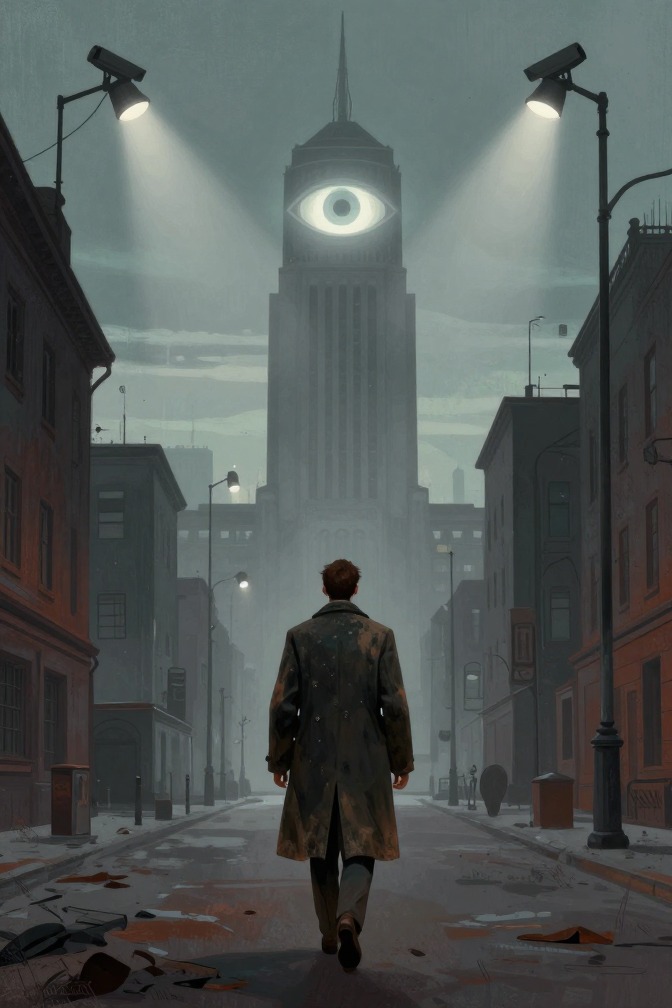
Cover of "Nineteen Eighty-Four": a portrait of Winston Smith, a single strong focal subject in a painterly scene, a rich muted palette with dramatic warm light against deep…
Nineteen Eighty-Fourby George Orwell
149 Entities

Overview Nineteen Eighty-Four is a dystopian novel by the English writer George Orwell, first published in London by Secker & Warburg on 8 June 1949. It was Orwell’s ninth and final completed book. Set in a terrifying future imagined from the late 1940s, the novel describes a world in which a handful of totalitarian superpowers are locked in permanent war, and where every citizen is subjected to omnipresent surveillance, ideological indoctrination, and the systematic manipulation of truth. The book is often grouped with Aldous Huxley’s Brave New World and Yevgeny Zamyatin’s We as one of the founding classics of the dystopian genre, and it has become one of the most influential English-language novels of the twentieth century. Plot The world of the novel is divided into three great powers: Oceania, Eurasia, and Eastasia. The story takes place in Oceania, a superpower that includes Britain, now known as Airstrip One. Oceania is ruled by a single Party, whose supreme leader is the godlike Big Brother. The Party controls every aspect of public and private life through the Thought Police, two-way television screens called telescreens, and a network of informers. Society is divided into the inner Party, the outer Party, and the proles, the working class. The Party’s ideology is known as Ingsoc, a Newspeak abbreviation for English Socialism. Government is organized into four ministries, each with a deliberately misleading name: the Ministry of Truth, which rewrites history; the Ministry of Peace, which wages war; the Ministry of Love, which carries out torture and executions; and the Ministry of Plenty, which manufactures scarcity. The protagonist, Winston Smith, is an outer Party member working at the Ministry of Truth. His job is to alter old newspapers and documents so that the records always match the Party’s current lies. Privately, Winston has begun to doubt the Party. He starts a secret diary, buys a piece of forbidden paper, and commits the crime of thoughtcrime. He enters a clandestine relationship with Julia, a young woman who despises the Party in a more personal, hedonistic way. Through a book seller, they come into contact with O’Brien, a senior Party member who seems to oppose the system. O’Brien gives them access to the legendary Book, a forbidden text that may explain the true nature of the Party’s power. However, O’Brien is in fact a loyal servant of the Thought Police. Winston and Julia are arrested. Winston is taken to the Ministry of Love, where he is tortured brutally until his mind and body are broken. In the culminating scene, he is taken to Room 101, where every prisoner is confronted by the thing they fear most. For Winston, that is rats. He begs them to attack Julia instead, betraying her completely. The final pages show Winston, now cured, sitting in a café and feeling that he loves Big Brother. Themes The novel is a powerful warning against totalitarianism. It explores how a government can use relentless surveillance, physical terror, and psychological manipulation to destroy individual freedom and human dignity. Orwell invented a now-standard vocabulary for these mechanisms. Newspeak is a deliberately reduced language designed to make unorthodox thought impossible; its vocabulary is trimmed every year to remove words that might stir rebellion. Doublethink is the ability to hold two contradictory beliefs at once and accept both, a mental discipline demanded of every Party member. Telescreens are constant monitors that cannot be switched off. Big Brother became shorthand for the supreme leader who watches over every citizen. The Party’s slogan—War is Peace, Freedom is Slavery, Ignorance is Strength—expresses the perversion of language and logic on which its power rests. The Ministry of Truth shows how the rewriting of history is central to totalitarian rule: if the past can be erased and recreated, then the present and future can be controlled as well. At a deeper level, the novel asks whether love, truth, and the desire for freedom can survive in a world that has turned every one of those values upside down. Background and Legacy Orwell lived through the rise of Hitler and Stalin. He fought alongside the Republicans in the Spanish Civil War, an experience that convinced him of the danger of communist totalitarianism and shaped his political conscience. He wrote Nineteen Eighty-Four partly as a response to the totalitarian systems he saw taking shape, and partly as a warning that the social-democratic world could drift into similar oppression. There are echoes of Stalinist Russia and Nazi Germany in the Party’s techniques, but Orwell was careful to make his dystopia a general model rather than a portrait of any single state. Published in the early years of the Cold War, the book rapidly became a cultural milestone. It gave the English language such lasting terms as Big Brother, Newspeak, doublethink, and thoughtcrime. It has been translated into dozens of languages and has sold tens of millions of copies. Many later dystopian novels, films, and television series draw directly or indirectly on Orwell’s world. With the rise of digital surveillance, fake news, and political manipulation of information, Nineteen Eighty-Four continues to be read as a live warning rather than a historical curiosity. Its status as a classic of English literature, and as a mirror held up to power, remains undisputed.

Cover of "Frankenstein, or the Modern Prometheus": a portrait of Victor Frankenstein, a single strong focal subject in a painterly scene, a rich muted palette with dramatic warm light…
Frankenstein, or the Modern Prometheusby Mary Shelley
199 Entities

Frankenstein; or, The Modern Prometheus is a Gothic novel written by Mary Shelley, first published anonymously in 1818. It is widely regarded as the first true work of science fiction and remains one of the most influential novels in English literature. The story blends horror, Romanticism, and profound philosophical inquiry, exploring the consequences of unchecked ambition and the nature of humanity. The narrative is framed through the letters of Captain Robert Walton, who is on an Arctic expedition. He rescues a near-dead Victor Frankenstein, who then recounts his tragic story. Victor, a brilliant young scientist from Geneva, becomes obsessed with uncovering the secret of life. After years of study at the University of Ingolstadt, he succeeds in creating a sentient being from assembled body parts, animated by electricity. Horrified by the creature's grotesque appearance, Victor abandons it in terror. The creature, initially innocent and longing for companionship, wanders alone, learning language and emotions through observation, but is repeatedly rejected and attacked due to its monstrous looks. In desperation, it seeks Victor and demands that he create a female companion. Victor agrees but later destroys the unfinished female, fearing the creation of a race of monsters. Enraged, the creature vows revenge, killing Victor's younger brother William, his friend Henry Clerval, and finally his bride Elizabeth on their wedding night. Victor pursues the creature across Europe and into the Arctic, where he dies from exhaustion and illness. The creature, mourning its creator, disappears into the icy wilderness, promising to end its own life. Central themes in Frankenstein include the dangers of scientific hubris—Victor's Promethean overreach leads to catastrophe, raising questions about a creator's responsibility. The novel also examines prejudice and social isolation: the creature is not born evil but becomes violent due to society's rejection based on its appearance. The relationship between creator and creation mirrors the biblical story of God and Satan from Paradise Lost, exploring themes of rebellion, abandonment, and the search for identity. Additionally, the novel critiques the Romantic ideal of the solitary genius and the pursuit of knowledge without moral constraints. The writing of Frankenstein is legendary. In the summer of 1816, Mary Shelley, then 18, was staying near Lake Geneva with her future husband Percy Bysshe Shelley, Lord Byron, and John Polidori. Due to the volcanic winter caused by the eruption of Mount Tambora, the group was confined indoors and challenged each other to write a ghost story. Mary's nightmare inspired the tale of a scientist who creates life, and she expanded it into a full novel over the following months. The book was published when she was only 21. Frankenstein's impact is immense. It is considered the foundation of science fiction, influencing countless works of literature, film, theater, and popular culture. The 1931 film starring Boris Karloff cemented the monster's iconic image, though it differs from the novel's depiction. The novel has been interpreted through feminist, psychoanalytic, Marxist, and postcolonial lenses, and it remains a staple of academic curricula. Its themes of creation, responsibility, and the Other are more relevant than ever in an age of genetic engineering and artificial intelligence.

Cover of "Dune": a portrait of Paul Atreides, a single strong focal subject in a painterly scene, a rich muted palette with dramatic warm light against deep…
Duneby Frank Herbert
300 Entities

Dune is a landmark science fiction novel by American author Frank Herbert, first published in 1965 after being serialized in Analog Science Fiction and Fact magazine. It won both the Hugo Award and the Nebula Award for Best Novel in 1966, cementing its reputation as a masterpiece. The story is set in a distant future where humanity has colonized countless star systems and is ruled by a feudal empire under the Padishah Emperor. The most valuable substance in the universe is melange, the spice, found only on the desert planet Arrakis, also known as Dune. The spice extends life, enhances mental abilities, and makes space navigation possible. Control of Arrakis means control of the universe. The plot follows Paul Atreides, the young heir of House Atreides, a noble family that is ordered by the Emperor to take over the spice-mining operations on Arrakis from their sworn enemies, House Harkonnen. This is actually a trap: the Emperor and the Harkonnens conspire to destroy House Atreides. Paul's father, Duke Leto, is killed, and Paul and his mother Jessica, a member of the Bene Gesserit sisterhood, flee into the desert. They join the native Fremen, a hardy people who have adapted to the harsh desert environment and have developed a culture centered on the giant sandworms and the harvesting of spice. Paul undergoes a transformation, becoming a messianic figure known as Muad'Dib, and leads the Fremen in a revolt that topples the Emperor. The novel explores deep themes: ecology, as Herbert meticulously details the interconnectedness of the desert ecosystem; politics, with the complex machinations of the empire and the Great Houses; religion, showing how prophecies can be manufactured and manipulated; and human evolution, as Paul's prescient abilities and his genetic heritage raise questions about fate and free will. The writing background is equally fascinating. Herbert, a journalist, was assigned in 1957 to write about an Oregon Department of Agriculture project to stabilize coastal sand dunes. He became fascinated by the dunes and the struggle to control them, and began researching desert ecology, politics, and Middle Eastern culture. He spent six years developing the novel, drawing on his observations of oil politics, environmentalism, and the Cold War. Dune's influence is immense. It redefined science fiction, moving it away from pure technological speculation toward a more literary and philosophical approach. It has spawned five sequels written by Herbert, and numerous prequels and sequels by his son Brian Herbert and Kevin J. Anderson. The novel has been adapted into multiple films, including David Lynch's 1984 version and Denis Villeneuve's 2021 and 2024 films, as well as a television miniseries. It also inspired the first real-time strategy video game, Dune II, which shaped the entire genre. Dune remains a towering achievement, a rich and complex work that continues to captivate readers with its timeless themes of power, environment, and the human condition.

Cover of "To Kill a Mockingbird": a portrait of Atticus Finch, a single strong focal subject in a painterly scene, a rich muted palette with dramatic warm light against deep…
To Kill a Mockingbirdby Harper Lee
170 Entities

To Kill a Mockingbird is a 1960 novel by American author Harper Lee, published on July 11, 1960, by J. B. Lippincott & Co. It won the Pulitzer Prize for Fiction in 1961 and has since become a classic of modern American literature, often categorized as Southern Gothic. Set in the fictional town of Maycomb, Alabama, during the Great Depression, the story is narrated by six-year-old Scout Finch, who observes the complexities of racial injustice, moral courage, and the loss of innocence. The plot centers on Scout’s father, Atticus Finch, a principled lawyer who defends Tom Robinson, a black man falsely accused of raping a white woman. Despite compelling evidence of Tom’s innocence, an all-white jury convicts him, and Tom is later killed while attempting to escape. Interwoven with this trial is the children’s fascination with their reclusive neighbor, Boo Radley, who eventually emerges to save Scout and her brother Jem from a violent attack. The novel thus explores both public and private forms of prejudice and compassion. Key themes include racial prejudice, integrity, justice, innocence versus evil, and the moral education of children. The title metaphor—that it is a sin to kill a mockingbird, a creature that harms no one—symbolizes the destruction of innocent beings like Tom Robinson and Boo Radley. Lee’s writing is warm and humorous despite the gravity of the subject matter, capturing the voice of a young girl grappling with adult hypocrisy and courage. The novel draws heavily from Lee’s own upbringing in Monroeville, Alabama. Her father, Amasa Coleman Lee, a lawyer and state legislator, served as the model for Atticus Finch. The story was also inspired by a real event near her hometown in 1936, when she was ten years old. Lee initially wrote a manuscript titled Go Set a Watchman, featuring an adult Scout, but her editor advised her to rewrite it from a child’s perspective, a process that took two years. Upon release, To Kill a Mockingbird became an instant bestseller and critical success. It has been translated into over 40 languages and sold more than 30 million copies worldwide. In the United States, it is widely read in middle and high schools, often as required reading. The 1962 film adaptation, starring Gregory Peck as Atticus Finch, won three Academy Awards and cemented the novel’s cultural impact. While some contemporary critiques point to its “white savior” narrative, the book remains a powerful and enduring exploration of racial justice, empathy, and the moral complexities of small-town life. Harper Lee’s only other novel, Go Set a Watchman, published in 2015, was an earlier draft of the same story, revealing a more complicated portrait of Atticus and sparking debates about the integrity of its publication.

Cover of "Project Hail Mary": a portrait of Ryland Grace, a single strong focal subject in a painterly scene, a rich muted palette with dramatic warm light against deep…
Project Hail Maryby Andy Weir
184 Entities

Project Hail Mary is a 2021 hard science fiction novel by American author Andy Weir, published by Ballantine Books on May 4, 2021. It is Weir's third novel, following The Martian (2011) and Artemis (2017). The book was a critical and commercial success, debuting at number one on The New York Times bestseller list and becoming a finalist for the 2022 Hugo Award for Best Novel. It also won the Goodreads Choice Award for Best Science Fiction and the Japanese Seiun Award for Best Translated Long Novel. A film adaptation starring Ryan Gosling and directed by Phil Lord and Christopher Miller was released in March 2026. Plot Summary The story is set in the near future. Earth's sun is dimming at an alarming rate due to an infestation of an alien microorganism called Astrophage, which feeds on solar energy and multiplies rapidly. To save humanity, an international coalition launches the 'Project Hail Mary' mission: a spacecraft carrying three astronauts (including the protagonist) to the star 40 Eridani, which is also dimming, suggesting that Astrophage is present there as well. The mission's goal is to study the organism and find a way to stop it. The protagonist, Dr. Ryland Grace, awakens from hibernation aboard the Hail Mary alone, suffering from severe amnesia. He cannot remember his name, his mission, or even how to operate the ship. With the help of the ship's computer, he gradually recovers his memory and learns that his two crewmates died during the journey. He realizes he is humanity's last hope. During his voyage, he discovers another alien spacecraft from the 40 Eridani system. Inside is a spider-like extraterrestrial creature named Rocky, who hails from a civilization that breathes ammonia and faces the same Astrophage crisis. Despite initial communication barriers, Grace and Rocky use mathematics, physics, and music to build a shared language. They form a deep friendship and work together to solve the Astrophage problem, developing a revolutionary energy extraction method. The climax involves a daring plan to build a 'tau neutrino' or 'gravity' device to sequester the Astrophage, requiring one of the ships to be sacrificed. Ultimately, Grace and Rocky succeed in saving both their worlds, though Grace is left stranded in the 40 Eridani system until Rocky rescues him. The novel ends with the two friends returning to Earth together, having forged an unbreakable bond across species. Themes and Style Project Hail Mary exemplifies Weir's signature 'hard science fiction' approach, grounding every plot point in real scientific principles. The narrative is driven by Grace's problem-solving through experiments, calculations, and logical deduction, making complex science accessible and engaging. Key themes include cooperation across cultures (or species), the value of sacrifice, and the power of friendship. The novel also explores memory, identity, and the nature of heroism, as Grace's recovered memories reveal a reluctant hero who was initially terrified of the mission. The tone is notably optimistic and humorous, with Grace's sarcastic inner monologue and pop culture references (including Beatles jokes) providing levity. The portrayal of Rocky as a genuinely kind and selfless alien has been widely praised, adding emotional depth to the science-driven plot. Writing Background and Reception Weir wrote Project Hail Mary after the success of Artemis, initially releasing chapters on his personal website for free feedback, a method he used for The Martian. He has stated that he wanted to write a story about 'a human and an alien meeting and having to solve a problem together.' The book was met with overwhelmingly positive reviews, with Bill Gates featuring it on his annual reading list, calling it 'a story of hope and ingenuity.' Critics praised its scientific accuracy, engaging plot, and character development. The novel has sold millions of copies worldwide and has been translated into dozens of languages. Its 2026 film adaptation, starring Ryan Gosling, was praised for its faithful adaptation and visual effects, cementing the story's place in popular culture. Project Hail Mary is considered a landmark in 21st-century science fiction, proving that hard SF can achieve both critical acclaim and mainstream popularity, and inspiring a new generation of readers to embrace science and exploration.

Cover of "The Shining": a portrait of Jack Torrance, a single strong focal subject in a painterly scene, a rich muted palette with dramatic warm light against deep…
The Shiningby Stephen King
166 Entities

Basic Facts _The Shining_ is a 1977 horror novel by American author Stephen King, published by Doubleday on January 28, 1977. It is King's third published novel and his first hardcover bestseller, solidifying his reputation as a master of the horror genre. The book blends Gothic fiction, psychological horror, and supernatural elements, set in the isolated Overlook Hotel in the Colorado Rockies. The novel spans 447 pages and was followed by a sequel, _Doctor Sleep_, in 2013. Plot Outline The story follows the Torrance family: Jack Torrance, a struggling writer with a volatile temper and a history of alcoholism, takes a job as the winter caretaker of the Overlook Hotel. He moves in with his wife, Wendy, and their five-year-old son, Danny, who possesses a psychic ability called “the shining.” As a heavy snowstorm cuts off the hotel from the outside world, supernatural phenomena begin to manifest: swarms of dead wasps come to life, topiary animals move, ghostly footsteps echo in empty rooms, and Jack discovers a scrapbook detailing the hotel's violent past. The malevolent force within the hotel exploits Jack's inner demons, driving him to madness and turning him against his family. Danny uses his shining to confront the evil, ultimately leading to a deadly confrontation. The family escapes, but the hotel's legacy of horror endures. Core Themes The novel explores themes of alcoholism, domestic violence, the cycle of abuse, and the fragility of the human mind. Jack Torrance's descent into madness is a chilling portrayal of how isolation and personal demons can corrupt even a loving father. King also delves into the nature of evil, both supernatural and human, and the power of familial love and intuition as embodied by Danny. The Overlook Hotel itself becomes a character, representing the dark history and repressed violence of American society. Writing Background King was inspired to write _The Shining_ after a stay at the Stanley Hotel in Estes Park, Colorado, in 1974. The hotel's eerie atmosphere, combined with King's own struggles with alcoholism, shaped the novel's intense psychological depth. At the time, King had achieved financial stability with _Carrie_, but _The Shining_ marked a personal and artistic breakthrough, allowing him to confront his fears directly. Influence and Legacy _The Shining_ was a critical and commercial success, cementing King's status as a leading horror author. It was adapted into a 1980 film directed by Stanley Kubrick, which became a cultural landmark despite King's disapproval. A 1997 television miniseries, scripted by King himself, offered a more faithful adaptation. The novel has inspired countless works of fiction, film, and television, and its sequel, _Doctor Sleep_, was published in 2013. _The Shining_ remains a cornerstone of modern horror literature, celebrated for its psychological depth and enduring terror.

Cover of "No Longer Human": a portrait of Yozo, a single strong focal subject in a painterly scene, a rich muted palette with dramatic warm light against deep shadow
No Longer Humanby Osamu Dazai
122 Entities

Overview *No Longer Human* (Japanese: *Ningen Shikkaku*, also translated as *A Shameful Life*) is a 1948 novel by Japanese author Osamu Dazai. It is widely regarded as his semi-autobiographical masterpiece and was published shortly after his death. The novel is structured as a series of three notebooks written by the protagonist, Ōba Yōzō, framed by a prologue and epilogue from an unnamed writer. The work delves into themes of alienation, identity, and the inability to connect with others, resonating deeply with post-war Japanese society and beyond. Plot Summary The story begins with the writer encountering three photographs and three notebooks belonging to Yōzō, given to him by a bar owner. The first notebook recounts Yōzō's childhood in a wealthy family in northern Japan. From an early age, he feels a profound fear of other people, whom he calls "human beings," and responds by playing the clown to mask his true self. The second notebook describes his university years, where he becomes entangled in leftist movements, heavy drinking, and a failed double suicide with a waitress, leading to his expulsion. The third notebook follows Yōzō's descent into alcoholism, morphine addiction, and a series of doomed relationships. After a brief marriage, his wife is violated, triggering his final collapse. He is institutionalized and, upon release, lives as a hollow, diminished figure, concluding that he has lost the right to be called human. Core Themes Dazai's novel is a stark exploration of existential dread and the fragile nature of selfhood. Yōzō's inability to reveal his true self—a constant performance—leads to a profound sense of inauthenticity and shame. The work critiques societal hypocrisy and the cruelty inherent in human relationships. It also reflects the trauma of post-war Japan, where traditional values had crumbled, leaving individuals adrift. The recurring motif of suicide underscores the protagonist's despair, but the novel also offers a raw, unflinching autopsy of one man's psyche, making it a universal story of suffering. Writing Background Dazai wrote *No Longer Human* in a state of intense personal turmoil, plagued by addiction, illness, and a history of suicide attempts. The novel was serialized in the magazine *Tenbō* from April to May 1948, and Dazai completed it just weeks before his own suicide on June 13, 1948. The work draws heavily on his own life: his privileged yet lonely upbringing, his involvement with leftist groups, his multiple affairs, and his battle with morphine. The character of Yōzō is a thinly veiled version of the author, making the novel a final, painful confession. Legacy and Influence *No Longer Human* has become one of the best-selling novels in Japanese history, with over six million copies in print by Shinchōsha alone. It has been adapted into multiple films, an anime series (*Aoi Bungaku*), and a manga by Junji Ito. The book has also spawned a musical theatre adaptation. Its influence extends beyond literature, becoming a touchstone for the "decadent" or "sang" (丧) culture in contemporary Japan and China. Critics and readers alike praise Dazai's unflinching honesty and his ability to articulate the darkest corners of the human experience. The novel remains a vital work in world literature, studied for its psychological depth and its reflection of a nation's post-war identity crisis.

Cover of "The Road": a portrait of the man, a single strong focal subject in a painterly scene, a rich muted palette with dramatic warm light against deep shadow
The Roadby Cormac McCarthy
124 Entities

The Road is a 2006 post-apocalyptic novel by American author Cormac McCarthy, published by Alfred A. Knopf. The book won the 2007 Pulitzer Prize for Fiction, the James Tait Black Memorial Prize, and numerous other accolades. It was adapted into a 2009 film titled The Road. The novel is set in a world devastated by an unspecified cataclysm: the sky is perpetually gray with ash, all vegetation is dead, animal life is extinct, and the few remaining humans are either starving wanderers or members of cannibalistic communes. The story follows an unnamed father and his young son as they journey southward along a road, pushing a shopping cart containing their few possessions—a pistol with two bullets, some canned food, a blanket, and a tarp. The father is coughing blood and aware that he is dying, yet he is determined to protect his son at all costs. He has taught the boy how to shoot himself if capture by cannibals becomes inevitable. The mother, traumatized by the hopelessness of their situation, committed suicide early in the narrative. Along the road, the pair encounter extreme cold, starvation, and violent threats, including a group of marauders dragging a pregnant woman and a man who is immediately shot by the father. They also find fleeting moments of kindness—a hidden bunker stocked with food, an old man they share supplies with, and a family that takes the boy in after the father's death. The novel's themes revolve around survival, the bond between parent and child, the persistence of moral goodness in a world stripped of law, and the question of whether hope is an illusion or a necessity. McCarthy's writing style is stark and minimalist: he omits quotation marks, uses few apostrophes, and employs fragmented sentences that mirror the barren landscape. The narrative is deeply personal; McCarthy wrote the book for his young son John, and the story reflects his own fears and hopes as an older father. The Road has been hailed as a modern classic, often compared to Samuel Beckett's works for its existential bleakness and to the Bible for its allegorical resonance. It remains a defining text of the 21st-century post-apocalyptic genre, influencing countless writers and artists, and cementing McCarthy's reputation as one of America's greatest living novelists.

Cover of "The Trial": a portrait of Josef K., a single strong focal subject in a painterly scene, a rich muted palette with dramatic warm light against deep…
The Trialby Franz Kafka
122 Entities

Basic Facts _The Trial_ (German: _Der Prozess_) is a novel written by Franz Kafka between 1914 and 1915, published posthumously on 26 April 1925, one year after the author's death. Kafka's friend Max Brod edited and published the unfinished manuscript against Kafka's explicit wish to burn all his writings. The novel is a hallmark of modernist literature, often labeled as existentialist or absurdist, and remains one of the most influential works of the 20th century. Plot Overview Josef K., a senior bank clerk, is arrested on his thirtieth birthday by two guards from an unspecified authority. He is never told what crime he has committed, and the arrest itself is strangely casual—the guards eat his breakfast and discuss his underwear. The rest of the novel follows K.'s desperate attempts to navigate a labyrinthine, corrupt legal system. He hires a lawyer who produces endless petitions but never reveals the charges; he visits the court in a tenement attic, where the proceedings are filthy and chaotic; he consults a painter who claims to have connections but can only offer a temporary acquittal. In the cathedral, a chaplain tells him the parable "Before the Law": a man from the country spends his whole life trying to gain entry to the Law, only to be told at the moment of his death that the door was meant for him alone. The novel ends with K. being led to a remote quarry by two men in black coats and stabbed to death "like a dog." He never learns his crime. Themes and Style Central themes include bureaucratic oppression, the absurdity of existence, the inscrutability of guilt, and the alienation of the individual. Kafka's prose is remarkably clear and matter-of-fact, which makes the surreal events feel chillingly real. The novel is filled with dramatic irony: the more K. tries to prove his innocence, the more he appears guilty. As noted by critic David Foster Wallace, the work possesses a dark, almost comedic tone—the absurd situations are both terrifying and funny. Kafka's own life—his job at an insurance company, his strained relationship with his father, his Jewish identity in a German-speaking minority—permeates the novel's atmosphere of anxiety and helplessness. Influence and Legacy _The Trial_ has had an immense impact on literature, philosophy, and popular culture. It is a precursor to existentialism, inspiring writers such as Albert Camus and Jean-Paul Sartre, and its influence extends to postmodernism, absurdist theatre, and even film. The term "Kafkaesque" has entered the lexicon to describe nightmarish bureaucratic situations beyond reason. The novel continues to be widely studied, debated, and adapted, cementing Kafka's reputation as a visionary of the modern condition.

Cover of "The Goldfinch": a portrait of Theodore Decker, a single strong focal subject in a painterly scene, a rich muted palette with dramatic warm light against…
The Goldfinchby Donna Tartt
257 Entities

Book Introduction *The Goldfinch* is a novel by American author Donna Tartt, published on September 23, 2013, by Little, Brown and Company. Spanning 771 pages, the work won the 2014 Pulitzer Prize for Fiction and was named one of the best books of the year by *Time* magazine. The novel belongs to literary fiction, blending elements of a coming-of-age story, psychological thriller, and crime narrative. Critics have often compared it to the works of Charles Dickens and Fyodor Dostoevsky, praising its sweeping scope and deep humanism. Plot Summary The story begins from the perspective of 13-year-old Theodore Decker. While visiting the Metropolitan Museum of Art in New York with his mother, a terrorist attack occurs, killing her. In the chaos, a dying elderly man directs Theo to steal Carel Fabritius's 1654 painting *The Goldfinch*, a small but exquisite work. This painting becomes the haunting anchor of his life. After his mother's death, Theo is taken in by a wealthy friend's family but struggles with grief and loneliness. He later moves to Las Vegas with his father, where he befriends a Ukrainian boy named Boris, and together they descend into alcohol and drug abuse. Theo secretly keeps the painting, which is both his only memory of his mother and a ticking time bomb. As an adult, Theo returns to New York, enters the antiques trade, and tries to build a normal life, but the painting's existence draws him into a criminal underworld. Ultimately, Boris's involvement triggers a series of tragic events, forcing Theo to confront his conscience and fate. Core Themes The novel deeply explores the relationship between art and life. The painting *The Goldfinch* symbolizes beauty and captivity: a bird chained to its perch, fragile yet enduring, mirroring Theo's own trapped psyche. Trauma and grief are central—how the loss of a mother shapes a person's entire existence. Chance and fate also play major roles: a single museum visit and a dying man's words irrevocably alter Theo's path. Other themes include class disparity, the redemptive power of friendship, the authenticity of art, and the emotional weight carried by objects. Writing Background Donna Tartt is known for her meticulous, slow writing process, spending ten years on *The Goldfinch*. The real painting by Carel Fabritius, dated 1654, is housed in the Mauritshuis in The Hague. Tartt immersed herself in art history, frame-making, and the social landscapes of New York and Las Vegas, crafting a novel of remarkable detail. She has said that the deepest satisfaction of writing comes from sculpting sentences, aiming for an immersive experience that transports readers into a distinct world. Influence and Legacy Upon release, *The Goldfinch* became a bestseller and won the Pulitzer Prize, though its reception was polarized. Admirers praised its narrative ambition and literary heft, while detractors felt it was overlong and meandering. Nevertheless, it stands as a significant work of 21st-century literature, often regarded as a definitive modern bildungsroman. In 2019, it was adapted into a film starring Ansel Elgort; although the film received mixed reviews, it expanded the novel's reach. Donna Tartt cemented her reputation as a major literary force with this novel, which continues to spark debate among readers and critics.

Cover of "The Count of Monte Cristo": a portrait of Edmond Dantes, a single strong focal subject in a painterly scene, a rich muted palette with dramatic warm light against deep…
The Count of Monte Cristoby Alexandre Dumas
329 Entities

The Count of Monte Cristo (French: Le Comte de Monte-Cristo) is an adventure novel by French writer Alexandre Dumas, written with his collaborator Auguste Maquet. It first appeared as a serial in the Paris newspaper Journal des Débats from 28 August 1844 to 15 January 1846, and was published in book form in 1846. The book is usually classified as a historical novel or a "historical thriller": Dumas places fictional characters against the turbulent backdrop of Restoration France and the July Monarchy, turning real political conflicts and social codes into the engine of a large-scale revenge drama. The narrative moves from the glittering salons of Paris to the sun-scorched Mediterranean, from the depths of a prison fortress to the secret caves of a small island, creating a world at once romantic and ruthless. The story opens in Marseille in 1815. Edmond Dantès, a competent young sailor, is about to be made captain and to marry the beautiful Mercédès. Out of jealousy, ambition, and fear, his shipmate Danglars, his rival Fernand, and the prosecutor Villefort conspire to denounce him as a Bonapartist. Dantès is arrested at his wedding feast and locked away without a proper trial in the Château d'If. In prison he meets the Abbé Faria, an Italian priest and scholar, who teaches him languages, science, and history, and who reveals the hiding-place of a vast treasure on the island of Monte Cristo. When Faria dies, Dantès escapes, secures the treasure, and transforms himself into the mysterious and wealthy "Count of Monte Cristo." From this vantage point he enters Parisian high society and systematically brings down Danglars, Fernand, and Villefort, each through a carefully tuned punishment suited to their vices. Yet the revenge exacts a moral price, and Dantès must learn that justice without mercy can poison the avenger as well. The central themes of the novel are hope, justice, vengeance, mercy, and redemption. Dantès begins as an innocent victim and becomes both an agent of justice and a figure of ambiguous power. The motif of waiting and hoping, embodied in Faria's famous maxim, runs through the entire narrative. Dumas drew not only on the political memories of the Napoleonic era but also, indirectly, on the life of his own father, General Thomas-Alexandre Dumas, a hero of the Revolutionary Wars who was imprisoned and abandoned by his country. That family history gives the story an emotional charge that goes beyond melodrama. The Count of Monte Cristo was an immediate success and has remained a staple of popular literature. It has been translated into dozens of languages and has inspired hundreds of stage, film, television, and comic-book adaptations. It cemented Dumas's reputation as the "king of popular fiction," alongside The Three Musketeers. When Dumas was reburied in the Panthéon in Paris in 2002, it was largely in recognition of works like this one. For modern readers, the novel remains a dazzling fable about how suffering can shape a human being, and about the dangerous line between retribution and healing.

Cover of "Pride and Prejudice": a portrait of Elizabeth Bennet, a single strong focal subject in a painterly scene, a rich muted palette with dramatic warm light against…
Pride and Prejudiceby Jane Austen
137 Entities

Pride and Prejudice is a novel by the English author Jane Austen, first published on 28 January 1813 by Thomas Egerton of London. Austen began writing it in 1796 under the working title First Impressions, completed the first draft in the summer of 1797, and later revised it before publication. It was her third completed novel and the second to appear in print, following Sense and Sensibility. The novel is set in the English countryside of Hertfordshire and Kent during the late eighteenth and early nineteenth centuries, and it follows the Bennet family: Mr and Mrs Bennet and their five daughters, Jane, Elizabeth, Mary, Kitty and Lydia. Because the family estate is entailed to a distant male cousin, Mr Collins, Mrs Bennet is determined to see her daughters married well. When the wealthy bachelor Charles Bingley moves to Netherfield Park, he forms an attachment to Jane, while his friend Mr Darcy offends Elizabeth by his proud and reserved manner. Elizabeth, quick-witted and outspoken, takes an instant prejudice against him, encouraged by the handsome officer Wickham, who slanders Darcy. Darcy's first proposal is angrily rejected. Over time Elizabeth discovers his true character, including his part in separating Bingley and Jane and his quiet efforts to save the family when Lydia elopes with Wickham. A visit to Darcy's estate, Pemberley, changes her feelings completely. Darcy and Elizabeth both learn to overcome their pride and prejudice, and the novel ends with their marriage alongside the reunion of Jane and Bingley. The novel explores marriage as a social and economic institution, moral growth, and the dangers of judging by first impressions. It insists that marrying for money or status alone is wrong, yet marrying without any regard for material security is equally foolish; true affection and compatibility must be the foundation. Through Elizabeth, Austen shows a woman navigating a society in which marriage is almost the only respectable future. Sharp irony, lively dialogue, and free indirect discourse allow the reader to see both the characters' inner worlds and their self-deceptions. Austen wrote against the fashionable sentimental and Gothic novels of her day, grounding her fiction in ordinary domestic life and social observation. Though the book received only a few reviews on publication, it went on to become one of the most beloved novels in English, selling over twenty million copies, inspiring about twenty adaptations, and establishing the enduring enemies-to-lovers tradition. Its bicentenary in 2013 was celebrated across Britain, and it remains a touchstone of English literature.

Cover of "Carmilla": an evocative symbolic scene capturing the central mood of this novel, with a single strong focal point, a rich muted palette with dramatic…
Carmillaby Sheridan Le Fanu
91 Entities

Overview *Carmilla* is an 1872 Gothic novella by Irish author Joseph Sheridan Le Fanu, first serialized in *The Dark Blue* magazine from 1871 to 1872. It is a foundational work of English-language vampire literature, predating Bram Stoker's *Dracula* by twenty-five years. Set in a remote castle in Styria, Austria, during the 19th century, the story is told through the first-person account of a young woman named Laura. The novella is renowned for its atmospheric horror, psychological depth, and its subtle exploration of forbidden desire, cementing the archetype of the seductive female vampire. Plot Summary Laura, the narrator, lives in isolation with her widowed father in a castle in the Styrian forest. She recalls a dream from her childhood: at age six, she saw a beautiful girl's face at the foot of her bed, who then crawled in beside her; she awoke with a sharp pain in her chest. Years later, a carriage accident brings a mysterious young woman, Carmilla, to the castle. Laura and Carmilla form an intense bond, but Carmilla’s behavior grows increasingly strange—she sleeps during the day, avoids sunlight, exhibits supernatural strength, and sways Laura’s will. As Laura’s health declines, strange deaths occur in the neighboring village, with victims showing puncture wounds and blood loss. An investigator, General Vordenburg, arrives and reveals that Carmilla is actually Mircalla, Countess Karnstein, a vampire who has assumed many identities over centuries. The men locate her tomb, perform a ritual involving decapitation and burning, and destroy her. Laura survives but is forever haunted by the experience. Themes and Symbolism At its core, *Carmilla* explores themes of forbidden love, sexual repression, and identity. The intense, ambiguous relationship between Laura and Carmilla is widely interpreted as a coded representation of same-sex desire in Victorian society—a love that cannot be openly acknowledged and is therefore demonized. The vampire’s bite symbolizes both a lethal eroticism and a violation of bodily autonomy. The novella also examines the tension between isolation and intimacy: Laura’s craving for companionship leads her into a dangerous emotional and physical dependency. The claustrophobic setting—the castle surrounded by dense forests—mirrors the characters’ entrapment within social and psychological boundaries. Background and Publication Le Fanu wrote *Carmilla* during the height of the Victorian Gothic revival, drawing on Eastern European vampire folklore and his own Irish storytelling traditions. The serial format allowed him to build suspense gradually, catering to the magazine-reading public’s appetite for sensational fiction. The story incorporates elements of detective work and medical rationalism, reflecting the era’s fascination with the supernatural as a subject for scientific inquiry. Legacy and Influence *Carmilla* is a cornerstone of vampire literature. It introduced the first major female vampire in English fiction and deeply influenced Bram Stoker’s *Dracula*, which borrowed its Styrian setting, the character of a vampire expert, and many physical attributes of the vampire. Although *Carmilla* never achieved the same mainstream fame as *Dracula*, its impact on horror culture is immense: it inspired a wave of lesbian vampire films in the 1970s, has been adapted into numerous stage plays, graphic novels, and films, and remains a key text for feminist and queer literary criticism. The novella’s enduring power lies in its ability to blend terror with the ache of forbidden love, ensuring its place as a classic of the Gothic genre.

Cover of "Animal Farm": a portrait of Napoleon, a single strong focal subject in a painterly scene, a rich muted palette with dramatic warm light against deep…
Animal Farmby George Orwell
158 Entities

A Fairy Story That Tells the Truth Animal Farm is a political allegory and dystopian novella by George Orwell, published in London on 17 August 1945 by Secker and Warburg. Its original title, Animal Farm: A Fairy Story, emphasizes the fable-like form, but the subject is unmistakably real. Orwell wrote the book as a reflection of the Russian Revolution of 1917 and its degeneration under Stalin. A democratic socialist who was fiercely anti-totalitarian, he wanted to show how revolutionary ideals could be hijacked by a new ruling group, turning liberation into tyranny. The book is short, direct and often grimly funny, and it has become one of the most widely read political fables in the world. Plot Outline The story begins on Manor Farm in England. Old Major, an ageing prize boar, gathers the animals and preaches a doctrine of rebellion: man is the only creature that consumes without producing, and once man is removed, the animals can run the farm for themselves. When Old Major dies, the pigs develop its ideas into a system called Animalism. Led by two rival pigs, Snowball and Napoleon, the animals chase away the neglectful farmer, Mr Jones. They rename the farm Animal Farm, establish a set of commandments called the Seven Commandments, and adopt the founding principle that all animals are equal. For a time, the experiment seems to work. The animals work hard, harvest the fields and look forward to a better life. But the pigs, being the cleverest, gradually create privileges for themselves and take control of policy. A power struggle follows: Napoleon, with his trained dog pack, drives Snowball off the farm and rewrites history so that Snowball becomes the scapegoat for every failure. Napoleon becomes an absolute dictator. The Seven Commandments are quietly altered: permission to sleep in a bed, to trade with humans and to wear human clothes appears under revised wording. The loyal draft horse Boxer, who believes that it will be "work harder" and "Napoleon is always right," is sold to the knacker's yard when he collapses. Finally, the pigs begin to walk on their hind legs and entertain human farmers. The farm's name reverts to Manor Farm, and the animals outside the window cannot tell pigs from men. Themes At its heart, Animal Farm is about the corruption of power. Orwell does not condemn the animals' desire for freedom; he condemns what their leaders make of it. The most famous line—"All animals are equal, but some are more equal than others"—captures how revolutionary language can be hollowed out by hypocrisy. The novella also explores the rewriting of history, the manipulation of memory, the use of fear and intimidation, and the willingness of ordinary people to accept lies when truth becomes inconvenient. Each animal stands for a kind of human response: Boxer for blind loyalty, Benjamin the donkey for cynical detachment, the sheep for unthinking repetition of slogans. Together they form a warning about how easily a society can slide from uprising into dictatorship. Background and Legacy Orwell's experience in the Spanish Civil War in 1936–1937 was fundamental. He saw anti-fascist forces divided by Stalinist purges and understood plainly how authoritarianism could disguise itself as revolution. During the Second World War, however, the Soviet Union was Britain's ally, and publishers regarded a satire on Stalin as politically impossible. The book was rejected by several London publishers and did not appear until after the war, when Cold War tensions changed the mood. Since then it has never been out of print. It was included in Modern Library's 100 Best Novels and on NPR's list of the 100 Best Science Fiction and Fantasy Books, and it has received both Hugo and Prometheus recognitions. For generations of readers, Animal Farm has remained a clear and chilling story about power, language and the betrayal of ideals.

Cover of "The Great Gatsby": a portrait of Jay Gatsby, a single strong focal subject in a painterly scene, a rich muted palette with dramatic warm light against deep…
The Great Gatsbyby F. Scott Fitzgerald
143 Entities

A Masterpiece of the Jazz Age Published on April 10, 1925, by Charles Scribner's Sons, The Great Gatsby is a tragedy novel by American writer F. Scott Fitzgerald. Set on Long Island and in New York City during the 1920s, it is widely regarded as the definitive literary expression of the Jazz Age, a term Fitzgerald himself popularized. The novel examines the glittering, reckless world of the newly rich, and its central concerns are love, money, class, and the corruption of the American Dream. Although it received mixed reviews and modest sales during the author's lifetime, it later became one of the most celebrated and studied American novels of the twentieth century, ranking high on lists such as the Modern Library's 100 Best Novels. Plot Summary The story is narrated by Nick Carraway, a young man from the Midwest who moves to New York to learn the bond business. He rents a small house in West Egg, next door to the mansion of the enigmatic millionaire Jay Gatsby. Every weekend, Gatsby throws lavish parties attended by hundreds of strangers, yet he himself remains elusive. Nick learns that Gatsby, born James Gatz, was once a poor young officer who fell in love with Nick's cousin, Daisy Buchanan. After World War I separated them, Daisy married the wealthy, arrogant Tom Buchanan, who now has a mistress. Gatsby, convinced that wealth can win Daisy back, has built his fortune—largely through dubious means—and positioned his mansion across the bay from hers, where a green light glows at the end of her dock. With Nick's help, Gatsby and Daisy reunite. Their affair rekindles, but Daisy is no longer the girl Gatsby remembers. Tension escalates during a hot day in New York, and on the drive home, Daisy, at the wheel of Gatsby's car, accidentally kills Tom's mistress, Myrtle Wilson. Gatsby takes the blame to protect her. Tom then tells Myrtle's grieving husband where to find Gatsby, and Gatsby is shot dead in his pool. Nick organizes his funeral, but the people who flooded his parties stay away; even Daisy and Tom have vanished. The novel ends with Nick's reflection on Gatsby's doomed dream and the haunting image of striving toward a future that recedes like the green light. Themes, Composition, and Legacy The Great Gatsby explores the hollowness of the upper class, the unattainability of the past, and the destructive power of obsession. Fitzgerald began sketching the novel after attending parties on Long Island's North Shore, and he worked on it slowly, writing in a letter of wanting something "extraordinary, beautiful, simple and intricately patterned." He completed a draft in 1924 while living in the south of France, then rewrote extensively. His editor Maxwell Perkins urged him to clarify the early chapters, and the first edition featured cover art by Francis Cugat. The novel's prose is celebrated for its lyrical precision and symbolic density, especially the recurring image of the green light. Today, The Great Gatsby is a classroom staple, frequently adapted for film and stage, and it remains a powerful critique of the American Dream and a timeless portrait of an era defined by excess and ennui.

Cover of "The Hunger Games": a portrait of Katniss Everdeen, a single strong focal subject in a painterly scene, a rich muted palette with dramatic warm light against…
The Hunger Gamesby Suzanne Collins
175 Entities

The Hunger Games is a dystopian young adult novel by American author Suzanne Collins, first published on September 14, 2008 by Scholastic Press. The novel is the first book in The Hunger Games trilogy, followed by Catching Fire (2009) and Mockingjay (2010). The cover art was designed by Tim O'Brien. The story is set in a post-apocalyptic future in what was once North America, now called Panem. Panem consists of a wealthy Capitol surrounded by twelve poorer districts. As punishment for a past rebellion, the Capitol holds an annual televised event called the Hunger Games, in which one boy and one girl from each district, aged 12 to 18, are selected by lottery to fight to the death in a vast outdoor arena. The sole survivor is crowned victor and receives fame and riches. The protagonist is 16-year-old Katniss Everdeen, who lives in District 12, the poorest district. She is a skilled hunter and forager, having taken on the role of provider for her mother and younger sister Primrose after her father's death. When Primrose is chosen as the female tribute, Katniss volunteers to take her place. She is joined by Peeta Mellark, the male tribute from District 12, who has secretly loved her for years. Together they are taken to the Capitol, where they are coached and paraded before the nation. The Games themselves are a brutal struggle for survival, with artificial traps, alliances, and constant danger. Katniss's resourcefulness and her defiance of the Capitol's rules—such as when she threatens to eat poisonous berries with Peeta rather than kill him—endear her to the audience and spark the beginnings of a rebellion. The novel explores themes of inequality, the power of media, the ethics of violence, and the cost of survival. Collins drew inspiration from the Greek myth of Theseus and the Minotaur, in which Athens sent seven youths and seven maidens to be devoured by the Minotaur. She also cited her father's service in the Vietnam War and her own experience as a television writer as influences. The Hunger Games became a massive bestseller, spending over 260 weeks on The New York Times bestseller list. It has been translated into dozens of languages and adapted into a blockbuster film series starring Jennifer Lawrence. The book's success revived the young adult dystopian genre and sparked numerous imitators. Its legacy includes ongoing discussions about class, surveillance, and the spectacle of violence. A prequel, The Ballad of Songbirds and Snakes, was published in 2020, and another prequel, Sunrise on the Reaping, is set for release in 2025.

Cover of "Wuthering Heights": a portrait of Linton Heathcliff, a single strong focal subject in a painterly scene, a rich muted palette with dramatic warm light against…
Wuthering Heightsby Emily Brontë
149 Entities

Wuthering Heights is the only novel by the English author Emily Brontë, first published in 1847 under the male pseudonym Ellis Bell. It is a Gothic tragedy set in the isolated moorlands of West Yorkshire, revolving around two estates—Wuthering Heights and Thrushcross Grange—and the families that inhabit them: the Earnshaws and the Lintons. The story centers on the intense, destructive relationship between Heathcliff, an orphan brought to Wuthering Heights by Mr. Earnshaw, and Catherine Earnshaw, the daughter of the house. After Mr. Earnshaw’s death, Heathcliff is degraded by Catherine’s elder brother Hindley, yet he and Catherine share a profound bond. When Catherine decides to marry Edgar Linton, the refined son of Thrushcross Grange, to elevate her social status, Heathcliff flees, only to return years later wealthy and determined to exact revenge on both families. His vengeance extends across generations, manipulating the lives of the next generation—Catherine’s daughter, also named Catherine, and Hindley’s son Hareton. The novel is narrated by Mr. Lockwood, a tenant at Thrushcross Grange, and the housekeeper Nelly Dean, using a complex frame structure that unfolds the story in flashbacks. Themes of obsessive love, revenge, class conflict, and the supernatural permeate the narrative. Catherine’s ghost haunts the moors, and Heathcliff’s torment is both psychological and spectral. Brontë wrote the novel between 1845 and 1846, and it was published alongside her sister Anne’s Agnes Grey by Thomas Cautley Newby. Contemporary reviews were mixed; many critics found the work brutal, immoral, and shocking due to its raw depiction of passion and violence. However, a few recognized its genius, including poet Dante Gabriel Rossetti, who called it a “fiend of a book.” Over time, Wuthering Heights has been acclaimed for its psychological depth, innovative narrative structure, and its challenge to Victorian conventions regarding gender, class, and religion. It is now considered a cornerstone of English literature, inspiring countless adaptations and scholarly analyses. Its exploration of the darker aspects of human nature, the clash between wild nature and civilized society, and the transcendent power of love—even in its most destructive form—ensures its enduring relevance.

Cover of "Jane Eyre": an evocative symbolic scene capturing the central mood of this novel, with a single strong focal point, a rich muted palette with dramatic…
Jane Eyreby Charlotte Brontë
215 Entities

Overview Jane Eyre is a novel by English writer Charlotte Brontë, first published on 19 October 1847 under the pen name Currer Bell. It is a Gothic bildungsroman that combines romance, mystery, and social criticism, and is considered one of the most influential works of English literature. Plot Summary The story is narrated by the titular character, Jane Eyre, an orphan who lives with her cruel aunt, Mrs. Reed, at Gateshead Hall. After a violent confrontation with her cousin John, Jane is locked in the red room where her uncle died, causing her to faint. Mrs. Reed then sends her to Lowood Institution, a charity school run by the hypocritical Mr. Brocklehurst. The school has harsh conditions, poor food, and strict discipline. Jane finds a friend in Helen Burns, who teaches her patience and faith, but Helen dies of consumption. Jane spends eight years at Lowood, the last two as a teacher. She then becomes a governess at Thornfield Hall, where she meets the brooding master, Mr. Rochester. They develop a deep connection, and Rochester proposes. However, on their wedding day, Jane discovers that Rochester has a mad wife, Bertha Mason, locked in the attic. Refusing to become his mistress, Jane leaves Thornfield. She wanders destitute until she is taken in by the Rivers family, led by the clergyman St. John Rivers. She learns they are her cousins and that she has inherited a fortune from her uncle. St. John proposes marriage and asks her to join him as a missionary in India, but Jane declines because she still loves Rochester. She returns to Thornfield to find it burned down by Bertha, who died in the fire; Rochester is now blind and crippled. Jane reunites with him, and they marry, finding true equality and happiness. Themes Jane Eyre is celebrated for its exploration of female independence and the quest for equality. Jane's assertion of her own worth and her refusal to compromise her principles challenge Victorian gender roles and class hierarchies. The novel also examines religious hypocrisy, the conflict between passion and reason, and the importance of self-respect. Writing Background Charlotte Brontë drew heavily on her own experiences. The harsh Cowan Bridge School, which she attended, inspired Lowood, and the death of her sisters from typhus is echoed in Helen's death. Brontë's time as a governess informed Jane's struggles, and the novel's passionate first-person voice reflects her own longing for autonomy. Legacy Upon publication, Jane Eyre was a sensational success, though it sparked controversy for its bold portrayal of female desire. It is now regarded as a proto-feminist masterpiece and has influenced countless writers. The novel has been adapted into numerous films, TV series, and stage productions, cementing its place as a timeless classic.