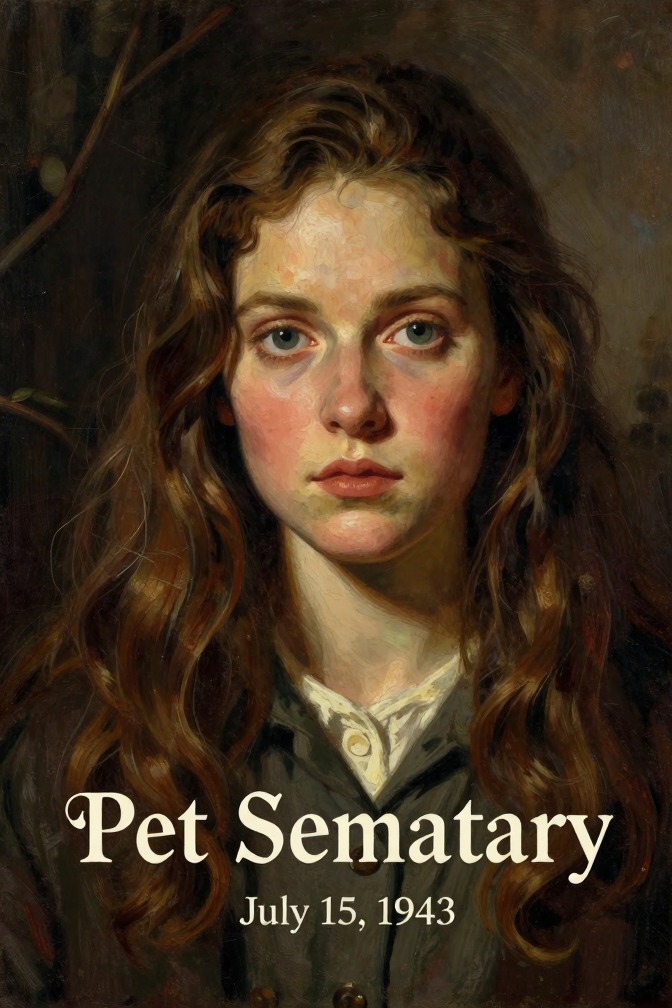
July 15, 1943, is the date on which Timmy Baterman, a young soldier from Ludlow, was killed in action in Italy during World War II, an event that set in motion a chain of supernatural horror when his father, Bill Baterman, used the forbidden Micmac burying ground to resurrect him, resulting in a monstrous return that ended in murder and suicide.
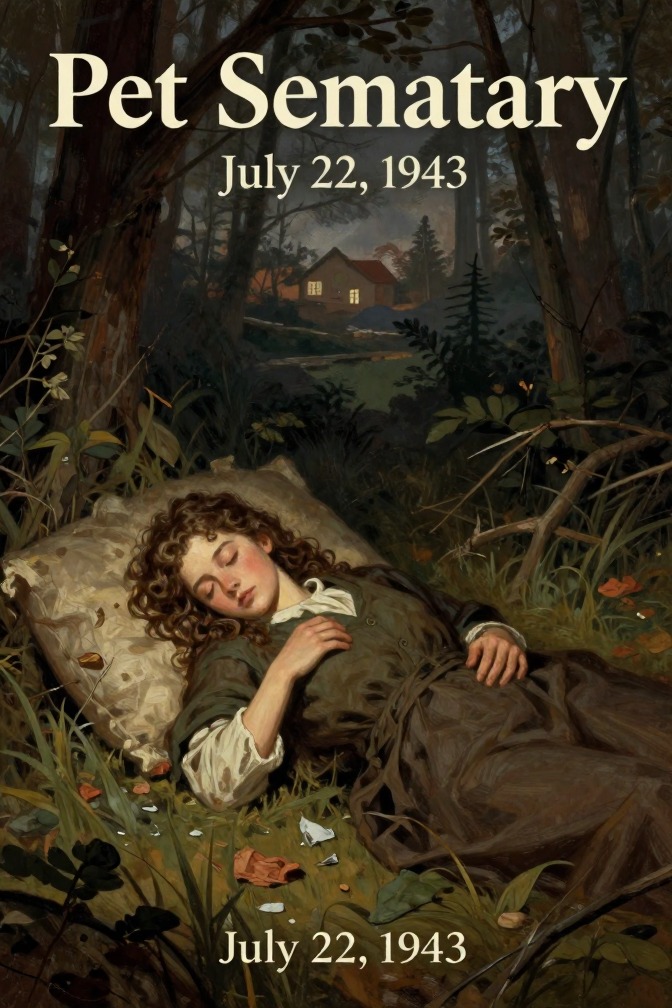
July 22, 1943, is the date on which Timmy Baterman, a young soldier from Ludlow killed in Italy, was buried with full military honors in Pleasantview Cemetery—an event that set the stage for his father Bill Baterman's secret exhumation and the disastrous resurrection that followed, a cautionary tale that Jud Crandall later recounted to Louis Creed to warn him against using the Micmac burying ground for human beings.
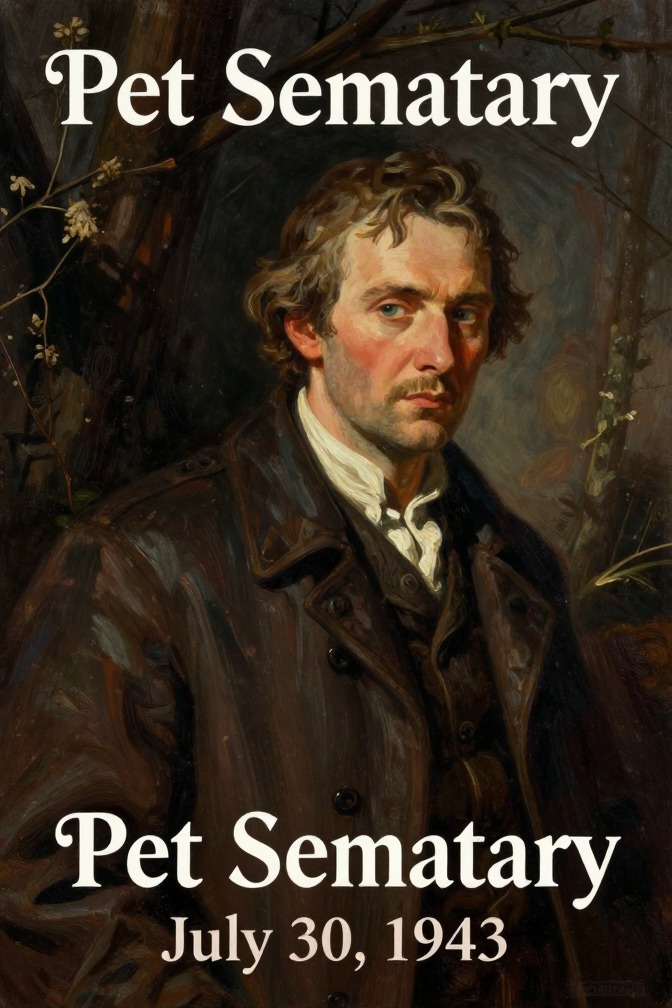
July 30, 1943, is the date on which Jud Crandall, along with three other Ludlow men, confronted Bill Baterman and his resurrected son Timmy at the Baterman home, an event that crystallized the horror of the Micmac burying ground's power and became the central cautionary tale Jud later told Louis Creed.
May 17, 1984, is the date of Gage Creed's funeral, the day that marks the formal end of the Creed family's public mourning and the beginning of Louis Creed's secret, desperate plan to resurrect his son from the Micmac burying ground beyond the Pet Sematary.
New Year's Eve marks the final social gathering of the Creed and Crandall families before Norma Crandall's death, a quiet evening of eggnog and companionship that, in retrospect, reveals Norma's declining health and the fragile happiness of the Creed household before the tragedies of the following year.
November 22 is the day before Thanksgiving 1983, when Louis Creed drives his family to Bangor International Airport and sees them off on a flight to Chicago for a holiday visit with Rachel's parents, the Goldmans. Louis stays behind in Ludlow, ostensibly because of work but actually to avoid his hostile father-in-law, Irwin Goldman. This departure leaves Louis alone in the house, setting the stage for the death of the family cat Church later that same evening and the subsequent night journey to the Micmac burying ground.
Spring in Ludlow, Maine, arrives in the narrative as a season of tentative renewal and fragile hope following the long winter of grief and horror that has engulfed the Creed family. It is the season in which Louis Creed experiences his last truly happy day—March 24, 1984—when he flies a kite with his son Gage in Mrs. Vinton's field, a moment of pure, unselfconscious joy that stands in stark contrast to the catastrophe that will follow. Spring also marks the thawing of the ground, the return of migratory birds, and the literal and metaphorical blooming of the Micmac burying ground's dark power, which grows in strength as the season advances, ultimately enabling the resurrection of the dead and the destruction of the Creed family.
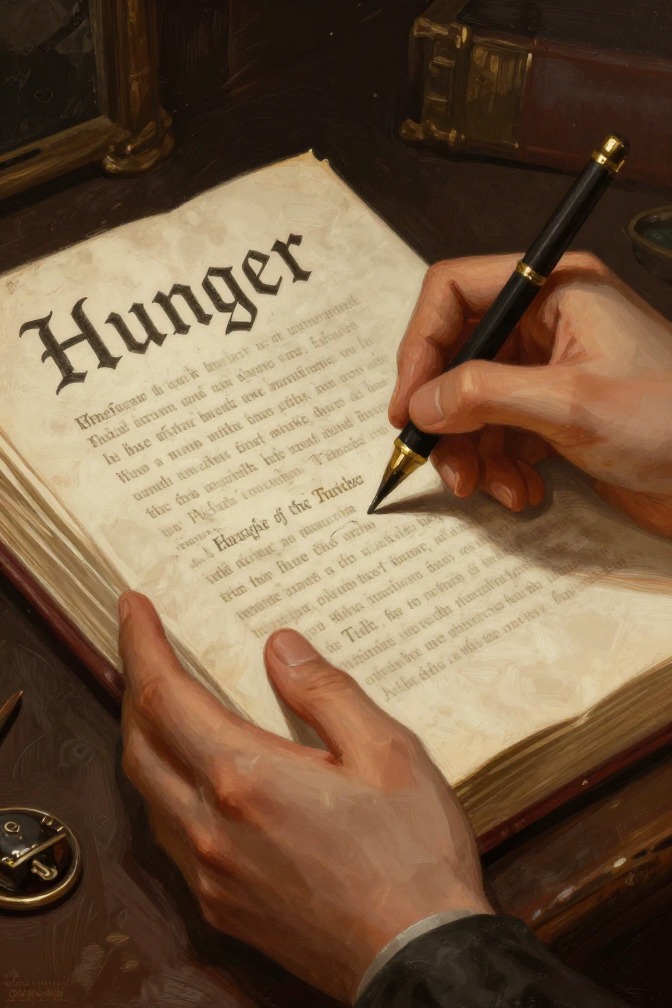
The protagonist destroys his own manuscript in a fit of despair and rage after failing to complete it, an act that crystallizes his mounting frustration, creative impotence, and the physical and psychological toll of starvation.
The narrator pawns his waistcoat to give money to a beggar, an act that briefly lifts his spirits but also exposes his precarious dignity and the absurdity of his poverty.
The Commandor, a newspaper editor, gives the starving protagonist half-a-sovereign in a spontaneous act of charity that saves his life and briefly restores his hope, but the gift also deepens his shame and sets off a chain of moral and psychological crises.
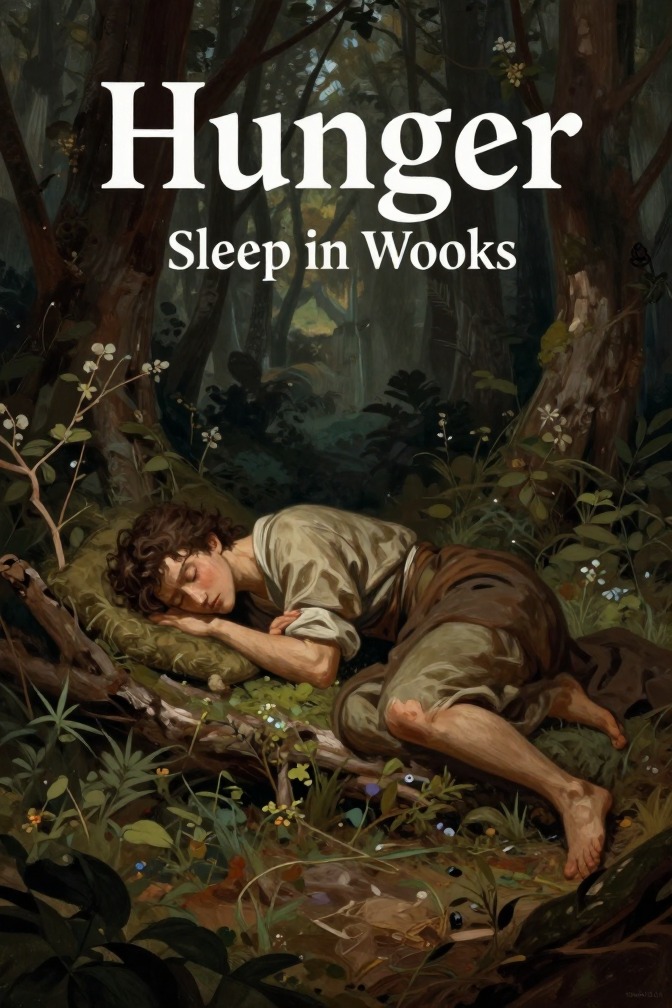
The protagonist's desperate attempt to sleep in Bogstad's Wood after exhausting all other options for shelter marks a critical low point in his physical and psychological decline, exposing the raw vulnerability of homelessness and the onset of hallucinatory delirium.
The protagonist's stay at a lodging house in Vaterland marks a period of precarious shelter, deepening poverty, and failed creative efforts, culminating in his eviction and final departure from Christiania.
The Five Shillings Theft is a pivotal action in Knut Hamsun's *Hunger*, where the starving narrator, in a moment of confusion and desperation, accepts five shillings in change from a shopkeeper who mistakenly believes he has paid for a candle. This act, his first outright theft, marks a profound moral crisis and a turning point in his descent, as he grapples with guilt, shame, and the erosion of his honor.
The narrator's visit to Ylajali's apartment on Tuesday evening is the story's most intimate and emotionally volatile encounter, where a night of flirtation, confession, and physical tenderness collapses into mutual fear and misunderstanding, revealing the unbridgeable gap between his desperate poverty and her sheltered world.
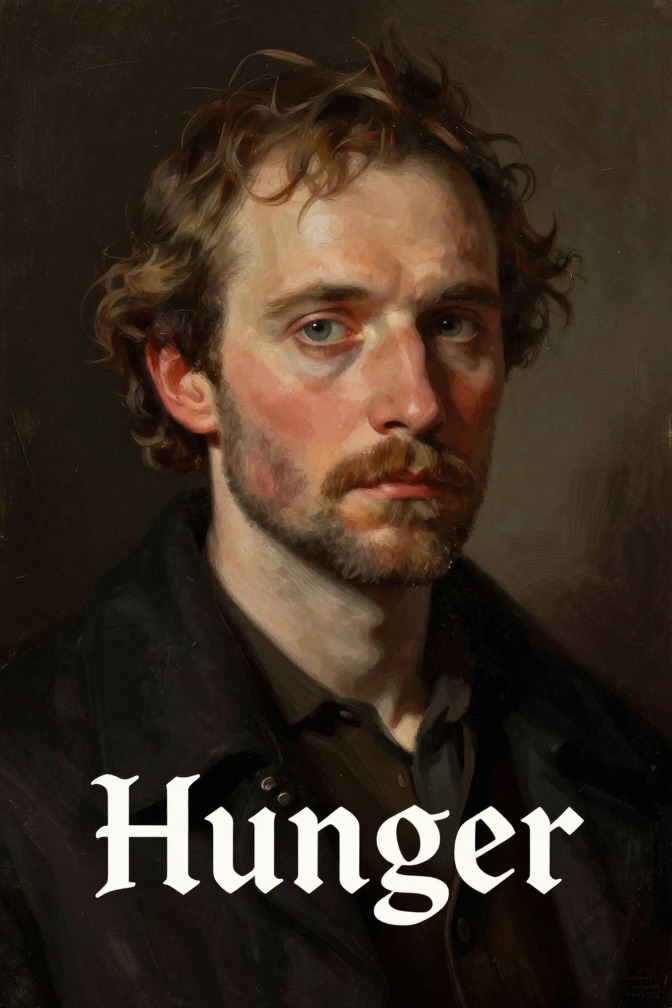
Andreas Tangen is the pseudonymous, starving narrator and protagonist of Knut Hamsun's novel *Hunger*, a young writer in Christiania whose desperate struggle for food and shelter drives him to the brink of madness and forces him to confront the limits of his own honor and creativity.
Cisler is a music-seller in Christiania whom the starving narrator approaches for a loan in Part II of Hunger, only to be met with a curt refusal that deepens his humiliation and sense of utter abandonment.
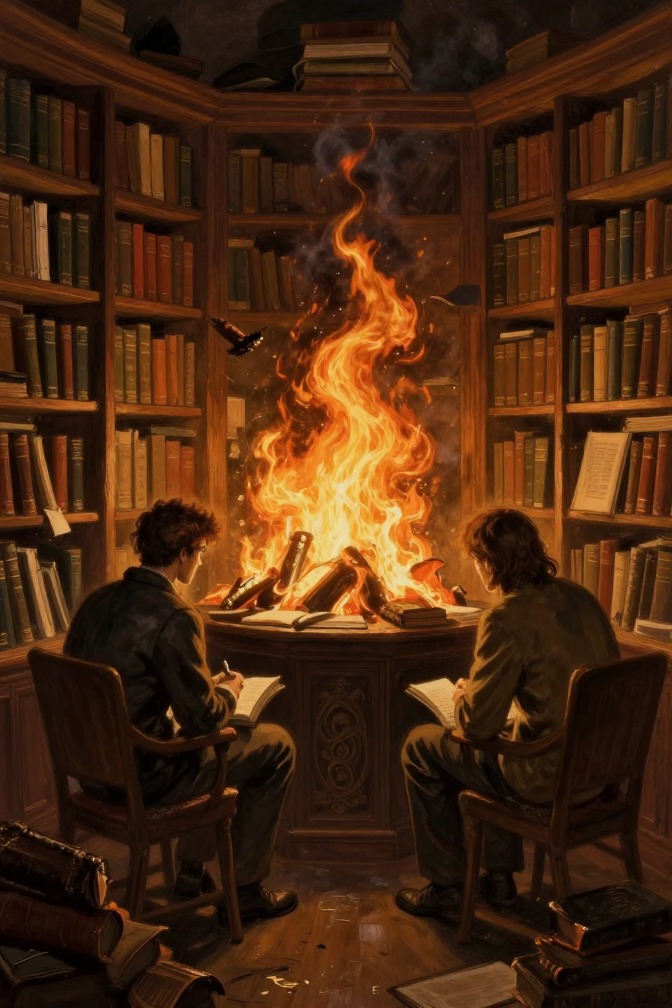
The Allegory of a Conflagration in a Bookshop is an unfinished literary work conceived by the starving protagonist of Knut Hamsun's *Hunger*, representing his final, desperate attempt to produce a commercially viable piece of writing and his ultimate confrontation with creative and physical collapse.
Conscience is a central, agonizing force in Knut Hamsun's *Hunger*, functioning as the protagonist's internal moral compass that he repeatedly tests, violates, and reaffirms throughout his descent into starvation and degradation. It is not a static principle but a dynamic, often painful presence that shapes his identity, drives his actions, and ultimately defines his sense of self-worth against the backdrop of extreme poverty.
Honor is the central moral axis of Knut Hamsun's *Hunger*, a fragile, internalized code that the starving narrator repeatedly tests, violates, and reasserts as his physical deprivation deepens. It functions as both his last claim to dignity and the source of his most acute suffering, driving the novel's psychological drama.
The Evening at Ylajali's Apartment is the pivotal romantic and psychological climax of the novel, where the starving protagonist is invited into the home of the mysterious woman he has been obsessively following, leading to an intimate encounter that exposes his profound physical and moral degradation, his desperate need for connection, and the insurmountable gap between his inner world and the social reality he inhabits.
The Five Shillings Theft is a pivotal event in Knut Hamsun's *Hunger* in which the starving narrator, desperate and disoriented, inadvertently accepts five shillings in change from a provision shop boy who mistakenly believes he has already paid for a candle. The narrator keeps the money, spends it on a meal, and is immediately consumed by guilt, shame, and fear of discovery. This episode marks his first deliberate dishonesty and becomes a moral crisis that he attempts to resolve by giving the money away to a cake vendor, only to later confess the theft to the shop boy in a fit of anguished pride. The event crystallizes the novel's central tension between the narrator's hunger-driven survival instincts and his fragile, fiercely guarded sense of honor.
The Happolati Invention is a pivotal episode in Part I of Knut Hamsun's *Hunger*, in which the starving narrator, driven by curiosity and a volatile mood, fabricates an elaborate fictional identity for a man named Happolati and his family during a chance encounter with an old man in a park, escalating his lies into a manic performance that reveals his psychological unraveling.
The half-sovereign is a recurring unit of currency in Knut Hamsun's *Hunger* that functions as a threshold between survival and collapse, a measure of the protagonist's fluctuating fortunes, and a charged object around which questions of honor, shame, and human connection crystallize. It appears at decisive moments: as the hoped-for payment for an accepted story, as a gift from the editor that staves off death, and as an anonymous alms from Ylajali that the protagonist first throws away in a fit of pride and then bitterly regrets losing.
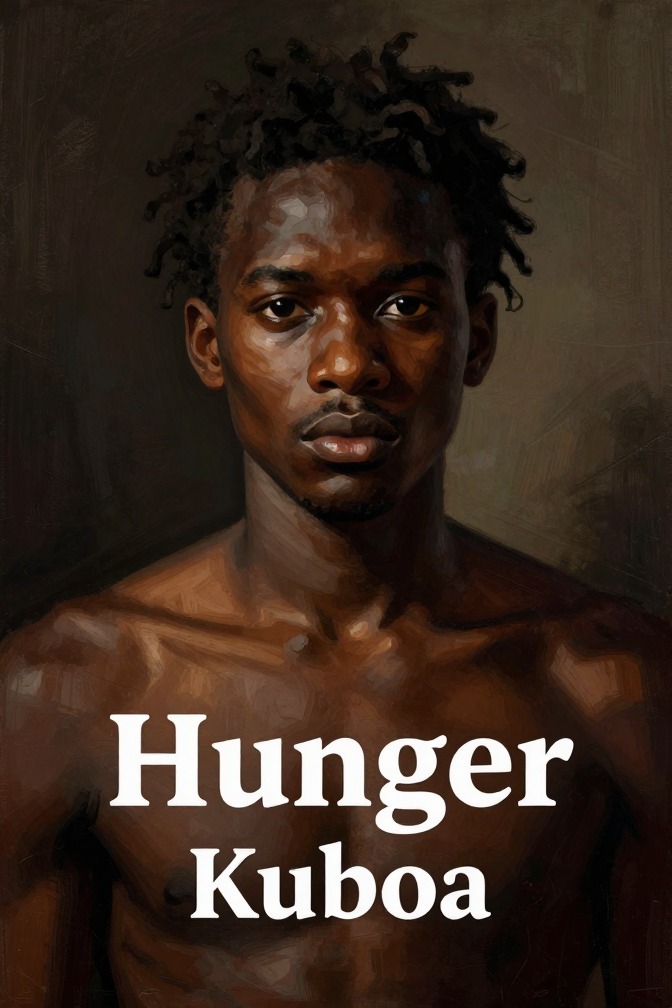
Kuboa is a word invented by the starving narrator during a sleepless night in a police cell, representing a moment of linguistic delirium and psychological fragmentation that reveals the profound effects of extreme hunger on cognition and identity.
Uncle is the narrator's recurring euphemism for the pawnbroker in Knut Hamsun's *Hunger*, a figure who systematically consumes the protagonist's possessions as he descends into destitution, symbolizing the relentless erosion of his material existence and dignity.
Bogstad's Wood is the forested area outside Christiania where the starving narrator spends a desperate night after being locked out of his lodging, a key location that dramatizes his physical and psychological collapse.
Our Saviour's Cemetery is a recurring location in Knut Hamsun's *Hunger*, serving as a site of refuge, creative struggle, and psychological deterioration for the unnamed protagonist during his wanderings through Christiania.
The Shaving Book is a small booklet of barber's tickets that the protagonist carries as a token of residual respectability and a last material resource, which he ultimately attempts to barter for food during his starvation in Christiania.
Aftenpost is a Christiania newspaper that the protagonist reads for situation-vacant advertisements and whose posted edition he consults during his wanderings, serving as a recurring marker of his desperate search for employment and his deteriorating social standing.
Morgenbladet is the newspaper whose old issues paper the walls of the narrator's attic room in Christiania, serving as a constant visual reminder of his poverty and isolation, and later becoming a key element in his false identity when he claims to be a journalist for the paper during a night in the guard-house.