Kuboa
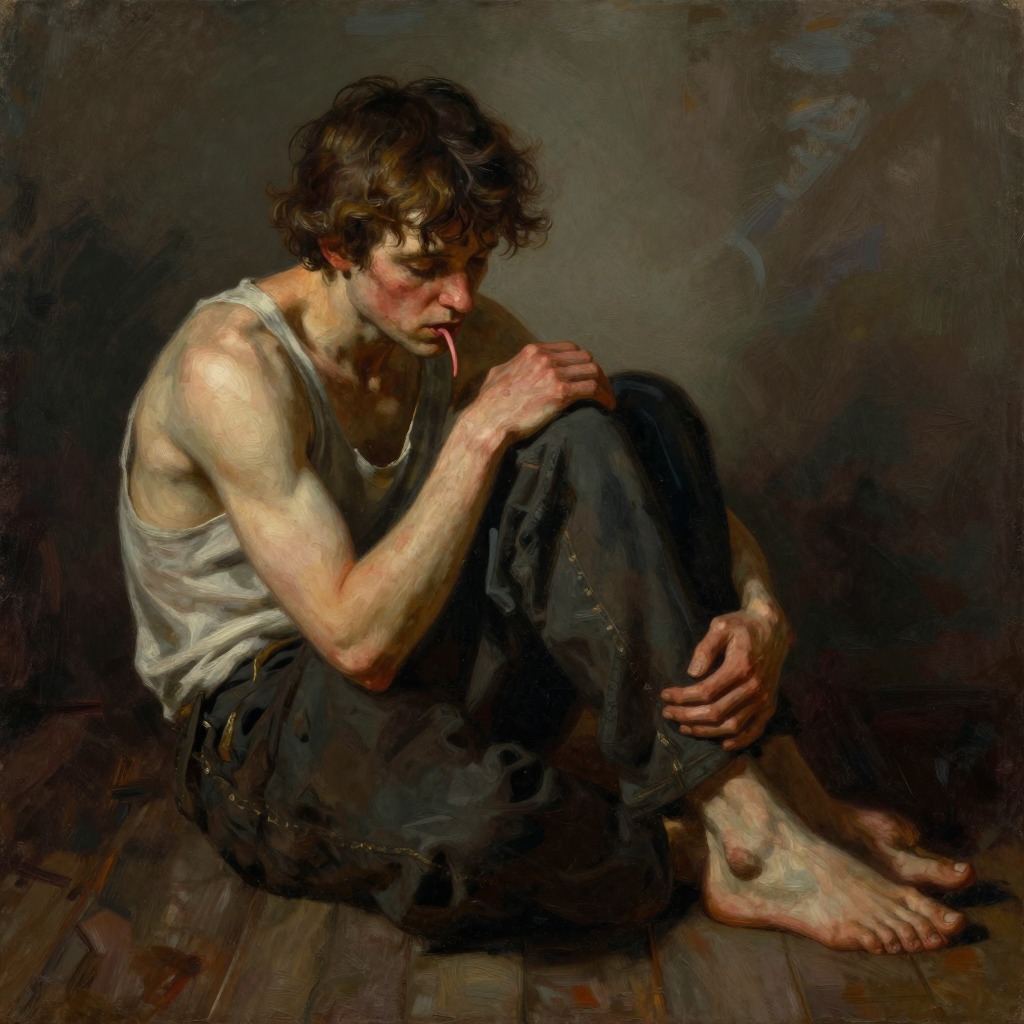
Kuboa is a word invented by the starving narrator during a sleepless night in a police cell, a linguistic creation that crystallizes the intersection of hunger, madness, and the desperate search for meaning. This invented term, which emerges unbidden from a mind pushed to its limits by prolonged starvation, becomes a focal point for the narrator's unraveling rationality and his struggle to maintain a coherent sense of self. The word's appearance and the narrator's subsequent obsession with defining it serve as a powerful emblem of how extreme deprivation can shatter the most fundamental structures of thought and language.
Origin and Discovery
The word Kuboa springs into the narrator's consciousness during his second night in a police cell, a night of profound darkness and psychological torment. After the gaslight in his cell goes out with "a strange suddenness, without diminishing or flickering," he finds himself in "the deepest darkness" where he cannot see his hand or the white walls. Lying awake, unable to sleep, he becomes increasingly agitated by the oppressive darkness, which he perceives as "a desperate element to which no one had hitherto paid attention." In this state of heightened nervousness and sensory deprivation, he suddenly snaps his fingers and laughs, exclaiming that he has discovered a new word. "It is not in the language; I have discovered it. 'Kuboa.' It has letters as a word has. By the benign God, man, you have discovered a word!... 'Kuboa' ... a word of profound import." The narrator sits with open eyes, amazed at his own find, laughing for joy, and immediately begins to whisper, intending to keep his discovery a secret. This moment of linguistic invention occurs within the "joyous frenzy of hunger," a state where he feels "empty and free from pain" and gives free rein to his thoughts.
The Struggle for Meaning
Having discovered the word, the narrator immediately becomes consumed with the task of assigning it meaning. He revolves things in his mind "with the most singular jerks in his chain of ideas," seeking to explain what Kuboa signifies. He considers and rejects several possibilities: it need not mean God or the Tivoli, nor cattle show, padlock, or sunrise. The narrator clenches his hands fiercely and repeats, "Who said that it was to signify cattle show?" He decides that finding a meaning for such a word is not difficult and that he will wait and see, planning to sleep on it. However, the word torments him unceasingly, returning again and again, taking up his thoughts and making him serious. He has "fully formed an opinion as to what it should not signify, but had come to no conclusion as to what it should signify." He tells himself aloud that this is "quite a matter of detail," that the word itself has been found, and that is the principal thing. Yet ideas worry him without end and hinder him from falling asleep, as nothing seems good enough for this "unusually rare word." He sits up in bed, grasps his head in both hands, and declares that it is impossible to let Kuboa signify emigration or tobacco factory, as he would have decided on that long ago if it could have meant anything like that. He concludes that the word is fitted to signify something psychical, a feeling, a state, and he reflects profoundly to find something psychical.
Descent into Confusion
The narrator's attempt to define Kuboa leads to increasing mental chaos. As he struggles with the word, he feels that someone is interposing, interrupting his confabulation. He responds angrily, "Beg pardon! Your match in idiocy is not to be found; no, sir! Knitting cotton? Ah! go to hell!" He laughs at the absurdity of being forced to let Kuboa signify knitting cotton when he has a special dislike for that meaning, asserting that since he discovered the word himself, he is perfectly within his right to let it signify whatever he pleases. But his brain gets more and more confused. He springs out of bed to look for the water-tap, not because he is thirsty, but because his head is in a fever and he feels an instinctive longing for water. After drinking, he gets back into bed and determines with all his might to settle to sleep, closing his eyes and forcing himself to keep quiet. He lies thus for some minutes without making a movement, sweating and feeling his blood jerk violently through his veins. The word continues to haunt him, and he finds himself thinking about the paper cornet trick he played on the policeman, the pearly blue sea, and the ships. He opens his eyes, unable to keep them shut when he cannot sleep, and the same unfathomable black eternity broods over him, his thoughts striving against it and unable to understand it.
The Crisis of Sanity
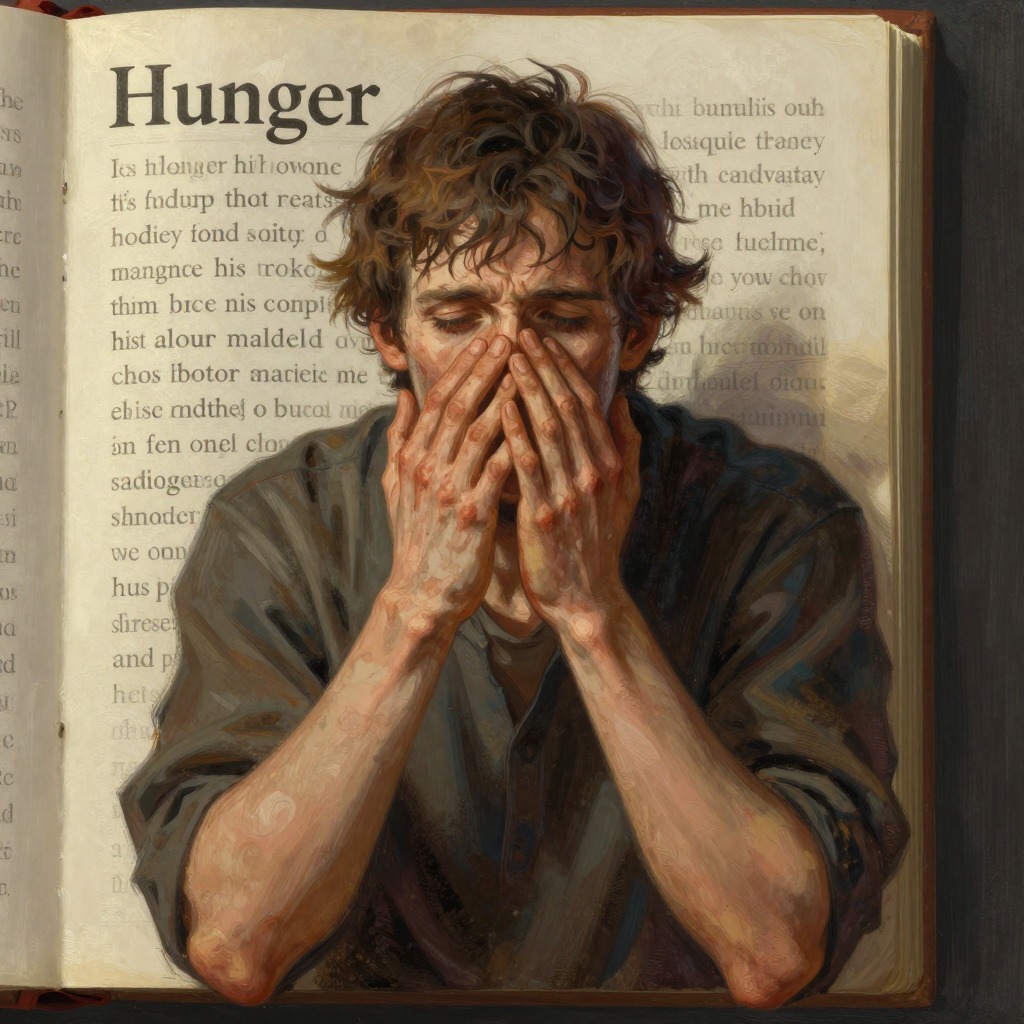
The obsession with Kuboa precipitates a crisis in which the narrator questions his own sanity. He starts up in bed and asks severely, "If I found the word, am I not absolutely within my right to decide myself what it is to signify?" He can hear himself that he is raving, that his madness is "a delirium of weakness and prostration," but he insists he is not out of his senses. Suddenly, the thought darts through his brain that he is insane. Seized with terror, he springs out of bed again, staggers to the door, tries to open it, flings himself against it a couple of times to burst it, strikes his head against the wall, bewails loudly, bites his fingers, cries, and curses. All is quiet; only his own voice echoes from the walls. He falls to the floor, incapable of stumbling about the cell any longer. Lying there, he catches a glimpse of a greyish square in the wall, a suggestion of white, a presage of daylight. He feels it must be daylight through every pore in his body and draws a breath of delighted relief, flinging himself flat on the floor and crying for very joy over this blessed glimpse of light, sobbing for gratitude, blowing a kiss to the window, and conducting himself like a maniac, all while being perfectly conscious of what he is doing. All his dejection vanishes, all despair and pain cease, and he has, at least as far as his thought reaches, not a wish unfilled. He sits up on the floor, folds his hands, and waits patiently for the dawn.
Significance
Kuboa stands as a testament to the narrator's psychological disintegration under the pressure of extreme hunger and isolation. The word's invention and the subsequent frantic search for its meaning mirror the narrator's broader struggle to impose order on a reality that has become increasingly chaotic and unbearable. The fact that Kuboa ultimately remains undefined, a signifier without a signified, underscores the emptiness at the core of the narrator's existence and the failure of language to adequately capture or contain his suffering. The word becomes a symptom of his condition, a linguistic manifestation of the void left by prolonged starvation and social abandonment. Its appearance in the narrative marks a critical threshold where the narrator's grip on rationality begins to slip, and his ability to distinguish between meaningful thought and delirious fantasy becomes dangerously compromised. The episode with Kuboa thus serves as a microcosm of the novel's central concern: the fragility of the self when stripped of the basic necessities of life, and the desperate, often futile, attempts of the mind to create meaning in the face of overwhelming nothingness.