Uncle
Uncle is the narrator's recurring euphemism for the pawnbroker in Knut Hamsun's Hunger, a figure who systematically consumes the protagonist's possessions as he descends into destitution, symbolizing the relentless erosion of his material existence and dignity. The term appears throughout the novel as a bitter, ironic shorthand for the pawnshop, the last resort for a starving writer who has nothing left to sell but the remnants of his former life.
Identity and Function
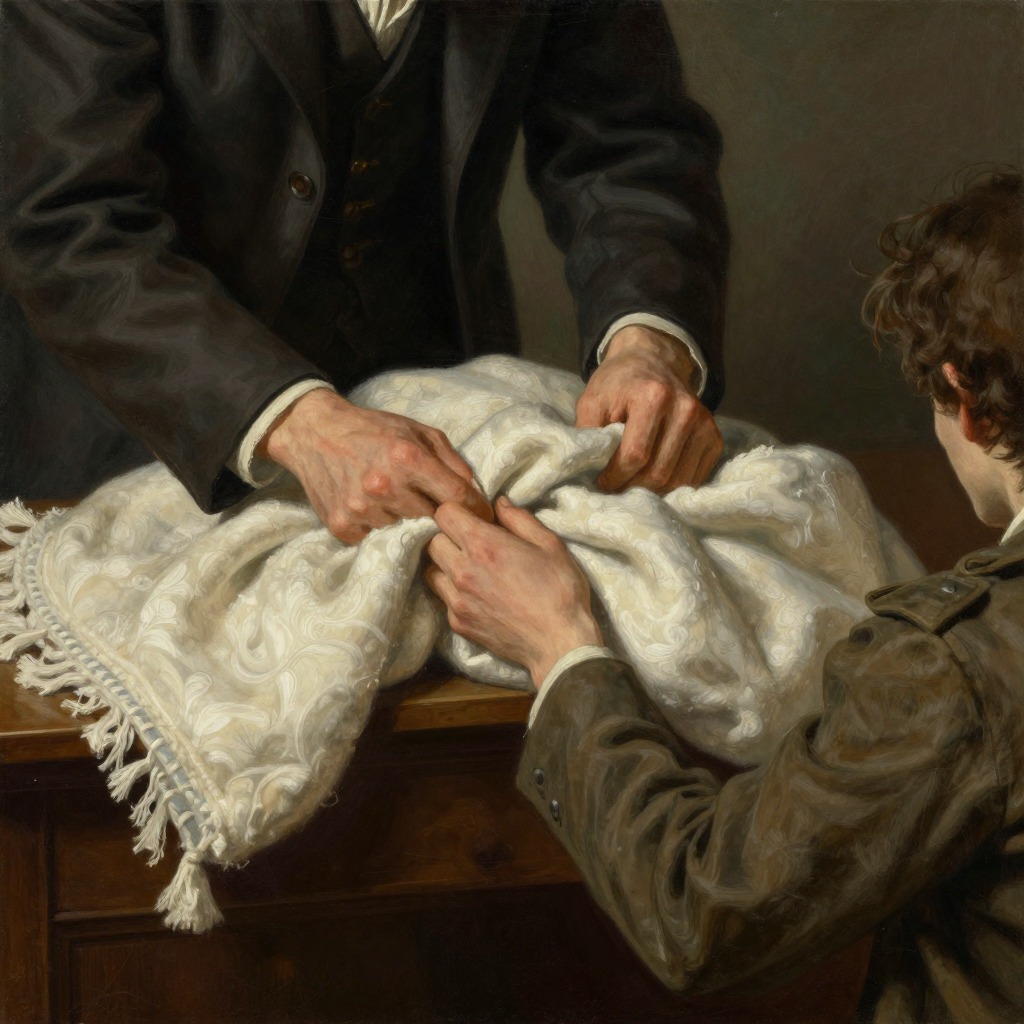
The narrator first invokes Uncle in the opening pages of Part I, reflecting on his recent hardships: "one after the other of my belongings had been taken to my 'Uncle'" . The pawnbroker is never named; he is simply "Uncle," a familial term that masks the cold, transactional nature of the relationship. The narrator's belongings—his waistcoat, his books, his watch, even a diary containing his first poetic attempt—all pass through Uncle's hands. The pawnshop is located on a second floor in Pyle Street, a place the narrator visits repeatedly, each time surrendering another piece of himself. The pawnbroker himself is described as a man who "came smilingly over to me, as was his wont, laid both his hands flat on the counter, and looked at my face without saying anything" , a demeanor that mixes professional courtesy with quiet judgment.
The Systematic Consumption of Possessions
Uncle's role is not merely transactional but cumulative and destructive. The narrator's possessions vanish one by one: his waistcoat, pawned for one shilling and sixpence to help a beggar (E00080–E00083); his books, sold at auction where he watches "to rejoice each time my books seemed likely to fall into good hands" ; his watch, bought by an actor named Magelsen, a fact that fills the narrator with "almost proud" satisfaction ; his topcoat, which ends up in a photographer's studio . The diary with his first poem is bought by an acquaintance . Each item carries a memory, a fragment of identity, and Uncle consumes them all. The narrator's room becomes increasingly bare: "I had not even a comb left, not even a book to read" . The green blanket he sleeps under is borrowed from Hans Pauli Pettersen, not his own . Uncle's shop is the final destination for everything the narrator once owned.
The Failed Attempts to Pawn Worthless Items
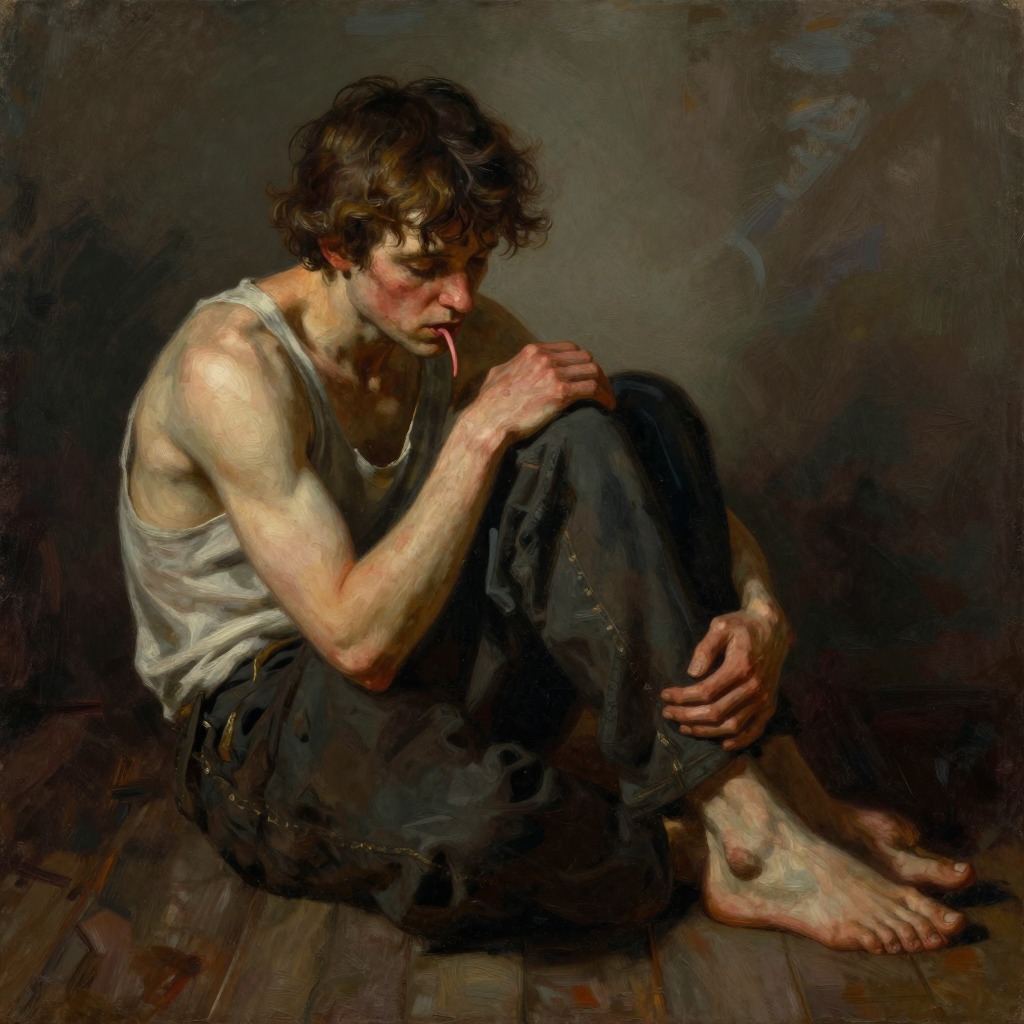
As the narrator's resources dwindle, he tries to pawn objects of diminishing value, and Uncle's refusals mark the narrator's descent into absolute poverty. In Part II, the narrator attempts to pawn his eyeglasses, but Uncle tells him, "You know quite well I can't lend you anything on your glasses; I told you that once before" . The narrator then offers a handful of buttons, hoping for "a couple of halfpence," but Uncle "burst out laughing, and returned to his desk without saying a word" . The narrator's final plea—"I want a stamp... a penny or a halfpenny stamp"—is met with dismissal: "Oh, God help you, go your way!" (E00627–E00628). These scenes are not just about failed transactions; they are rituals of humiliation. The narrator's body itself becomes a site of shame: his clothes are shabby, his shoes are "as wide as a dog's house" , and he has no waistcoat, forcing him to hide his bare chest when meeting the editor . Uncle's laughter at the buttons is a death sentence, a confirmation that the narrator has nothing left of value.
The Emotional and Symbolic Weight
Uncle is more than a character; he is a symbol of the narrator's degradation and the relentless logic of poverty. The narrator's relationship with Uncle is marked by a strange, almost affectionate familiarity. He knows the pawnshop's layout, its auction days, and the fate of his belongings. He even feels a perverse pride when his watch falls into good hands. Yet Uncle's refusals are devastating. After being laughed at for the buttons, the narrator thinks, "This laughter was my death-warrant" . The pawnbroker's rejection of the narrator's glasses and buttons is not just a financial refusal; it is a judgment on the narrator's worth. The narrator's internal struggle over whether to pawn Hans Pauli's blanket—a borrowed item—becomes a crisis of conscience, a test of his remaining honor (E00301–E00303). He ultimately cannot bring himself to do it, but the temptation itself reveals how far he has fallen.
The Final Break
In Part IV, the narrator's relationship with Uncle reaches its end. After being thrown out of his lodging house, he wanders the streets, and the thought of Uncle recurs: "I liked to go there on auction days, to look on, and rejoice each time my books seemed likely to fall into good hands" . But by this point, the narrator has nothing left to pawn. His final encounter with the pawnbroker is a memory, not a transaction. Uncle has consumed everything, and the narrator is left with nothing but his own body and the hunger that defines him. The term "Uncle" itself fades from the narrative as the narrator's material existence is stripped away, leaving only the bare struggle for survival.
Narrative Significance
Uncle functions as a structural and thematic anchor in Hunger. The pawnshop is a recurring destination, a place the narrator returns to again and again, each time with less to offer. It is a measure of his decline: from pawning a waistcoat for one shilling and sixpence to offering buttons that are laughed at. Uncle's refusals mark the narrator's fall from a person with possessions to a person with nothing. The euphemism "Uncle" itself is a form of denial, a way of domesticating the brutal reality of poverty. It is a word the narrator uses to distance himself from the shame of pawning, to pretend that he is not selling his belongings but merely visiting a relative. In the end, Uncle is not a person but a process—the slow, systematic stripping away of everything the narrator has, until he is left with nothing but his hunger and his pride.