Canton
BabelCanton is the geographic and emotional point at which Robin Swift’s personal history meets the larger forces of empire. It is presented as a city of linguistic exchange and commercial violence, a place where illness can erase a household, where language offers a child his first livelihood, and where the return of an estranged native son produces not catharsis but emptiness.
Childhood, Disease, and Loss
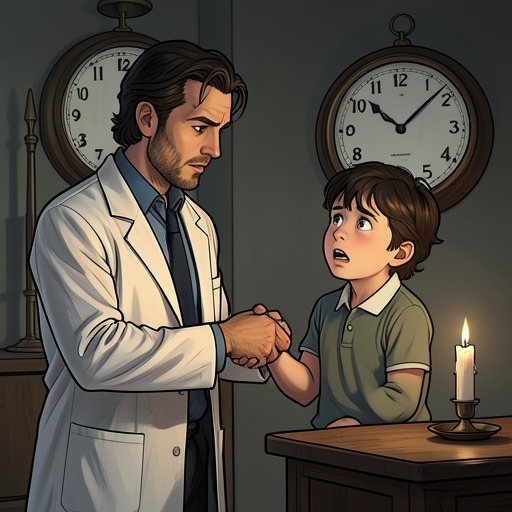
Canton first appears through the catastrophe that makes Robin’s later life possible. When Professor Richard Linton Lovell reaches a faded address in the city’s narrow alleys, Robin is the only person in the house still alive. The air is rank, the floors slippery, and a full jug of water remains untouched beside the bed because the boy is too weak to lift it. He is conscious but drifting toward the fatal sleep that had already taken his grandparents, his aunts, and Miss Betty, an Englishwoman who died a day after them.
Robin’s mother has perished that same morning. He lies beside her body as the blues and purples deepen across her skin, trying unsuccessfully to close her filmy eyes after her final breathless attempt to say his name. Canton is therefore not introduced as an abstract homeland or picturesque port, but as the intimate scene of orphanhood: a domestic space made uninhabitable by disease, where familial succession ends one death at a time.
A Harbour of Languages
The city’s harbour is also the place where Robin first encounters language as a practical means of survival. Canton’s waterfront is described as a universe of Portuguese, French, Dutch, Swedish, Danish, English, and Chinese, all mingling in a mutually intelligible pidgin that many understand but few speak with ease. Robin learns this hybrid speech while running among the quays, translating for sailors in exchange for pennies and smiles.
That early experience gives Canton a distinctive linguistic character. The harbour is not merely a boundary between China and the outside world; it is a noisy intermediary zone in which languages meet, fracture, and become useful. Robin’s childhood fluency in the waterfront pidgin later enables his education and mobility, while the city’s multilingual commerce foreshadows the novel’s wider connection between translation and imperial power.
Departure and Return
Two days after Professor Richard Linton Lovell gives him the name Robin Swift, Robin leaves Canton for London with Professor Richard Linton Lovell and Mrs Piper. Rest, hot milk, and Mrs Piper’s abundant cooking have made him strong enough to walk, though he still struggles up the gangplank under the weight of a trunk filled with books. He boards the Countess of Harcourt, an East India Company ship carrying a small number of commercial passengers.
The departure places Canton at the beginning of Robin’s adopted identity. The boy rescued from the city is renamed, educated, and carried toward the imperial centre, while the linguistic fragments learned on its docks are redirected into a more formal system of knowledge. Canton remains behind as both origin and absence: the place Robin has survived, but not yet learned how to remember.
A decade later, Robin approaches Canton again from the sea. At sunrise, the mists open onto a thin strip of green and grey that gradually becomes a coast, then buildings, then a mass of ships gathered where the Middle Kingdom encounters the world. The sight is his first view of his motherland in ten years. Yet the expected emotional return does not occur. As Letty compares his face with those of the dockworkers, Robin feels nothing stir in his chest; after a lifetime away, he experiences only emptiness.
Riverfront Commerce and Imperial Conflict
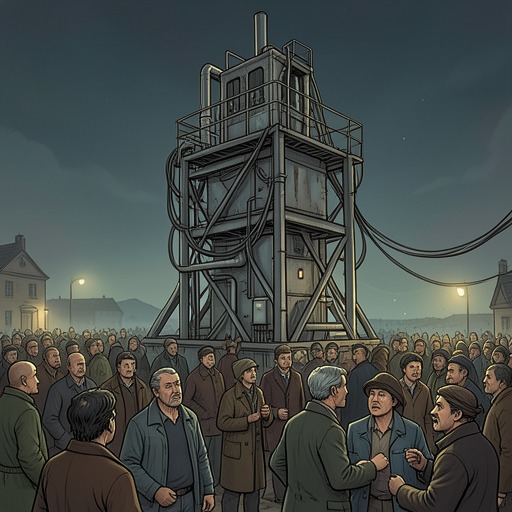
The return journey exposes a city louder and busier than the one Robin remembers. After anchoring at Whampoa, the travelers transfer to smaller boats and continue along Canton’s riverfront, surrounded by the rumbling and humming of gongs, firecrackers, and shouting boatmen. Robin cannot recall such a din from childhood, leaving open whether Canton has grown busier or whether exile has made his ears unaccustomed to its sounds.
At Jackass Point, Mr Baylis, their liaison with Jardine, Matheson & Company, meets the party. He reports that the situation is a disaster for European commercial interests: Chinese authorities have broken up distribution rings, bombed one of the fast crabs in the harbour, and begun crackdowns that threaten to make trade impossible. His alarm reveals the riverfront as a contested economic space, where the movement of goods depends on smuggling networks and where commercial privilege is already being challenged by organized resistance.
Canton thus contains two overlapping histories. For Robin, it is the house of the dead, the harbour of childhood language, and the shore that fails to restore a lost sense of belonging. For the foreign merchants and their representatives, it is a strategic node in a volatile trading system. The city’s noise, ships, languages, and violence make visible the costs of that system: Canton is not simply the place from which imperial knowledge is collected, but the place where imperial commerce meets resistance and begins to lose its confidence.