University College, Oxford
BabelUniversity College, Oxford is Robin Swift’s assigned college after his arrival in Oxford, and it becomes the first physical shape of his new life. Commonly called “Univ,” it houses every student enrolled in the Royal Institute of Translation. Its Gothic architecture, inherited traditions, social hierarchy, and lavish public rituals make it both a home and a concentrated image of Oxford itself: beautiful, wealthy, self-conscious, and sustained by institutions that convert learning and prestige into power.
Setting and Character
University College, Oxford stands among the twenty-two colleges that compose Oxford, each possessing its own residential buildings, coat of arms, dining hall, customs, and traditions. The most richly endowed colleges, including Christ Church, Trinity, St John’s, and All Souls, are praised for their grounds and resources, while poorer colleges such as Worcester and Hertford are dismissed as unattractive and badly fed. This hierarchy places Univ within a larger system in which architecture, money, food, and social reputation continually measure one another.
Robin’s guidebook describes the college as “sombre and venerable,” an appearance suited to the university’s oldest daughter. Its front wall presents a Gothic sanctuary of turrets and evenly spaced windows set into smooth white stone. The building therefore announces age and authority before Robin has encountered its academic life. It is not merely accommodation: its appearance gives institutional tradition a visible body, making the past seem built into the walls through which the new student must pass.
Robin’s Arrival
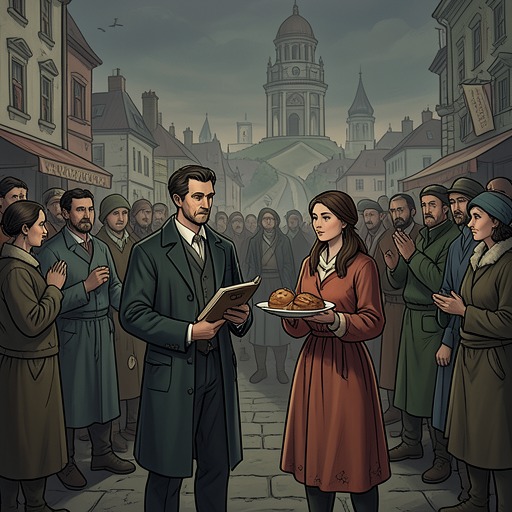
Robin reaches University College after the final stage of his journey from London. The coach enters Oxford over cobblestones and stops on High Street before the walled gates of his new home. Professor Richard Linton Lovell helps him collect his keys at the porter’s lodge and drag his trunks from High Street to the pavement, completing the practical business of admission while struggling with the emotional awkwardness of their parting. He tells Robin to explore the city, find the other members of his cohort, and visit him and Mrs Piper in Jericho after she joins him there.
Robin’s lodgings are at Number 4, Magpie Lane, a green-painted building halfway down the crooked, narrow alley linking High Street and Merton Street. The house is close enough to Univ to function as part of the college environment while also becoming a small community of its own. A new student is already at the door when Robin arrives, with satchels and trunks scattered over the cobblestones; this encounter begins Robin’s Oxford association with Ramiz Rafi Mirza, whose appearance immediately marks him as someone from outside England, just as Robin’s own foreignness is silently assessed in return.
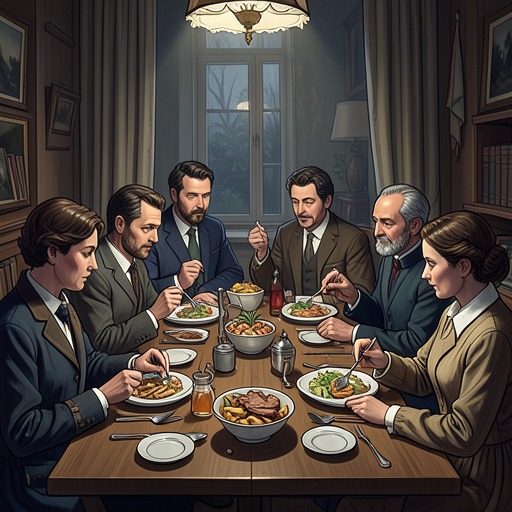
The house fills over the weekend with residents who are not translation students: Colin Thornhill, an expansive solicitor-in-training; Bill Jameson, an affable red-haired medical student anxious about expenses; and the twin brothers Edgar and Edward Sharp, second-year Classics students who openly treat university as a period of social life before inheriting money. Their presence shows that Univ is not a sealed academic enclave. Its residential world brings together students pursuing different futures and exposes Robin to class attitudes, financial unease, inherited privilege, and the rituals of undergraduate sociability.
Architecture and Collections
Robin and Ramy spend their third day touring Oxford’s principal institutions, and University College appears within a city undergoing constant expansion. In 1836, colleges are renovating, acquiring land, replacing medieval structures, and building libraries for newly purchased collections. Almost every prominent building bears the name of a wealthy or powerful benefactor rather than a practical description, revealing how the university’s physical beauty is inseparable from money and patronage.
The tour takes in the Ashmolean Museum, with its collection of curiosities including a dodo’s head, a hippopotamus skull, and the supposed horn of an old woman from Cheshire; the Radcliffe Library, whose interior seems larger and grander than its dome promises from outside; and the Sheldonian Theatre, watched over by stone busts called the Emperor Heads. The Bodleian Library is presented as a national treasure, holding England’s largest manuscript collection and expanding under Reverend Doctor Bulkeley Bandinel, whose annual book-buying budget approaches £2,000. These institutions establish the scale of the knowledge-world into which Robin and Ramy have entered: abundance is awe-inspiring, but its accumulation is also visibly financed and administered.
A senior porter, Billings, reveals that Robin and Ramy have seen only a small portion of their new home. University College contains two green quadrangles and stone buildings arranged like castle keeps. As he leads them through the college, Billings recites the histories of donors, architects, and other figures associated with the site. Statues over the entrances represent Queen Anne and Queen Mary; inside are James II and Dr Radcliffe; and the chapel’s painted windows were made by Abraham van Linge in 1640, with the east window completed by Henry Giles of York. The tour turns the college into an archive in stone and glass, where institutional memory is repeatedly attached to named patrons and makers.
The chapel’s bas-relief commemorates a University College alumnus whose 1786 work identified Proto-Indo-European as a predecessor language linking Latin, Sanskrit, and Greek. The monument connects Univ directly to the intellectual genealogy of translation and to the discipline’s most celebrated achievements. Robin and Ramy have been hearing the alumnus’s name constantly since reaching Oxford, while the alumnus’s nephew, Sterling Jones, is now perhaps the best-known translator on the continent after him. The college thus supplies both a historical foundation for translation scholarship and a living prestige that shapes the students’ expectations of one another.
Social Rituals and Institutional Life
Every three years University College holds a commemoration ball, the height of Oxford’s social calendar. The event allows colleges to display their grounds and wine cellars, enables richer institutions to flaunt their endowments, and gives poorer colleges an opportunity to compete for prestige. Its stated financial logic is that spectacle attracts wealthy alumni and encourages donations, particularly for renovations, even while colleges spend resources on an occasion from which students in need receive little benefit.
The ball’s extravagance is treated as a competition. Wine flows through the night, music continues without pause, and dancers who remain until dawn receive breakfast on silver trays. The celebration therefore makes Univ’s material abundance theatrical. Its grounds become a stage on which wealth is converted into reputation, and reputation is converted back into further wealth. Robin, Ramy, Letitia Price, and Victoire Desgraves encounter the college not only as a place of study but as a social machine that demands participation in its displays.
The Royal Institute of Translation also holds an annual garden party in the University College grounds just before the beginning of Hilary term. Faculty, students, and graduate fellows attend, and the party is described as long and unremarkable, with barely passable food and lengthy speeches. By the time Robin and his companions have attended three of them, the event has become familiar rather than exciting. Ramy nevertheless insists that attendance is mandatory because everyone is expected to appear, especially after they have been seen around Oxford by Professor Margaret Craft and others. The garden party shows how Univ’s social calendar functions as institutional surveillance: presence maintains appearances, while absence would itself become meaningful.
Narrative Significance
University College, Oxford is the threshold through which Robin enters the education, friendships, and hierarchies that govern his Oxford years. Its walls offer shelter, but they also enforce belonging through keys, gowns, ceremonies, public attendance, and inherited custom. Number 4, Magpie Lane gives him an informal domestic community, while the college’s chapel, quadrangles, collections, and commemorative events place that private life inside a much older structure.
The college’s beauty is repeatedly shadowed by the systems that produced it. Its castle-like buildings preserve donors’ names; its libraries embody the wealth required to gather knowledge; its balls turn surplus money into prestige; and its garden parties make social conformity appear voluntary while treating it as compulsory. Univ is therefore both a setting and a model of the world surrounding Robin: a place where learning is genuine and magnificent, yet inseparable from property, hierarchy, performance, and institutional power.