Rabo Karabekian and Circe Berman
BluebeardRabo Karabekian and Circe Berman become friends through a confrontation over the enormous painting he has hidden in his potato barn. Their relationship grows from months of lively but unsettled cohabitation: Circe urges Rabo to paint again and presses him to share what he has kept from the world, while he alternates between welcoming her energy and craving the quiet she disrupts. Her refusal to let him hide the work changes their acquaintance into a bond, and her recognition of the painting helps him accept the bodily source of his art.
An Uneasy Household
Circe enters Rabo’s life as a determined widow from Baltimore, staying in his house while she works on a book. Their months together bring animation and friction in equal measure. Rabo finds her exciting to have around, but also too exciting: she tells people what to do, and her brassy habit of issuing orders can unsettle the peace he wants while finishing his own book. He is sorry she is leaving and glad of it at the same time. The distinction matters to him: they have spent months as acquaintances, but have not yet become great friends.
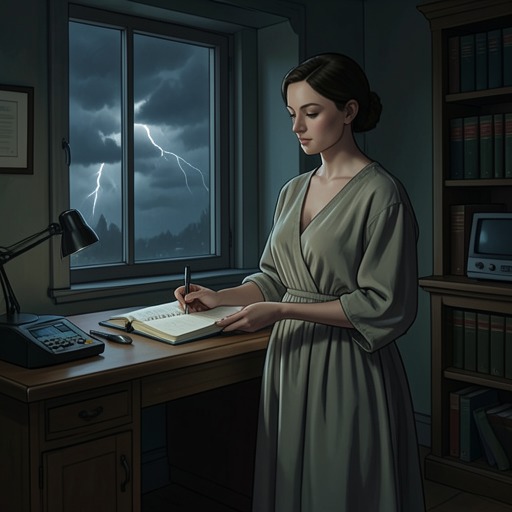
Circe’s liveliness also works against grief. She tells Rabo that writing and dancing help keep sorrow away, and that loudly correcting people and ordering them to wake up, cheer up, and get to work helps too. Her husband, whom she has recently lost, had been brilliant, funny, and adorable. Her way of occupying a room is therefore more than a taste for control: it is also one of the ways she keeps loss at bay. Rabo experiences the same behavior both as a welcome source of excitement and as a demand on his quiet.
Pressing Him Back Toward Art
Circe asks Rabo how to distinguish a good painting from a bad one, drawing him into a conversation about artistic judgment. He recalls an answer he once heard from the painter Syd Solomon, while acknowledging that it was imperfect. The question arrives at a consequential moment: Circe is not simply curious about art in general but attentive to Rabo’s own history as a painter.
At lunch, she tells him he ought to try painting again because it used to give him pleasure. Rabo says he gave the same reply to his late wife, Edith: “I have had all I can stand of not taking myself seriously.” Circe then asks what had pleased him most about his professional life, offering possibilities that range from his first one-man show and money for a painting to fellowship with other painters and critical praise. Her question directs attention away from professional achievement toward what painting itself had given him, even as Rabo remains wary of returning to it.
Rabo’s memories of Fred Jones and Jackson Pollock further establish the kind of pleasure Circe is asking him to recover. He compares Jones’s excitement at the smoke trails of falling aircraft and observation balloons with Pollock’s pleasure in watching dripped paint make its own marks on a canvas. Rabo calls them the same sort of happiness, while noting that Pollock’s painting lacked the human sacrifice attached to the spectacle Jones witnessed. He also remembers that Jones, like Rabo, had found a home in a military corps and was expelled after losing an eye. These recollections set Rabo’s artistic return beside a different, dangerous kind of looking; they do not, however, resolve his own reluctance to paint or exhibit.
From Acquaintance to Trust
On Circe’s last night in the Hamptons, Rabo takes her to supper at the American Hotel in Sag Harbor rather than dancing. The meal leaves room for contradictory feelings: he is sorry to lose her company, yet eager for the quiet he expects when his book is nearly finished. Over dinner, the hotel’s past as a whaling port and its old guest register place their present farewell against a much older history. On the register’s date, March 1, 1849, Circe’s ancestors were in the Russian Empire and Rabo’s in the Turkish Empire; at that historical moment, he observes, they would have been enemies. The contrast lends their shared meal an echo of distance overcome, without making their still-incomplete friendship seem inevitable.
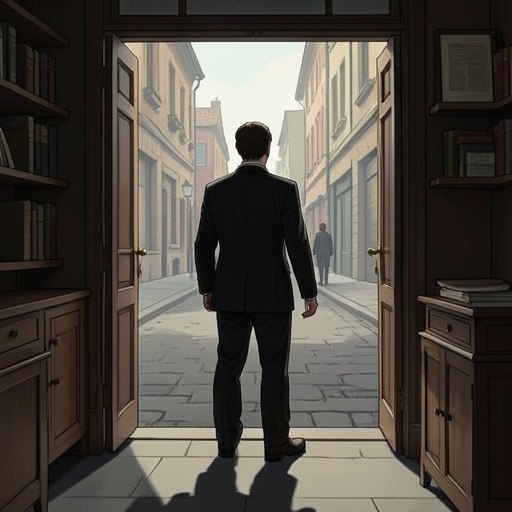
Their acquaintance changes when Circe persuades Rabo to unlock the potato barn and turn on its floodlights. He had treated the painting inside as the last thing he had to give the world and did not want to be present for people’s judgment of it. Circe directly challenges that retreat, telling him that if he will not show her the work, she will remember him as a coward. Rabo considers her accusation, fetches the keys, and asks her to come with him. His consent is a decisive action: instead of preserving the barn as a private refuge, he chooses to let another person enter and see what he has made.
The walk to the barn gives their change of relation a physical passage. They leave the house in darkness, with a flashlight beam ahead of them; the route crosses flagstones, turns toward the carriage house, and continues along a stubble path cut through the wilderness. Rabo is elated and terrified, while Circe becomes subdued and awed. Inside, the painting’s scale and character exceed what a verbal account could convey. When they return through the dark, Circe holds Rabo’s hand and says he has taken her dancing after all. He asks when; she answers that they are dancing now. The exchange answers the earlier refusal with a shared gesture: the journey to the barn has become an intimacy neither a formal evening out nor their months as housemates had produced.
Loss, Renewal, and the Painting
Rabo describes his own life as marked by two returns from emotional death. He tells Circe that he died with Terry Kitchen and that Edith brought him back to life; he then says he died with Edith and that Circe brought him back. Circe does not know who Terry Kitchen is, so the comparison is not an account of shared history between them. Its force lies instead in how Rabo names her effect on him: after the loss of Edith, Circe’s presence has helped restore his engagement with life.
The barn encounter also changes the terms on which Rabo understands the painting. Circe connects its making to his “meat”—his physical, instinctive self—rather than to a fully conscious artistic plan. Rabo agrees that his soul did not know what kind of picture to paint, while his meat did. Circe then asks whether it is time for his soul, ashamed of his meat for so long, to thank it for finally doing something wonderful. Rabo accepts the judgment, and she insists that he must actually say the thanks. Their exchange turns the painting into more than a concealed object: it is evidence, for both of them, that creativity can arise from a part of the self the artist has distrusted.
The friendship is not established by a declaration of perfect compatibility. Before the barn is opened, Rabo and Circe are still acquaintances, and he anticipates that her departure will bring relief as well as sadness. What changes is his willingness to share the work he had kept from public judgment and to recognize what her presence has done for him. The final image of their hands joined in the dark and their unplanned dance gathers that change into a modest, concrete form. Circe does not simply advise Rabo to return to painting: by making him open the barn, she helps him show the work, renew his sense of connection, and acknowledge the physical source of his art.