Rabo Karabekian and his mother
BluebeardRabo Karabekian’s mother is remembered as a survivor of the Armenian Genocide and as the parent who tried to turn her son’s artistic ambitions into a path toward a different life in America. Her optimism and resourcefulness contrast with the lasting despair of Rabo’s father; her sudden death, when Rabo was twelve, also leaves him to confront the distance between her hopes and the reality of his childhood.
Survival and family history
Before she became Rabo’s mother, she survived the massacre by pretending to be dead among the bodies. She had been caught in the killing itself, with victims lying over her, and Rabo later describes her as having been close enough to hear and see the violence around her. He considers her more entitled than his father to Survivor’s Syndrome: her experience was direct, while his father had hidden in a schoolhouse privy and remembered the deserted village afterward. The difference between their memories becomes a difference in how they live with the past.
Despite that trauma, she managed to put the massacre behind her enough to find things to like in the United States and to imagine a family future there. Rabo says that his father never managed the same adjustment. The contrast gives the mother’s hope a practical dimension: she looks toward what the family might become, even while the past remains part of its history.
Her death and Rabo’s memory
Rabo tells Circe Berman that his mother died when he was twelve, from a tetanus infection he believed she had contracted while working in a California cannery. He traces the possible source to the cannery’s site, formerly an old livery stable, and describes the infection as beginning with a cut on her hand. The account’s patient explanation of how the infection might have reached her makes the loss both intimate and contingent: an obscure danger in the surroundings becomes the cause of an early death.
Her absence remains present in Rabo’s adult reflections. When Circe Berman suggests that he may have considered his mother faithless because she had died and left him, he entertains the possibility. His remembered wariness toward women is thus connected, in his own account, to childhood bereavement, though he offers the connection tentatively rather than as a settled explanation. Her death also meant she could not see the gap between the future she anticipated for him and what actually happened.
A plan for Rabo’s artistic future
In 1927, when Rabo was eleven, his mother read about Dan Gregory, a wealthy Armenian-American artist whose success placed him among movie stars and tycoons. The detail that caught her attention was a photograph of Gregory on his yacht, named Ararat, the mountain sacred to Armenians. She recognized an Armenian connection in the profile and saw the artist’s life as evidence that an artist could attain wealth and social standing.
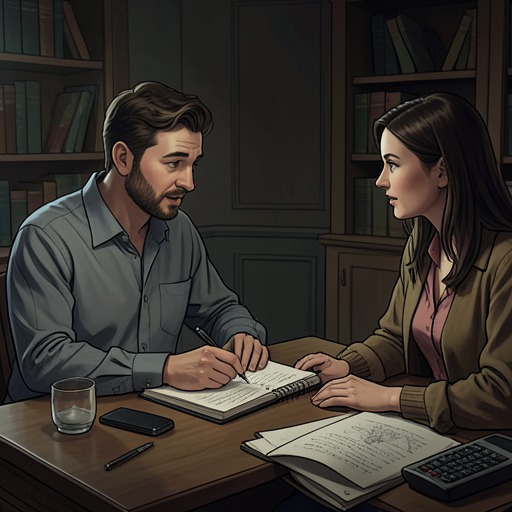
She was shrewd about American loneliness, Rabo recalls, and believed that people—even successful people—could respond to an attractive stranger’s friendliness. She directed her son to write to Gregory, identify himself as Armenian, say he hoped to become an artist half as good, and praise Gregory as the greatest artist who had ever lived. Rabo wrote roughly twenty letters in childish longhand before his mother judged the appeal ready. His father responded with skepticism, questioning Gregory’s Armenian identity and warning that a letter of praise would lead to a request for money. In Armenian, his mother answered that they were fishing and should not scare the fish away. Her strategy was not simply a dream of artistic recognition; it was an attempt to make opportunity answer a personal appeal.
The imagined mentorship and its aftermath
The appeal received a response, but not from Gregory himself. It reached Marilee Kemp, Gregory’s mistress, and the apparent opening to a mentor became a connection mediated by Gregory’s household. Rabo’s mother nevertheless died believing that her son had become Gregory’s protégé. She anticipated that Gregory would send him to art school, help him find work as an illustrator when he was old enough, introduce him to wealthy friends, and show him how to invest his earnings.
Those expectations were never fulfilled as she imagined. Rabo later understood that he had not been in direct contact with Gregory, who probably did not even know he was alive; the enthusiastic comments on the artwork he sent to New York were not from the famous artist. His mother did not live to learn either that Rabo had no real mentorship or that the stock market she had imagined as a route to wealth would crash. The interval between her confident plan and Rabo’s belated knowledge gives the relationship its central poignancy: she tried to open a future for him, but died before the promise could be tested against reality.
Lasting significance
Rabo remembers his mother through both her vulnerability and her initiative. She had survived what his father could not forget, yet she remained able to imagine a family life in America and to act on behalf of her son. The letters to Gregory make her hope concrete: she identifies a possible opportunity, devises an approach, and draws Rabo into carrying it out despite his father’s ridicule. The plan rested on mistaken expectations, but its failure does not erase what it reveals about her—the difference between her forward-looking ingenuity and her husband’s distrust, and the enduring influence of a mother who wanted her son’s artistic life to be possible.