Rabo Karabekian and Terry Kitchen
BluebeardRabo Karabekian and Terry Kitchen are fellow artists whose friendship takes shape in conversation, a shared studio, and the contrast between Terry’s many talents and Rabo’s ability to render likenesses. Their bond later acquires the rueful nickname “the Three Musketeers,” but Rabo rejects the idea that it was founded on painting or endured unchanged: the men’s companionship faded well before the deaths associated with their circle, and he insists that despair and self-destruction were separate from their artistic achievement.
Meeting Through Talk and Painting
When Rabo first knew Terry, Terry was still a talker rather than a painter, and Rabo describes himself as a talker and painters’ groupie who expected to become a businessman. Their conversation ranged beyond art. After Rabo recounted an experience of contentment with Marilee, Terry named it a “non-epiphany,” a term he said he had invented. He argued that people were not merely waiting for rare moments of divine revelation: God, in his view, was continually holding people by the scruff of the neck. His idea gave their friendship an early register of wry philosophical talk, in which ordinary experience could be reconsidered rather than elevated into a grand revelation.
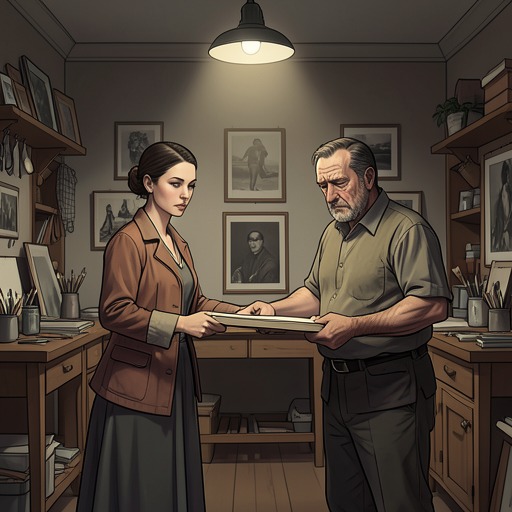
The two men made that companionship practical by renting studio space together in a photographer’s loft atop a building on Union Square. Rabo recalls that studio rent in Manhattan was then cheap enough for an artist to afford to live in New York City. The shared space belonged to a period when neither man had settled into the later roles by which the relationship would be remembered: Terry had not yet received the spray rig that would support his painting, and Rabo still expected a business career.
Terry’s Choice and Rabo’s Skill
Terry’s decision to paint mattered partly because it meant refusing several plausible futures. Rabo says that Terry could have made brilliant careers in law, business, finance, or politics; he was also a magnificent pianist and a great athlete, and might have remained in the Army and risen to become a general. Instead, he chose painting, despite having had no art lessons and, in Rabo’s assessment, little ability to draw. Terry explained the choice as a matter of trying something he had not tried before and believing that something had to be worth doing.
The difference between the men’s abilities did not produce a simple hierarchy. Terry could not draw or paint a likeness of what he saw, while Rabo could. Rabo recalls that Terry stood in awe of him for precisely this capacity, even though Terry’s own accomplishments far exceeded Rabo’s in other areas. This inversion gives the friendship its distinctive balance: the man with the wider range of talents admired the narrower artistic gift his companion possessed.
A small detail in Terry’s painting later complicated judgments about that limitation. A work once displayed in Rabo’s foyer, generally known as Magic Window, is mostly a brightly colored, airbrushed view resembling a storm system seen from an orbiting satellite. In one small patch, however, Terry reproduced an upside-down version of John Singer Sargent’s full-length portrait of Madame X. The patch became the evidence some people used to claim that Terry could draw realistically if he chose, though Rabo presents it as an isolated feature within an otherwise characteristic Kitchen painting.
Companionship, Distance, and the Studio
Rabo’s memories of Terry retain a visible likeness between the pair and Dan Gregory and Fred Jones, the fictional-looking artist and ideal American hero whose pairing had shaped Rabo’s earlier life. Rabo says he and Terry really did look like Gregory and Jones when they went places together. Terry also treated Rabo with the deference Fred had shown Gregory, a comparison Rabo calls preposterous: unlike the supposedly simple, sweet Fred, Terry was a Yale Law School graduate who could have pursued professional music or excelled as a tennis player or golfer.
The resemblance did not mean that Rabo and Terry shared the same standing or history. Terry had also outranked Rabo in the Army, serving as a lieutenant colonel in the Paratroops, and had distinguished himself through daring actions. Yet he continued to respect Rabo for his ability to depict visible things. The relationship thus combined public and military contrasts with a private reversal of esteem: Rabo could regard Terry as more accomplished in many ways and still be the person Terry admired as an artist.
Their closeness did not hold. Looking back, Rabo says the men had stopped being friends long before the deaths of Terry and Jackson Pollock. People had called them the Three Musketeers because of the drinking they did together, not because painting bound them together. If one man stopped drinking, or sometimes if all three did, the group’s nickname and fellowship fell away. Rabo’s account makes the name less a lasting fellowship than a temporary social identity sustained by a shared habit.
Rupture, Loss, and Artistic Independence
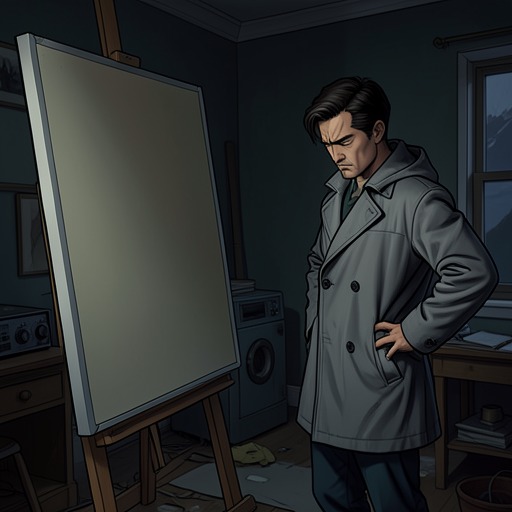
At a later point in Rabo’s recollection, after he has left an apartment and taken his suitcase to the studio he shared with Terry, he finds Terry asleep on a cot. During Rabo’s absence, Terry has slashed all his paintings with an ivory-handled straight razor inherited from his paternal grandfather, a former president of the New York Central Railroad. Rabo considers the destruction a loss to no one, reflecting his low estimate of the paintings, but the scene places the rupture between friendship and art in sharp relief: Terry has attacked his own work, while Rabo’s immediate response is to consider the possibility that Terry might also have harmed himself.
The inherited razor links Terry’s action to his family background, but the account does not explain why he destroyed the paintings. Rabo instead dwells on the disparity between Terry’s range of abilities and the one gift Terry believed he lacked. He remembers the sleeping man as someone capable of success in law, music, sport, and military life, and as a son of a father accomplished in music, chess, horticulture, corporate law, and civil-rights work. That catalogue makes Terry’s chosen identity as a painter seem deliberate rather than inevitable, without supplying a motive for the slashing.
When the men are again together, Rabo wakes Terry and offers to buy him an early supper at the Cedar Tavern. He does not tell Terry about a major deal he has completed in Florence, because Terry cannot be part of it; Terry will not get his hands on the spray rig for another two days. The episode places their companionship alongside practical artistic arrangements and a continuing limit on what Rabo shares with him. In the studio, Rabo’s own large fields of color are beginnings: he expects them to become more complex as he searches for what he calls soul. Their common workspace therefore contains distinct artistic trajectories, not a unified style or purpose.
The Three Musketeers and the Meaning of the Deaths
Years later, Circe Berman asks Rabo about figures represented in his large painting. He identifies two Polish slave laborers on the far side of a tower as Jackson Pollock and Terry Kitchen; Circe calls the three men depicted across the bottom, including Rabo, the Three Musketeers. Rabo agrees that they are there, but immediately qualifies what the label means. He says the three had ceased to be friends long before the other two died, and that the drinking—not painting—had made people call them the Three Musketeers.
Rabo rejects Circe’s suggestion that the deaths of Pollock and Terry were a terrible blow to him. He recalls no response beyond becoming a hermit for about eight years. He then places their deaths in a broader roll-call of suicides among Abstract Expressionist painters: Arshile Gorky died by hanging in 1948, Pollock died in a drunken-driving crash, Terry died by suicide with a pistol in 1956, and Mark Rothko died by suicide in 1970. Rabo’s own recollection emphasizes that the two deaths closest together did not restore or confirm a friendship that had already ended.
His insistence that the deaths had nothing to do with painting is unusually sharp. Rabo separates the men’s drinking, their self-destruction, and the despair shared by painters and plumbers from what he regards as the wonder of their art. In this account, the relationship’s lasting significance lies not in an idealized brotherhood but in the tension between real artistic admiration and social distance: Terry revered Rabo’s gift, they shared a studio and a period of companionship, and Rabo later refuses to let the Three Musketeers legend turn either their drinking or their deaths into an explanation of their painting.