Rabo Karabekian and Dorothy
BluebeardRabo Karabekian and Dorothy’s marriage ends in separation, but its significance extends beyond the breakup: Rabo later identifies his failure as a husband and father as one of his deepest sources of shame. Their conflict grows out of incompatible expectations of postwar life. Dorothy wants him to provide reliable support for their family; Rabo devotes himself to painting and the artistic ambitions he had not previously disclosed to her. When she and their sons finally leave, the empty rooms and the portraits removed from their wall make the family’s estrangement tangible.
Identity and Background
Dorothy is Rabo’s first wife and the mother of their two sons, Henri and Terry. Rabo says that he married the nurse who cared for him after his wartime injury. The marriage began in the postwar years, when he was trying to establish a civilian life after serving as a camouflage specialist and losing his left eye in Luxembourg. He later recalls explaining his decision to marry as part of the expected postwar course of life, a formula that in retrospect does little to account for his particular readiness or capacity for family life.
The marriage unfolded alongside Rabo’s move toward an artistic career. He had left his insurance-sales job, rented a studio with Terry Kitchen above Union Square, and begun spending two or three nights a week there rather than in the basement apartment where Dorothy and the boys lived. He was absorbed in making large fields of color with Sateen Dura-Luxe and had also rented a potato barn and made a down payment on a house on Long Island. To Rabo, these were parts of becoming an artist; from the standpoint of family life, they meant increasing physical and emotional distance.
Family Life and Conflicting Expectations
Rabo’s later account is sharply self-accusing. He calls Dorothy good and brave and describes his sons as his own flesh and blood, while acknowledging that they became alienated from him. Their departure in 1956 marked a decisive break: he says he gave up on himself as a painter afterward and went looking for loneliness, living as a hermit for eight years. The narrative connects the collapse of the marriage not just to disagreement over work but to the lasting isolation that followed it.
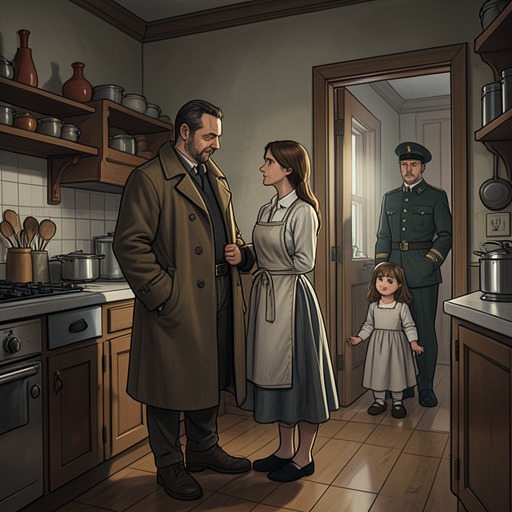
The contrast between Dorothy’s practical expectations and Rabo’s artistic ambitions becomes explicit after he returns from Florence. The family is recovering from influenza, and Dorothy has been told that Rabo should stay at the studio for a few nights while she regains her strength. She expects him to seek steady work and make use of the business-administration degree for which the family had sacrificed. Instead, Rabo announces that he has sold ten thousand dollars’ worth of paintings in Florence. The announcement represents triumph and possibility to him, but Dorothy doubts the sale will come through and points to the household’s immediate insecurity: their apartment is crowded with canvases, yet she does not regard those paintings as a dependable source of income.
Dorothy urges him to act as a husband and father with a family to support, rather than gamble on uncertain artistic success. She reminds him that he is thirty-four and argues that ordinary employment may become harder to find as he grows older. Rabo answers that he has always wanted to be an artist, but Dorothy replies that he had never told her so. Their exchange exposes a failure of communication alongside their disagreement about money: the vocation Rabo treats as the truth of himself had not been openly made part of the life they planned together.
Conflict Over Art and Responsibility
Rabo asks Dorothy to have more faith in him as a painter. She says that she loves him but hates his friends and paintings, and is frightened for herself and her children. Her objection is not simply that he paints; she fears the practical consequences of a life organized around his ambitions. Rabo’s appeal to artistic recognition and Dorothy’s appeal to family security meet without reconciliation.
Their argument also turns on the difference between wartime danger and postwar responsibility. Dorothy tells him that the war is over and that he no longer needs to undertake enormous, risky projects. She points to his ambition to make New York City, rather than Paris, the art capital of the world as an example of his grand scale of aspiration. Rabo is already outside the apartment when she asks why he must set out to conquer Paris. He leaves without resolving the argument; Dorothy closes and locks the door, and he hears her crying from inside. The scene makes departure itself part of their conflict: he moves toward the studio and his artistic circle as she remains with the children and the consequences of his choices.
The pressures of the marriage are set beside a wider pattern of women being trapped in roles they did not choose. Rabo later recognizes himself, Dorothy, Marilee Kemp, and Fred Jones as caught in different versions of such confinement. The parallel does not erase the particularities of his marriage, but it places Dorothy’s frustration within the book’s recurring concern with prescribed roles, constrained lives, and the costs of failing to see another person’s position.
Separation and Its Material Traces
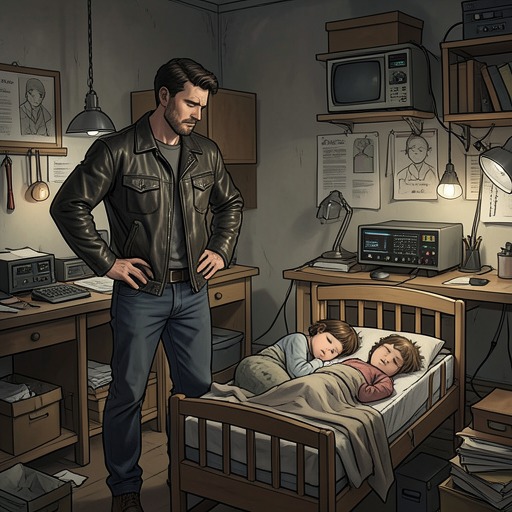
Dorothy and the boys eventually leave while Rabo is away from home. The pictures he had painted of his sons had remained on the Sheetrock for six years. When he comes home half drunk one afternoon, he finds his wife, children, and the pictures gone, along with a note from Dorothy saying they are gone forever. She has cut the portraits out of the wall, leaving two large square holes. The removed images are not merely possessions taken in a family departure: they make the children’s absence visible in the place where Rabo had represented them.
The separation is also reflected in the sons’ names. Rabo says that Henri and Terry no longer speak to him and are no longer Karabekians: they legally changed their surnames to Roy Steel, their stepfather’s name. In Rabo’s retrospective telling, the change records an estrangement that has become formal as well as emotional. His own identity as a father is thus defined by the distance between the family name he gave his sons and the name they chose after leaving him.
Regret and Narrative Significance
Rabo’s evaluation of the marriage is unusually direct. He calls his failure as Dorothy’s husband, and the resulting alienation of Henri and Terry, his most troublesome source of shame. In his imagined reckoning, he gives himself a failing judgment as a husband and father, even while crediting himself as a soldier. His frankness does not undo the harm or restore the family; it establishes how he interprets his life from the perspective of old age.
The empty house and its two square holes acquire still greater meaning because Rabo sees them soon after Jackson Pollock and Terry Kitchen have died by suicide and while his own paintings are falling apart. Asked what he felt at the sight, he stops before completing his answer. He finally says the moment came as close as he would ever come to understanding what his father must have felt when he was alone in his village after a massacre. The comparison connects domestic loss to the family’s inherited history of catastrophe without equating the events: for Rabo, the abandoned house brings an earlier story of isolation into the present. His marriage to Dorothy therefore remains central to the memoir not as a reconciled romance, but as a relationship whose failures continue to shape his understanding of loneliness, fatherhood, and what it means to lose a family.