Death of Thomas Buddenbrook
BuddenbrooksThe Death of Thomas Buddenbrook follows a dental emergency from Thomas’s attempt to have a diseased molar treated to his sudden collapse on the street and death at home. The extraction does not resolve the problem: the crown breaks, the dentist says the roots still need to be removed, and Thomas dies before that treatment can be carried out. The episode makes the body’s vulnerability, and the limits of medical intervention, an abrupt counterpoint to the senator’s accustomed public composure.
The dental emergency
Thomas reaches the dentist’s office suffering from severe pain in the lower left side of his jaw. The pain has kept him from sleeping and strains his effort to maintain control while speaking to others. He goes to Herr Brecht on Mühlen Strasse, where he is examined in an adjustable chair and told that the tooth must be extracted. Thomas agrees to proceed.
The extraction lasts only seconds, but it fails to remove the tooth as intended. After a sudden jerk and a crack, the pressure is gone but Thomas’s pain has worsened. Herr Brecht explains that the crown has broken off because the tooth is in very poor condition. He says that the remaining roots will have to be extracted with a lever, one by one. The required treatment is therefore left unfinished, and the proposed further procedure is deferred until the following day.
Collapse in the street
Thomas leaves the surgery and walks home, returning greetings mechanically while preoccupied with how unwell he feels. At Fischer Grube he becomes nauseated and decides to stop at a tavern for brandy. As he crosses the street, he experiences a sudden, violent sensation of dizziness and falls forward onto the wet pavement.
The slope of the street leaves his head lower than his feet. His hat rolls away, his fur coat is soiled, and his white gloves come to rest in a puddle. He remains there until passersby turn him onto his back. The fall brings the carefully managed visit to the dentist to an unforeseen end: the intended next step is extraction of the roots, but Thomas never returns for it.
The household and medical response
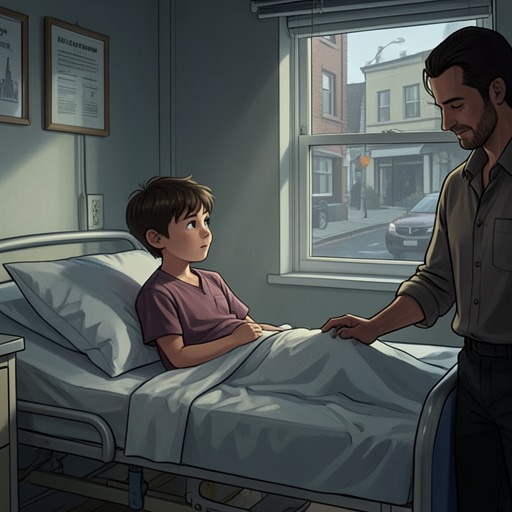
Thomas is brought home and laid in a broad mahogany bed under a red quilt, wearing an embroidered nightshirt. His muddy clothes lie on a chair nearby. Dr. Langhals attends him, changing the bloody bandage on his face and checking his chest and pulse. Thomas’s sister, Tony, takes his cold, heavy hand, while Hanno sits at the foot of the bed, listening to his father’s sounds without understanding their import.
The family’s response unfolds alongside the doctors’ efforts to assess the situation. Earlier in the novel, Dr. Grabow’s account of illness had shown how easily serious bodily trouble could be treated as routine: when Christian complained of indigestion, the physician advised bed rest and a strict diet, while anticipating that ordinary habits would soon resume. In another episode, Christian describes a difficulty swallowing that he connects to his own will, and his family dismisses his account as nervousness. These earlier scenes do not explain Thomas’s collapse, but they establish a recurring distance between a patient’s experience, family interpretation, and medical judgment.
Death and confirmation
Thomas sobs softly two or three times, then falls silent; the cessation of movement in his lips is the only visible change after his eyes have already appeared dead. Dr. Langhals arrives within minutes, listens to Thomas’s chest with a stethoscope, and confirms that he has died. Sister Leandra gently closes his eyes.
Tony kneels beside the bed and weeps openly. Once she rises, she is composed enough to recognize that the death announcements must be prepared and sent quickly. The practical task follows immediately upon grief, placing a public family obligation beside an intimate moment of loss.
Narrative significance
The sequence turns on the mismatch between planned treatment and actual outcome. Thomas enters the dentist’s office expecting a procedure that will address his tooth; instead, the crown breaks, more work is required, and the interruption of his return home ends in death. The dentist’s conscientious attempt and the doctor’s examination are presented as care, but neither can make the event predictable or reverse its course.
The domestic details sharpen the contrast between Thomas’s public standing and his helplessness at the end. The senator who had walked the streets greeting acquaintances is now unable to speak, while his family watches and a physician confirms the death. The scene does not offer a diagnosis for his collapse beyond the events it recounts. Its force comes instead from the plain sequence of unfinished treatment, sudden fall, vigil, and confirmation: mortality arrives within ordinary routines, before the promised next day can come.