Election of Thomas Buddenbrook to the Senate
BuddenbrooksThomas Buddenbrook’s election to the Senate turns a vacancy in Lübeck’s civic government into a contest between two ambitious merchants, Thomas and Hermann Hagenström. The result gives Thomas a public office and a new arena for his energies, but the suspense around the vote also exposes how civic reputation, family pride, and commercial competition converge in the town’s political life.
Vacancy and Candidates
The election follows Senator James Möllendorpf’s death. The constitution requires a vacant Senate seat to be filled within four weeks, and the vote takes place after three weeks, in late February during a thaw. Thomas is not the only plausible candidate: Consul Eduard Kistenmaker and Consul Hermann Hagenström are considered, while Henning Kurz is set aside as too old and Consul Huneus is constitutionally excluded because his brother already sits in the Senate. As election day approaches, Thomas and Hagenström emerge as the leading contenders.
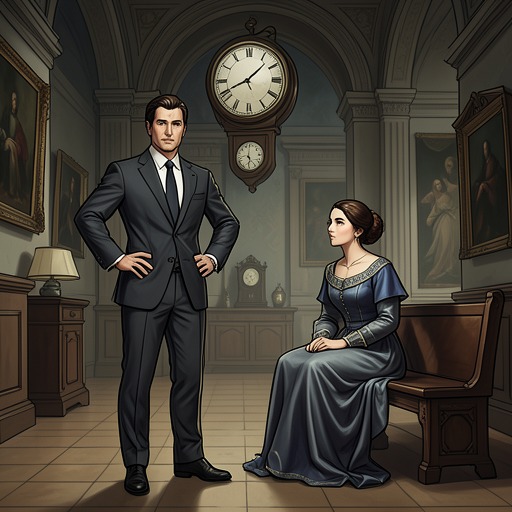
Hagenström’s appeal is presented as a mixture of civic engagement, commercial success, and modern social style. His firm, Strunck & Hagenström, has grown rapidly; he lives luxuriously in a spacious new house on Sand Strasse and is known for liberal, tolerant views and distance from old patrician conventions. His supporters see him as a conspicuous figure in the town’s ruling circles. Thomas, by contrast, stands for the established Buddenbrook family and its business, so the contest carries the force of a rivalry that reaches beyond the vacant seat.
The Vote in Suspense
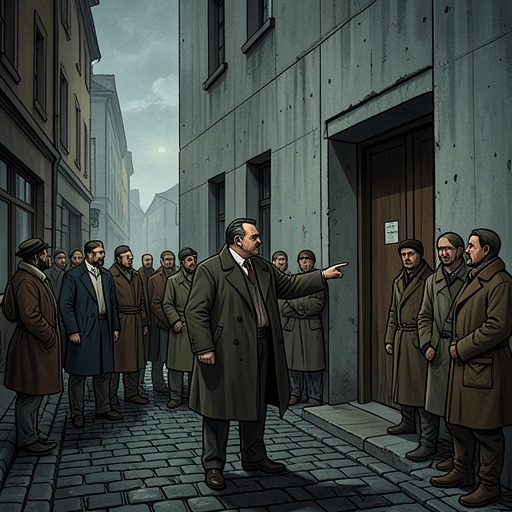
On election day, townspeople gather along Breite Strasse outside the Town Hall. Inside, electors drawn from the Senate and town council wait while three electoral chambers debate their nominations. The process lasts longer than expected because the chambers have not yet settled on a common candidate. Rumours escape into the crowd, where speculation about the proceedings turns the election into a public spectacle.
The first secret ballot is inconclusive. Kistenmaker, who receives the fewest votes, is eliminated, leaving the contest between Thomas and Hagenström. A citizen suggests that a tie would require five arbitrators to decide by majority. The crowd then hears a false report that Heine Seehas, a familiar seller of steamed dumplings, has been elected. The joke briefly draws laughter, but the attention returns at once to the Town Hall and the unresolved contest.
The Result Becomes Visible
The report that Hagenström has won spreads through the crowd, and a veiled woman who has been following the election believes Thomas has lost. The announcement is overturned by the movement of the ceremonial bailiffs, Kaspersen and Uhlefedt. In red coats, three-cornered hats, white riding breeches, yellow cuffs, and swords, they emerge from the Town Hall and proceed down Breite Strasse rather than toward Sand Strasse. Their route makes the result legible before it is formally announced: the newly elected senator is Thomas, not Hagenström.
The crowd recognizes the meaning of their direction and begins following them. Men stream from the doors to congratulate the winner. Thomas’s sister, Antonie “Tony” Buddenbrook, runs ahead through the slush to reach him first. She enters the house and tells her brother that the visitors are coming and that he has won. Her hurried arrival makes the civic result a family event as well as a public one: the election brings the Buddenbrooks a moment of triumph in their competition with the Hagenströms.
Oath and Significance
The election takes place on a Friday. The following day, Thomas stands in the council chamber before the chair formerly occupied by Möllendorpf, in the presence of the city fathers and a town-council committee, and swears to perform the duties of office conscientiously. His oath commits him to the state’s good, obedience to the constitution, honest administration of public money, impartiality toward rich and poor, enforcement of the laws, and discretion in confidential matters. The ceremony translates the excitement of the contested vote into a formal public obligation.
Thomas’s victory establishes him as a senator and confirms his standing in Lübeck, but it does not end the rivalry with Hagenström. The dramatic contrast between the rumour of defeat and the bailiffs’ decisive turn gives the election the shape of a reversal: the crowd reads political power through movement in the street, then gathers around the confirmed winner. In the larger family narrative, the office also extends the Buddenbrooks’ inherited public identity into Thomas’s generation, joining civic service to the family’s established commercial prominence.