El Dorado beyond Paris
CandideEl Dorado beyond Paris is the remote kingdom that appears to offer a lived alternative to the disorder Candide has encountered across the world. Its prosperity, public provision, and absence of courts and prisons give tangible form to the possibility of a place where things go well; but Candide and Cacambo ultimately leave it, preferring the prospects of wealth, reunion, and distinction elsewhere to continued life within its protected borders.
Setting and History
The kingdom is described as an ancient land of the Incas, whose rulers once left to conquer elsewhere and were destroyed by the Spanish. According to a 172-year-old man retired from court, his father had witnessed the upheavals in Peru, and the old man passed on the history he had learned from him. The wiser princes, he says, remained in their native country and established, with the nation’s consent, a rule that inhabitants could not leave. The account presents this boundary as the condition that preserved the kingdom’s innocence and happiness.
The country’s isolation is also geographical. Inaccessible rocks and precipices have kept European powers at a distance, despite their appetite for the land’s stones and soil. The Spanish had only a confused report of the place and called it Eldorado; Sir Walter Raleigh came near it about a century before the old man’s account. The kingdom is therefore both a real destination in Candide’s travels and the legendary place that outsiders have only partly imagined.
Public Life and Abundance
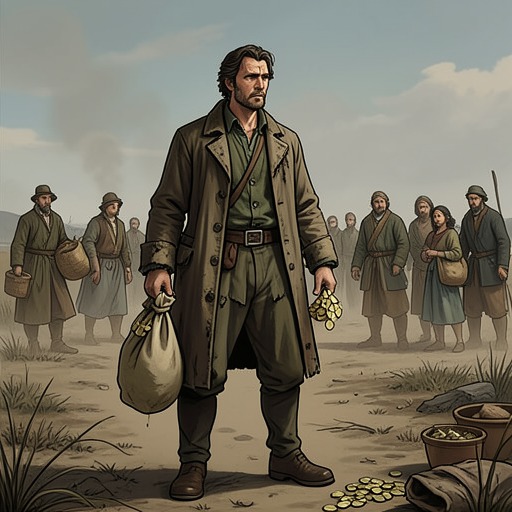
The first encounter with local customs turns ordinary expectations upside down. When Candide and Cacambo offer road pebbles to pay their bill, the innkeeper explains that they need no money: the government pays the inns established to serve commerce. Their meal is poor only because they are in a poor village; elsewhere, visitors will be received according to their standing. Cacambo translates the explanation, and the two travelers begin to wonder whether they have reached the country where all is well, since their experience in Westphalia had repeatedly contradicted Pangloss’s teaching.
In the capital, scale and public provision reinforce that impression. The travelers see immense public buildings, marketplaces with a thousand columns, and fountains dispensing spring water, rose water, and sugar-cane liqueurs into the squares. The paving is made of a precious stone. Candide asks to see the courts and parliament, but is told that the country has none and that its people are strangers to lawsuits; it has no prisons either. What pleases him most is the palace of sciences, whose gallery stretches two thousand feet and contains instruments for mathematics and physics. After touring only a thousandth of the city, Candide dines with the king, whose wit remains impressive even when Cacambo has to translate it.
The Travelers’ Choice to Leave
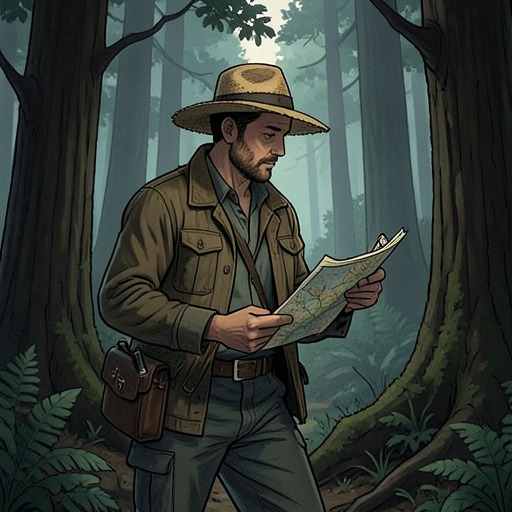
Candide and Cacambo spend a month in the hospitable kingdom. Candide acknowledges that his birthplace’s castle is nothing beside what he has seen, but the absence of Cunegonde weighs against staying. He also reasons that twelve sheep loaded with Eldorado’s stones could make them richer than the kings of Europe, free them from fear of inquisitors, and help them recover her. Cacambo welcomes the prospect as well: the travelers are drawn to returning to their former world, making a reputation there, and boasting of what they have seen. They ask the king’s permission to depart, exchanging an exceptional place of security for the uncertain rewards beyond it.
Narrative Significance
The kingdom tests Pangloss’s confidence in the order of the world by setting his abstract optimism against a society whose daily arrangements appear unusually fortunate. Candide himself recognizes the contrast with Westphalia, while the capital’s lack of lawsuits and prisons gives the contrast institutional force. Yet Eldorado does not settle the travelers’ search: even after a month of comfort, Candide’s attachment to Cunegonde and his calculations about wealth draw him away. The episode’s irony lies in the distance between finding a place that seems to answer the question of whether a better world can exist and choosing to leave it for the desires and ambitions that have governed the journey.