Venice
CandideVenice is a brief but consequential stopping place in Candide’s return from the Americas: a city where the reunion he expects remains absent, where new encounters unsettle his plans, and from which he eventually resumes his search for Cunegonde. Rather than offering a stable refuge, Venice becomes an interval of waiting and disappointment. Its inns, coffeehouses, supper tables, and Carnival diversions gather the novel’s shifting fortunes into a sequence of encounters before Candide leaves for Constantinople.
Place in the Journey
Candide reaches Venice with Martin after a rapid passage from the Atlantic coast into the Mediterranean. Following the English execution of an admiral, he is so appalled by what he has witnessed that he refuses to go ashore there. He bargains with a Dutch skipper to take him on to Venice without delay; after two days, the ship coasts along France, passes Lisbon and the Straits, and enters the Mediterranean before bringing the travelers to the city. That route makes Venice the next destination in a journey already marked by repeated reversals, and Candide arrives imagining it as the place where he will see Cunegonde again.
The expectation has a practical basis as well as an emotional one: Candide trusts Cacambo to bring her, and believes that the reunion is near. On arrival, however, he finds neither of them. The contrast between his confident anticipation and the missing people turns Venice from a promised meeting place into a setting for suspense. The city does not resolve the journey; it holds Candide between the promise of reunion and the possibility that it will never occur.
Searching and Waiting
Candide searches for Cacambo at every inn and coffeehouse, as well as among the women of pleasure, but finds no trace of him. He also sends inquiries every day to ships arriving in port. The repeated searches give the city a concrete geography of expectation: Candide moves among places where travelers and news might be found, while the information he needs never arrives. His own account of the many stages he has crossed—from Surinam through Bordeaux, Paris, Dieppe, and Portsmouth, along Portugal and Spain, and across the Mediterranean—makes the delay feel especially severe. After all that travel and several months of waiting, Cunegonde has still not appeared.
Candide concludes that she must be dead and that he has nothing left to live for. He now calls his earlier refuge in El Dorado a paradise and adopts Martin’s bleak judgment that life is misery and illusion. This response gives Venice a particular narrative force: the city is where Candide’s expectation that events will turn out well collapses once more, not through a new catastrophe but through absence and uncertainty. He falls into deep melancholy, avoids the opera and the other entertainments of Carnival, and resists the attractions of the women around him. The diversions of the city continue to be available, but grief makes them ineffectual for him.
Encounters in the City
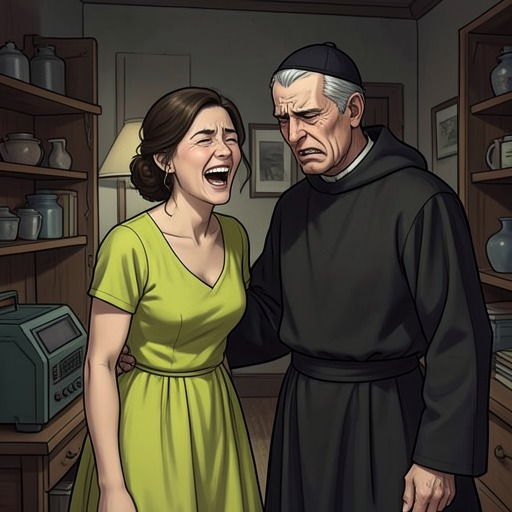
While looking for Cunegonde, Candide encounters Paquette with a Theatine. He approaches them and invites them to dine at his inn, offering macaroni, Lombard partridges, caviar, and several wines, including Montepulciano, Lachrymæ Christi, Cyprus, and Samos. The invitation begins as an act of hospitality toward strangers. Once the girl enters his apartment, she recognizes herself to him as Paquette. Her blush, tears, and evident confusion turn the meal into an unexpected reunion with someone from the earlier part of his life, rather than the longed-for reunion with Cunegonde. Candide has not recognized her at first because his thoughts are fixed on Cunegonde.
Venice also hosts the supper at which Candide and Martin dine with six strangers staying at their inn. Before the meal, a dark-complexioned man takes Candide by the arm and orders him to get ready to accompany them. Candide later recalls that the company consisted of six dethroned kings, and that he had given charity to one of them. The episode enlarges the range of misfortune visible in the city: even former rulers appear among the displaced and dependent. It also places Candide’s own losses beside theirs. He has lost a hundred sheep, he observes, and is still pursuing Cunegonde, while men who once held royal power have been overthrown.
Departure and Narrative Significance
The absence of Cacambo lasts long enough to dominate Candide’s time in Venice. He is so consumed by grief that he does not even reflect on Paquette and Friar Giroflée’s failure to return and thank him. Yet Cacambo has in fact prepared the next stage of the journey: he persuades a Turkish skipper, whose ship is to carry Achmet III to Constantinople, to take Candide and Martin aboard. Candide and Martin embark after paying their respects to the ruler. Venice thus ends not with Candide’s reunion with Cunegonde, but with his unexpected recovery of a companion and a new passage toward the reunion he still seeks.
Candide describes this change of fortune to Martin as further reason to believe that everything is for the best, returning to Pangloss’s optimism even after the melancholy and disillusionment of his Venetian wait. The city’s episodes resist a single, settled interpretation: absence makes Candide despair; encounters with Paquette and the dethroned kings expose different forms of hardship; and Cacambo’s intervention sets the journey moving again. In the novel’s swift travel structure, Venice is less a destination than a hinge between expectation and renewed motion. It briefly gathers reunion, social reversal, and disappointment into one place, then sends Candide onward without granting him the certainty he came seeking.