Alfeo
DianaAlfeo is a reputed sorcerer whose unreturned love for Belisa turns into a calculated deception: he uses spirits to make her believe that Arsileo and Arsenio have died. The staged deaths drive Belisa from home and keep her separated from Arsileo, making Alfeo the hidden cause of a grief that is eventually undone when the truth reaches her.
Identity and Reputation
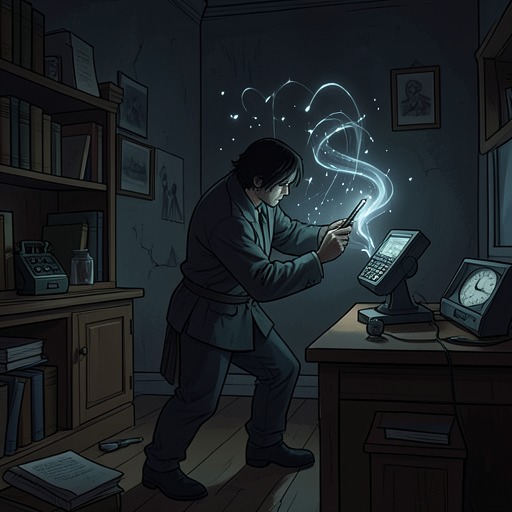
Alfeo is described among the people of his region as a formidable necromancer. Belisa later calls him the greatest sorcerer and enchanter in Europe, and says that his dealings are with demons, which he makes assume whatever forms he chooses. In her account, this power makes familiar appearances unreliable: a person who seems known may in fact be a demon wearing that person’s shape.
The story gives his reputation a direct role in its plot. The apparent deaths of Arsenio and Arsileo are not ordinary misfortune but a manufactured scene, produced through spirits taking their forms. Alfeo’s magic therefore acts not simply as spectacle but as a means of manipulating what Belisa sees and believes.
Love, Jealousy, and the Deception
Alfeo loved Belisa before Arsenio began courting her. Belisa did not return Alfeo’s affection; even hearing him mentioned caused her distress. Arsenio’s courtship, meanwhile, involved his son Arsileo: Arsileo supplied letters and songs, and his music also served his father’s suit. Belisa and Arsileo formed an understanding, including an arrangement to meet at a mulberry tree in a garden belonging to Alfeo.
Learning of the planned meeting, Alfeo used it to construct a false catastrophe. He caused two spirits to take the likenesses of Arsileo and Arsenio. At the appointed place, the spirit resembling Arsileo appeared, while the one resembling his father staged a shooting with a crossbow and an apparent death. The scene was arranged to make Belisa believe that both men had died, with the false father’s grief completing the illusion.
Alfeo’s purpose was to make Belisa die of despair at what she believed she had witnessed, or at least to drive her to the desperate act that followed. The plot thus converts rejected love into deliberate harm: rather than accept Belisa’s choice, Alfeo engineers a spectacle designed to destroy her hope and separate her from Arsileo.
Consequences for Belisa and Arsileo
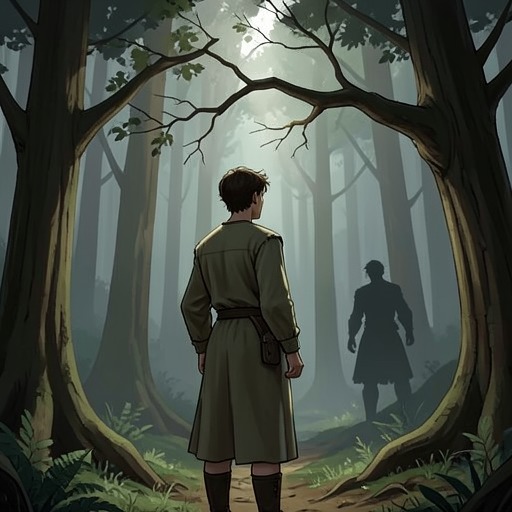
Belisa believed the deaths because she thought she had seen them with her own eyes: one man pierced by an arrow and the other killing himself with his sword. Overwhelmed, she left her home and disappeared into the wilderness. Her flight was not a response to a real bereavement but to Alfeo’s carefully staged appearance of one; for a long time, she lived with the conviction that both men were dead.
Arsileo survived and later recounted Alfeo’s scheme to Amarilida. Felismena, who heard the account, recognized Arsileo as the man Belisa had believed dead and resolved to bring him the news of Belisa. The disclosure establishes that the sorcerer’s deception had not only caused Belisa’s flight but also kept the surviving lovers apart through a false account of their deaths.
Exposure and Narrative Role
Polidora eventually finds Belisa in the forest and tells her that Arsenio and Arsileo are alive. Belisa initially struggles to believe the news, since it contradicts what she remembers witnessing. Polidora identifies Alfeo’s magic as the cause of that false memory and says that Arsileo himself has confirmed the men’s survival. She then takes Belisa toward him, turning the revelation into the first possibility of reunion.
Alfeo’s eventual fate is not given in these episodes. What is resolved is the falsehood he created: the apparent deaths are exposed, and Belisa can move from mourning toward the living Arsileo. His role is consequently defined by a sharp reversal. The sorcery that made sight seem conclusive produces years of error, while the spoken account of Arsileo’s survival begins to repair the separation.