Felismena
DianaFelismena is a noblewoman whose steadfast love for Don Félix carries her from her family’s deaths through exile, disguise, and years of searching to a reunion she makes possible by saving his life. The story tests the predictions made at her birth against the choices she makes: she is promised both extraordinary skill in arms and extraordinary misery in love, and her courage becomes the means by which she survives that contradiction and wins a changed ending.
Identity and Early Life
Her life is marked by competing prophecies before it begins. While her parents debate whether beauty belongs to the body or the soul, her mother argues that courage and the practice of arms confer a deeper beauty. In a dream, Venus foretells that Felismena and her twin brother will be exceptionally unfortunate in love; Minerva, appearing afterward, promises that they will be exceptionally fortunate in arms. The children are born about a month later. Their mother dies in childbirth, and their father dies within days from grief.
Felismena and her brother grow up in a convent under the care of an aunt who is its abbess, remaining there until they are twelve. Their paths then divide. Her brother is taken to the court of the Lusitanos, where his prowess in arms earns him the king’s favor and a lasting place at court. Felismena is sent to live with her grandmother, a change she later associates with the sorrow that follows. By nearly seventeen, she is a woman of high rank whose afternoons in a garden can be seen from a neighboring house. Don Félix sees her there and begins courting her, although she later admits that she cannot be sure whether his love was genuine or feigned.
Love, Separation, and Disguise
At first Felismena refuses to encourage Don Félix. He makes his feelings known through signs, walks, music, and tournaments held outside her door; she understands those signs but does not respond. When he finally sends a letter through her maid Rosina, whom he has won over with gifts, Felismena throws the letter back and threatens the maid for bringing it. The refusal does not hold. Over the following months, letters and messages pass between the two, the tournaments and nighttime music resume, and Felismena gradually falls in love. Nearly a year after their courtship began, she can no longer keep her own feelings from him.
Their attachment is interrupted when Don Félix’s father learns of it. Fearing that his son may marry Felismena, he sends him to Princess Augusta Cesarina’s Court, presenting the move as a way for a young nobleman to learn beyond his father’s household. Don Félix leaves so sorrowful that he does not tell Felismena he is going. She imagines that distance and the presence of women more beautiful and higher-ranking than she will cause him to forget her. Rather than remain separated, she resolves on an extraordinary journey: with help from a trusted friend who buys her men’s clothing and a horse, she leaves her home disguised as a man. The journey takes twenty days.
At court, Felismena enters Don Félix’s service as the page Valerio. For a year she serves him while concealing her identity and love, even acting as an intermediary in his attachment to Celia. She helps secure Celia’s favors at the cost of her own tears, and does not reveal what she feels. The disguise therefore brings her close to Don Félix while placing her in the painful role of assisting his courtship of another woman.
Loss and the Long Search
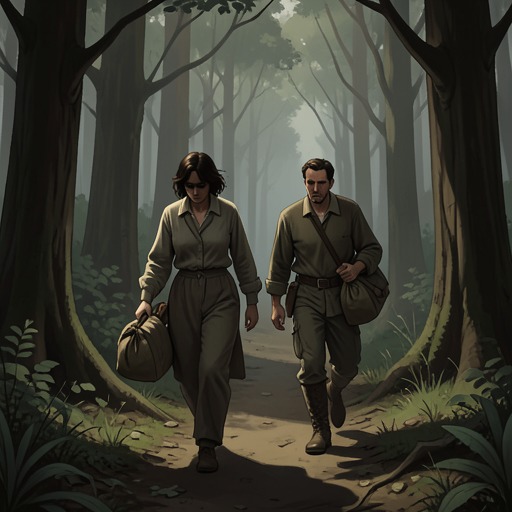
Celia’s death and Don Félix’s disappearance leave Felismena without either the hidden purpose or the person around which her life at court has been organized. After Celia dies, Don Félix vanishes from his house that same night, and neither his servants nor anyone else can discover where he has gone. Felismena searches without success. She has spent more than two years traveling in the page’s clothing when she recounts that search, and she describes the chance to help the women she encounters as a consolation amid her failure to find him.
Her story also reaches the Nymphs as a disclosure of how far love has displaced her from her former life. They are astonished that a woman of her rank has abandoned her natural dress and freedom for love, and moved by the tears with which she tells what has happened. Dorida responds with sympathy and invites her to go with the Nymphs to the wise Felicia. Felismena’s history thus enters the wider pastoral narrative not as a completed confession but as a turning point: her account explains her disguises and losses, while the company she joins leads toward the events that will bring her back to Don Félix.
Courage and Reunion
In the Portuguese countryside, Felismena appears in shepherdess’s dress, displaced from the Province of Vandalia. She cannot immediately answer the local shepherdesses’ questions about where she is from; instead, in tears, she asks what land she has reached. Duarda identifies Coímbra, the Mondego River and its fields, and the Castle of Montemor-o-Velho. Felismena accepts food from the shepherdesses, still grieving her exile. Her pastoral clothing is another outward change in a life that has already moved from noblewoman to disguised page and wandering searcher.
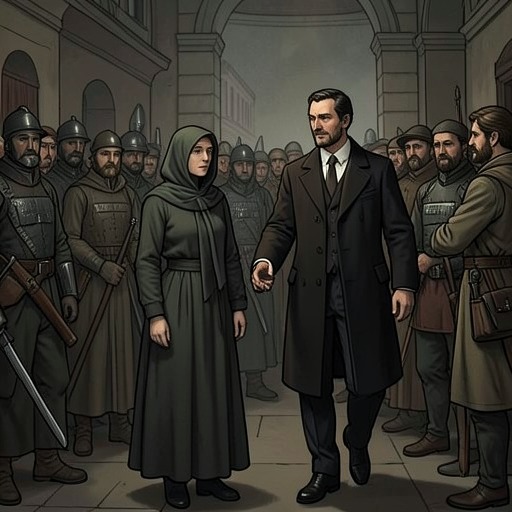
Her encounter with Don Félix comes through violence rather than recognition. Hearing a clamor in the meadow, the shepherds and Felismena find three knights fighting one. The lone knight has already killed one opponent but is close to being overwhelmed by the remaining two. Felismena intervenes, condemning the advantage of three against one, and kills the two attackers with arrows: one shot passes between a knight’s eyes, the next pierces another beneath the left breast and through the heart. The surviving knight removes his helmet, and Felismena recognizes Don Félix.
She does not let his gratitude stand without confronting the history behind it. She reminds him that she once received his attentions through tournaments and other courtly displays, that she served him for a year as a page, and that she acted as intermediary in his love for Celia despite the pain it caused her. She recounts leaving her home, enduring the life of a page, and continuing to love him in shepherdess’s dress. Her rescue makes visible the courage foretold at her birth; her speech makes visible the cost of that courage when it has been devoted to a man who did not recognize her.
Repentance and Narrative Role
Hearing Felismena’s account, Don Félix acknowledges that he loved Celia and forgot her, while admitting that neither Celia’s beauty nor absence excuses his conduct. He recognizes that the past wrongs will trouble him even if Felismena forgives him. She does forgive him, explaining that her enduring love cannot bear to withhold forgiveness; Don Félix returns to his former love for her. The reconciliation is therefore not a sudden discovery that his past behavior did no harm: his own remorse preserves the knowledge of that harm even as she chooses to pardon him.
Dorida then invites Felismena and Don Félix to join the company at Diana’s Temple, where the wise Felicia and the shepherds and shepherdesses are waiting. They travel together, and Felismena tells Don Félix what has happened since they last met, including her service as his page and the events connected with Felicia and the shepherds. He is astonished that he failed to recognize her during that service, while also rejoicing that she loves him. At Diana’s Temple, the company is married to those they love, and Felismena and Don Félix’s union gives her long, largely unreturned service a conclusion different from the misfortune foretold by Venus. Her plot combines the persistence of a quest with the reversals of a love story: each disguise and sacrifice brings her nearer to Don Félix, but only her armed intervention and direct account of the past make recognition and reconciliation possible.