Belisa
DianaBelisa is a shepherdess whose romance with Arsileo is shaped by divided affection, a staged tragedy, and the painful difference between what she sees and what has happened. Believing that Arsileo has been killed by his father, Arsenio, and that Arsenio has then killed himself, she abandons her family home and spends six months alone, convinced that consolation would be an offense to her grief. Her story turns on the later revelation that both deaths were faked through sorcery, and on the reunion that restores the possibility of happiness without erasing the suffering she has endured.
Identity and Background
Belisa is born in a village set in a wooded landscape between two rivers. The houses stand far apart amid gardens, flowers, and cultivated produce, and the inhabitants belong to families regarded as free by virtue of their ancient lineages. Her account begins in this settled world of household, kinship, and rural work, a contrast to the lonely shelter in which the other characters eventually find her.
When she first appears in the narrative, she is asleep in a shepherds’ hut on a small island in a pond. The island lies in a green valley, and the stream that runs through it rises from the pond. Belisa sleeps on a makeshift bed of willow branches and grass, still weeping; her disordered blond hair, blue clothing, and bare foot make her seem both exposed and withdrawn from the company that has entered. On waking, she reacts in alarm to the visitors and insists that the hut is a place for those whose love has left them incurable, not a place where comfort can reach them.
Her grief seems to have spread into the landscape around her. Belisa describes the island’s greenery, water, and moving trees as if they were sustained by her tears and sighs, and imagines the birds and animals as witnesses to her complaints. This is not simply a scenic setting: the pastoral valley gives visible form to the solitude in which she has enclosed herself.
Arsenio and Arsileo
Belisa’s story begins with Arsenio, a prominent shepherd whose wife, Florinda, died young. Their son, Arsileo, was sent to the Academia Salamantina when he came of age, as Arsenio wanted him to pursue a virtuous education rather than fall into idleness. Fifteen years after Florinda’s death, Arsenio saw Belisa at the village market and fell in love with her.
For more than four years, Arsenio pursued her persistently. He sought occasions to meet her while she carried food to the shepherds, went to the river with washing, or fetched water. Belisa, who knew little of love at the time, alternated between pretending not to understand, treating his advances as jokes, and resenting his persistence. She says she could neither stop him with her words nor give him even the smallest favor. Her later account makes clear, however, that his devotion eventually mattered to her: she could not treat his affection as if it had left her untouched.
The change begins with a letter sent in Arsenio’s name. Belisa comes to suspect that Arsileo, rather than his father, supplied much of its intellectual substance. Reading it softens her resistance, and she falls in love with Arsileo, while also returning some of Arsenio’s affection. The distinction is central to her account: she loves Arsenio partly so as not to repay his long devotion with ingratitude, but gives her freedom to Arsileo. As her love for the son deepens, the father continues to send gifts and messages, leaving her increasingly conscious of the obligation his attentions create.
Belisa’s attachment to Arsileo becomes mutual. She recalls hearing him play and sing, receiving letters and sonnets from him, and listening to him sing beneath her window. Their feelings become clear to both, though Belisa describes their communication as constrained by secrecy and caution. Arsileo’s later visit to the fountain confirms the depth of her attachment: she says she already loved him before she looked at him, while he falls in love with her when he sees her there.
The Apparent Deaths and Belisa’s Exile
The catastrophe begins with a secret meeting arranged for a summer night. Arsileo is to climb a mulberry tree in the garden of Belisa’s father and speak to her at a window. Belisa later regrets choosing this dangerous rendezvous, since Arsileo had many ordinary opportunities to meet her in the fields, by the river, or while tending the cows. Arsenio, meanwhile, has been in the habit of keeping watch near her street. That night he sees Belisa at the window and a man in the tree, but does not recognize his son.
Enraged, Arsenio leaves, arms a crossbow with a poisoned arrow, and returns to shoot the figure in the tree. The arrow strikes Arsileo in the heart. As he falls, he manages only a brief lament about how little fortune has allowed him to serve Belisa. Arsenio recognizes his son by his voice and, after finding him dead, kills himself with his own sword. Belisa witnesses the scene and interprets it as the irreversible consequence of her love and the meeting she arranged.
She flees her parents’ house and makes her way to the remote refuge where she is later discovered. For six months she sees and speaks to no one and makes no effort to seek company. In telling her story, she rejects the idea that recounting sorrow must relieve it: remembering and repeating her misfortune, she says, intensifies it. She also grieves both men, not only Arsileo. Belisa recalls Arsenio’s sustained affection, kindness, and sleepless nights, and says that she might have married him had Arsileo never come to the region. Her account preserves the painful asymmetry of her feelings without reducing either man to a passing complication.
The Deception and Reunion
Belisa’s account is told to a company that includes the nymphs and the shepherds Sireno, Silvano, and Selvagia, as well as Felismena. Dorida offers her help and asks her to explain her sorrow, though Belisa makes plain that she expects no comfort from telling it. Her listeners are moved to tears by the story she believes to be true.
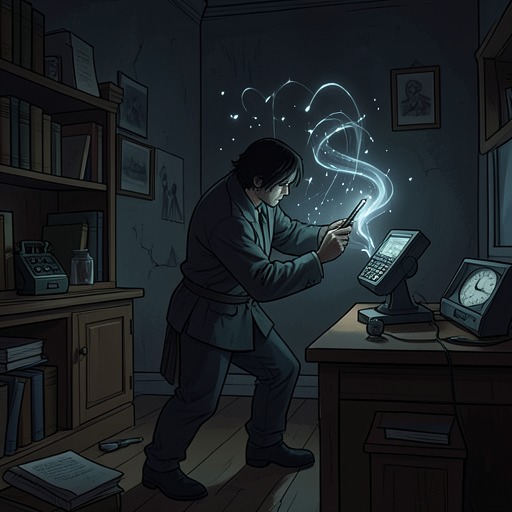
The apparent deaths are later exposed as a deception. Polidora asks whether Belisa is certain that Arsenio and Arsileo died, then tells her that both are alive. She identifies Alfeo as the cause of the false scene: a sorcerer who could make spirits assume familiar forms, he arranged for two spirits to take the shapes of Arsileo and his father and enact the deaths before Belisa. Belisa had seen the scene with her own eyes, so the revelation does not instantly undo her disbelief; she asks how Polidora can know and is told that Arsileo himself provided the truth.
Polidora brings Belisa to Arsileo. Hearing his voice, Belisa recognizes him and says that the sorrow occupying her has at last lifted. Arsileo is so overcome at the sight of her that he cannot speak at first. When he does, he describes the joy of seeing her as recompense for his suffering; Belisa answers that the pain of his supposed death measures the happiness of finding him alive. The nymphs share in their emotion, and the company sets out together for Felicia’s house, recounting what has happened. The reunion restores Belisa and Arsileo to each other, though the evidence here does not establish what follows for their relationship.
Narrative Role and Significance
Belisa’s history is an embedded tale of love and misrecognition: the same scene that seems to confirm the lovers’ destruction is later revealed to have been manufactured by magic. The reversal depends on the difference between witnessed appearance and reliable knowledge. Belisa’s grief is genuine even though its apparent cause is false, and the story gives weight to the six months of isolation that the revelation cannot simply erase.
Her divided affections also complicate a straightforward story of a single pursuit. Belisa resists Arsenio, then recognizes the force of his devotion even as she gives herself to Arsileo; afterward she mourns both father and son. The quiet rural spaces of her childhood, the dangerous garden meeting, and the secluded island hut mark successive changes in her life—from social belonging to secrecy, then to self-exile. Her reunion with Arsileo brings the tale out of isolation, but its emotional resolution rests not on forgetting the tragedy, rather on learning that the tragedy she mourned was a deception.