Arsileo
DianaArsileo is a gifted poet and musician whose relationship with Belisa is entangled from its beginning with his father Arsenio’s courtship of her. First believed to have been killed in a night-time encounter, he later emerges alive: the apparent deaths were an illusion arranged by Alfeo, who sought to drive Belisa to despair. Felismena’s intervention restores the lovers’ knowledge of one another and turns a story of apparent bereavement into a reunion.
Identity and Background
Arsileo is the son of Arsenio and Florinda. After Florinda died only a few years into their marriage, Arsenio grieved so intensely that he nearly died himself; his son became a consolation. Arsileo’s beauty was said to rival his mother’s, and, as he grew, his father recognized his promise and sent him to the Academia Salamantina, believing that idleness in young men bred vice and undermined virtue.
After fifteen years of widowhood, Arsenio fell in love with Belisa, a young woman in their village. He pursued her for more than four years without winning even the smallest favor. When Arsileo returned from his studies, he was admired by both the village’s leading people and the wider community for his judgment, grace, gentleness, poetry, and music. Arsenio concealed his own passion from his son, who did not recognize the cause of his father’s sadness.
The Borrowed Courtship
Arsenio enlisted his friend Argasto to obtain a love letter from Arsileo. Argasto told Arsileo that the letter was for a shepherd who wished to court a distant shepherdess, and prompted him to include sentiments suited to Arsenio’s purpose. Arsenio then arranged for the letter to reach Belisa. Arsileo thus became an unwitting author of his father’s courtship: Belisa received his words as evidence of the son’s feeling, although they had been solicited and used by the father.
Arsenio extended the same strategy to music. One summer night, beneath a large ash tree in the square opposite Belisa’s lodging, he praised Arsileo’s singing and playing until their neighbors urged the young man to fetch his harp. The music was performed where Belisa could not help hearing it. She understood that Arsenio hoped to win her through his son’s gifts, and recognized the danger: a woman might fall for the performer rather than the suitor who had arranged the performance. Arsileo’s art, which his father meant to deploy on his own behalf, instead deepened Belisa’s attachment to Arsileo.
Belisa later described the reversal in her account to the nymphs. After reading the letter, she suspected that it expressed Arsileo’s understanding more than Arsenio’s own feeling. Her resistance softened, and she found herself loving the son for himself while loving the father in return for his devotion. Arsenio sent her presents and messages; she answered without openly declaring great love, but Arsileo’s place in her heart grew. When she heard Arsileo play the harp and sing, she understood that his father had arranged the performance, yet the son’s own grace was what moved her.
Belisa and the Apparent Death
Arsileo’s first face-to-face encounter with Belisa occurred at a fountain, where she was sitting with other shepherdesses. He asked permission to spend the midday rest with them. When their companions left to milk the cows, Belisa remained behind, and Arsileo found the opening to speak of his feelings. Belisa’s recollection emphasizes that she had loved him before seeing him, while he fell in love when he looked at her. Both were constrained by embarrassment and fear of giving offense; their eyes conveyed what Arsileo initially struggled to say aloud.
The lovers later arranged a secret meeting at night. Arsileo was to climb a mulberry tree in Belisa’s father’s garden and speak to her from the window of her room. Arsenio, who often watched the street, saw Belisa at the window but could not identify the person in the tree. Enraged, he went for a crossbow and returned with a poisoned arrow. Belisa’s account describes the apparent catastrophe: the figure in the tree was struck and fell, and the figure who seemed to be Arsenio then recognized the supposed victim as his son and appeared to kill himself with his sword. Belisa believed that father and son had both died before her eyes.
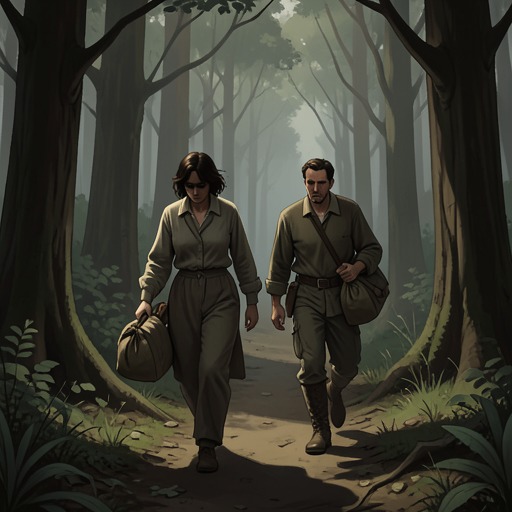
Overcome, she left her parents’ house and withdrew to the wilderness. For six months she lived in seclusion, without seeing or speaking to anyone, and lamented what she understood as the deaths of both men. Her grief includes distinct sorrow for Arsenio: she remembers his persistent love, his goodness, and the nights he had spent suffering on her account. The scene’s apparent finality explains why Arsileo’s later survival is not merely a rescue from danger but the undoing of the loss around which Belisa’s exile has formed.
The Deception Revealed
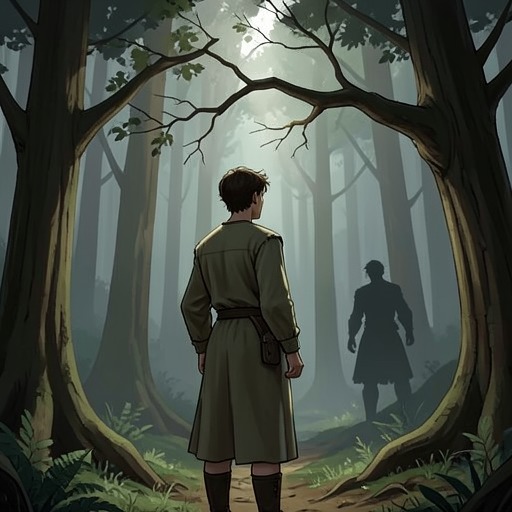
Arsileo later tells Amarilida that Alfeo, a reputed necromancer who had loved Belisa before Arsenio began courting her, engineered the apparent deaths. Alfeo knew of the lovers’ meeting at the mulberry tree and created two spirits: one took Arsileo’s shape and went to the rendezvous, while the other took Arsenio’s shape and shot that figure, then staged a father’s suicide in remorse. Alfeo’s plan was to make Belisa believe that both men had died, so that despair would drive her to take her own life or at least flee as she did.
The revelation reframes Belisa’s testimony without diminishing its emotional truth. She witnessed what appeared to be a double death and responded to the sight; she did not know that the figures were spirits. Arsileo says that Armia later told him what had happened, and that he believes her account in light of subsequent events. He remains alive but separated from Belisa, living for six months in a shepherd’s hut with Amarilida and enduring a life of grief. His story therefore exposes not a change in Belisa’s fidelity, but the false appearance that made each lover believe the other was lost.
Felismena’s Intervention and Reunion
Arsileo’s account reaches Felismena when she encounters him with Amarilida. He is singing in tears and reproaching Alfeo, while remembering Belisa and wishing to see her again. Felismena recognizes him as Belisa’s beloved, whom she had believed dead. She asks to shelter from the midday heat, then tells him what she knows of Belisa’s continued faith and gives him the information he has long wanted: where he can find her.
Felismena recounts the course of her own travels, including the events that brought her to the house of the wise Felicia and the nymphs’ discovery of Belisa asleep on an island in the pond. Hearing that Belisa’s love has never abandoned him overwhelms Arsileo with joy; he is so overcome that his senses fail him for a moment, and he thanks Felismena with tears, taking and kissing her hands. Amarilida confirms that Arsileo has spent the six months in the hut in profound sadness, and Felismena explains that the news of Belisa is the remedy his grief needs.
When Belisa later hears Arsileo’s music, she recognizes his voice and wonders whether she can truly call him hers. Arsileo, seeing her, is temporarily unable to speak; once he recovers, he says that her sight repays his long suffering. Belisa answers that the joy of seeing him is measured by the despair his supposed death caused her. Their reunion thus resolves the separation not through a change of heart but through recovered knowledge: each learns that the other has survived and remained faithful.
Narrative Role
Arsileo’s story turns on the difference between a lover’s words and the circumstances in which they are heard. His letter and music are first appropriated by Arsenio, who hopes to make another man’s talents serve his own suit; instead, those talents establish Arsileo’s bond with Belisa. Later, the staged death makes sight itself unreliable: Belisa’s apparent eyewitness certainty cannot tell her that the figures are spirits. The revelation of Alfeo’s plot reverses the meaning of the scene, while Felismena’s testimony replaces the false evidence with news that can reunite the lovers.
His poetry and music also give the plot its recurring means of recognition. Arsileo’s song at the arranged courtship brings Belisa closer to him; his lament in the hut carries his longing into the scene where Felismena finds him; and, at the reunion, his voice lets Belisa identify him before she can be sure he is truly present. His artistic gifts are therefore not ornament alone: first redirected by his father, they become part of the lovers’ own history and finally help make their recovery possible.