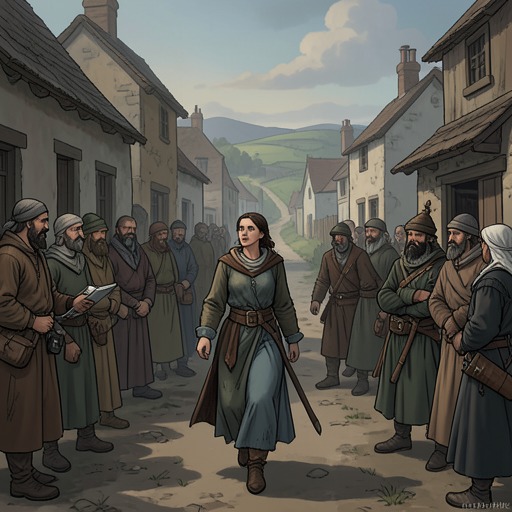
Felicia
DianaFelicia is the celebrated wise woman in the Forest of Diana whose knowledge and kindness make her a sought-after source of relief for people suffering from love. In the episodes presented here, she is less a directly observed character than a powerful presence at a distance: her fame shapes decisions, offers hope to the afflicted, and helps draw separate stories toward the Temple of Diana, where she awaits the returning company.
Identity and Reputation
Dorida identifies Felicia as the wise woman who lives in the Forest of Diana and whose calling is to provide remedies for passions of love. She describes Felicia not simply as knowledgeable but as unmatched in her time: no human person, she says, can equal her learning. Her character is also distinguished by goodness and an inviting disposition. Those qualities, in Dorida’s account, make people everywhere desire her company, so that her standing rests on more than the promise of a technical cure.
This reputation grants Felicia a particular authority in a world where the usual resources of judgment and self-command often fail. Dorida reflects that a sufferer’s discretion and courage might seem to offer medicine for love’s afflictions, yet love leaves few people free enough to use such qualities effectively, especially when judging their own cases. Felicia represents the hope that knowledge and assistance might reach where private reasoning cannot. The text establishes the scope of that hope without explaining, in these passages, the precise method by which she works.
The Forest and the Call for Help
Felicia’s home is associated with the Forest of Diana, a place the nymphs know as their dwelling. Dorida recounts that she, Polidora, and Cintia were returning from a visit to a kinswoman of one of the nymphs beyond the Galician passes when they stopped in a shaded valley. There, savages who had long desired them attacked after the nymphs refused their advances. Selvagia and the shepherds helped free them. The rescue creates the immediate bond through which Dorida can explain who the nymphs are and invite the others toward Felicia’s household.
The invitation becomes an answer to several kinds of distress at once. Dorida urges Felismena to go with the nymphs, saying that Felicia’s knowledge and generous nature have brought relief to many. Felismena, a woman of high rank traveling in a shepherdess’s habit, has spent more than two years searching for Don Félix after his disappearance. She doubts that anyone but the source of her suffering could cure her, but accepts the journey because the nymphs’ company will ease her grief. Felicia’s influence thus begins before the travelers meet her: the prospect of aid alters the course of a search sustained by hardship and hope.
A Remedy for the Shepherds
The invitation extends beyond Felismena. Polidora tells Sireno, Silvano, and Selvagia that their troubles may also be relieved through Felicia, and asks them to accompany the nymphs. Sireno hesitates to expect a remedy, since he believes that every path to one has been closed; nevertheless, he agrees to follow. His sorrow has been sharpened by the loss of Diana, while Silvano’s steadfast love for her has brought him its own suffering. Felicia’s name therefore gathers people whose situations differ but whose pain has made ordinary consolation seem insufficient.
The group sets out together, leaving their flocks in the care of others until their return. That practical detail marks the journey as a purposeful interruption of pastoral routine: the shepherds temporarily entrust their daily responsibilities to seek help beyond the familiar fields. The movement toward Felicia links the novel’s love complaints to a shared destination. Her promised assistance is not merely a private hope for Felismena, but a possibility extended to the assembled company.
Influence and Narrative Role
Felicia’s power in these episodes is chiefly prospective. The nymphs speak on the basis of her reputation, and the travelers act on the expectation that she can help; the text does not here show the specific treatment she gives them. This distance makes her an organizing presence rather than the center of a single encounter. Her name converts scattered histories of longing into a common itinerary, while her house offers a possible alternative to the helplessness that characters associate with fortune and love.
Her role also complicates the pastoral setting. Rivers, shaded groves, flocks, and songs provide the familiar spaces in which the shepherds voice their grief, but the journeys through the forest lead toward a figure associated with learning and extraordinary aid. Felicia’s sphere is connected to Diana’s woodland world without being reducible to the lovers’ pastoral lament: it promises a way to respond to passions that natural beauty and song can express but cannot resolve.
The Temple and the Promise of Return
Felicia remains a point of reference as Felismena’s search continues. After helping settle the dispute between Amarilida and Filemón, Felismena recalls her hope in the wise woman’s words as she travels on, still expecting that fortune may eventually tire of pursuing her. The recollection shows how Felicia’s earlier promise sustains her across further hardship, even when immediate relief is not in view.
At the end of the supplied narrative, Dorida conveys Felicia’s offer that Felismena and Don Félix should come with her to the Temple of Diana, where Felicia and the shepherds are waiting. Don Félix accepts, and the couple travel there together. The company is received with joy, and the narrative reports that all are joined in marriage with those they love. Felicia is thus associated with the destination at which the separate journeys converge and the group’s longed-for unions are celebrated. The episode confirms the fulfillment of the promised gathering, while leaving the precise nature of Felicia’s personal intervention unstated.