Celia
DianaCelia is a lady at Princess Augusta Cesarina's Court whose changing affections draw Don Félix, Felismena, and the disguise of Valerio into a painful triangle. She first appears as the object of Don Félix’s courtship, but her most consequential attachment is to the page who serves him: Felismena, living under a male identity. Celia’s story ends in sudden death after she discovers that Valerio has been pleading Don Félix’s case in earnest, a revelation she understands as proof that the page does not return her love.
Identity and Introduction
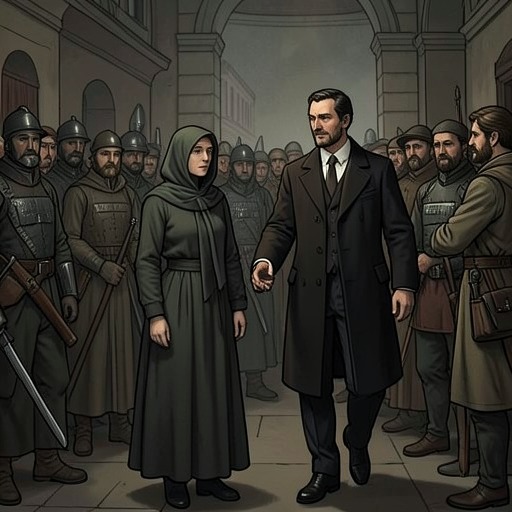
Celia is introduced through the livery Don Félix wears at court. When Felismena arrives in disguise and asks about the richly dressed gentleman, a court page explains that he is Don Félix, a native of Vandalia whose family home is in Soldina, and that the colors of his livery—blue, white, and yellow—belong to Celia. His clothing makes his devotion publicly legible: he does not merely wear her colors but has adopted them as a conspicuous sign of service to her.
Celia is not, however, unaware of the complications in his attachment. Don Félix tells Valerio that Celia has become tired of favoring him after hearing of the love he had left behind in his homeland. In a letter to Don Félix, she says that his confession of the earlier affair has confirmed her suspicions and made his excuses difficult to trust. She recognizes that he had loved another before her and warns that a later beloved might likewise displace her. Her wariness is grounded in what Don Félix himself admits, rather than in an imagined rival: he acknowledges that he began their courtship as Celia says, though he now claims to love her above all others.
Celia and Don Félix
Celia’s letter presents her as both emotionally invested and alert to the risks of a courtship shaped by absence and divided loyalties. She reproaches Don Félix for having given her reason to suspect his past, and she refuses to treat his present assurances as sufficient proof of constancy. She also warns him against allowing any lady to become the occasion of his ruin. The caution cuts two ways: it responds to his conduct while showing that she understands how readily a lover’s declarations can fail to secure a lasting bond.
The relationship is further complicated by Felismena’s presence at court. After Don Félix leaves his homeland, Felismena follows him, disguises herself as a man, and spends a year serving him as a page. Don Félix eventually confides his love for Celia to Valerio, unaware that the listener is the woman he once loved. He recounts Celia’s earlier displeasure and his own claim that his present love is sincere. Celia’s distrust and Don Félix’s assurances are therefore relayed through a person with a history of her own with him, though Celia does not know the page’s identity or the full cost of that role.
Valerio and the Reversal of Affection
Celia grows attached to Valerio while the disguised Felismena carries messages between her and Don Félix. The service places Felismena in a painful double position: she helps the man she loves pursue another woman, even as her own concern and visible tears affect Celia. Celia takes those tears as evidence of Valerio’s affection for her. As the page continues to plead Don Félix’s cause, she believes the requests for favor are a pretext to obtain her company, not an honest attempt to restore the other courtship.
The misunderstanding breaks when Celia realizes that Valerio is genuinely asking her to treat Don Félix well. She concludes that the page cannot love her as she had thought, since he is helping another man secure her favor. In her reproach, she measures Valerio’s apparent betrayal against the affection she believes she has given him and the love she says she has withheld from Don Félix for his sake. She then orders Don Félix not to see her and Valerio not to appear before her again. The scene reverses the expected roles: the intermediary who seemed to be courting Celia is revealed, from Celia’s perspective, as the devoted advocate of her former lover.
Death and Narrative Consequences
Celia retreats behind a closed door, and neither Valerio’s pleas nor explanations persuade her to receive the page again. From inside, she continues to refuse reconciliation and threatens to take her own life. Felismena does not tell Don Félix what has happened, instead reporting that Celia was occupied with a visitor. The next morning, the city learns that Celia suffered a fainting fit during the night and died. The narrative reports the sequence but does not establish that she carried out her threat; her death follows the confrontation, while its precise cause remains unstated.
Her death devastates Don Félix, who laments and weeps, and leaves Felismena divided between grief for Celia and anguish at seeing Don Félix suffer. The consequence for Felismena is immediate as well: after Celia’s death, Don Félix disappears without telling his household where he has gone, prompting Felismena to continue searching for him. Much later, when Felismena saves him from three attackers, she recalls the tears she shed while seeking Celia’s favor for him. Don Félix acknowledges that he loved Celia and forgot Felismena, though he also insists that he had not entirely lost awareness of Felismena’s worth. The magic water that revives him also ends the pain associated with his love for Celia and renews his love for Felismena.
Celia’s role thus extends beyond the courtship that bears her name. Her letter exposes Don Félix’s earlier divided history; her attachment to Valerio makes Felismena’s disguise emotionally consequential; and her sudden death precipitates Don Félix’s disappearance. The tragedy rests on concealed identity and misread devotion: Celia loves the person she believes Valerio to be, while Valerio’s apparent rejection is in fact Felismena’s effort to serve Don Félix at her own expense.