Rodrigo de Narváez
DianaRodrigo de Narváez is a distinguished captain, governor, and defender of Álora and Antequera whose defining deeds join military courage to clemency. In Felismena’s tale, he captures the Moorish knight Abindarráez but grants him leave to reach Jarifa; when the lovers return together, Rodrigo works to win their pardon and refuses to turn their gratitude into profit. His authority is measured not only by victory in combat but by how generously he treats those in his power.
Identity and Background
The tale places Rodrigo in the time of the Infante Don Fernando, later king of Aragon. His reputation for virtue and courage had been established in both war and peace, and he distinguished himself in the campaign in which the Infante took Antequera from the Moors. His deeds earned him the governorship and defense of Antequera and Álora, a reward the narration describes as inadequate to his service. He spent much of his time at Álora with fifty selected hidalgos paid by the king, guarding the stronghold and undertaking armed expeditions.
Rodrigo is presented as an active commander, impatient with idleness and committed to military exercise. Yet his authority is not merely a matter of rank or force. His men follow his direction, and his standing among them is matched by a reputation for liberality: the narrative suggests that a good captain makes even outsiders his own through generosity. These traits become crucial when a patrol brings him into contact with a formidable enemy whose private need calls for something other than a conventional prisoner’s fate.
The Night Patrol and the Captive
On a clear summer night, Rodrigo rides out from Álora with nine of his knights, leaving the others to guard the fortress. Near a fork in the road, the party divides: Rodrigo takes four men along one route, while five ride along the other, with a horn signal agreed upon in case either group needs help. The five hear a man singing with the sighs of a lover and hide among trees to watch him pass. The singer is Abindarráez, traveling from Cártama toward Coín, where he hopes to meet Jarifa.
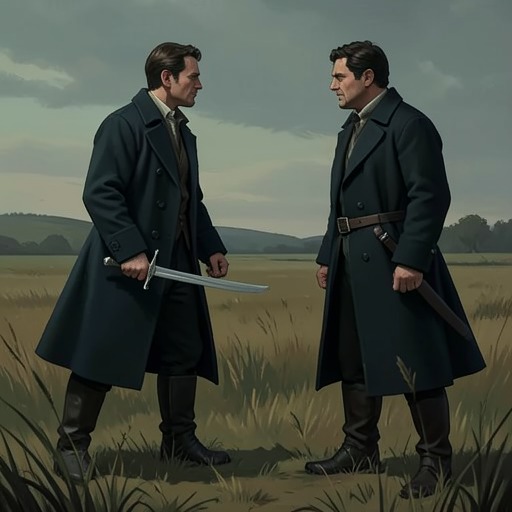
The knights attack, and Abindarráez proves dangerous despite being occupied by love. He fights all five, wounds his thigh, brings three of them down, and, after losing his lance, makes a show of flight. He then retrieves a fallen lance with remarkable agility and turns on the remaining two. Their danger prompts a call on the horn; Rodrigo arrives before they can be overcome. Having seen the Moor’s skill, he desires to test himself against him and courteously proposes a single combat, with the defeated man as the victor’s prize. Abindarráez is finally beaten not through cowardice but by accumulated fatigue, his wound, and his exhausted horse. Rodrigo helps him to his feet and binds his wounds rather than treating defeat as license for cruelty.
Mercy and the Lovers’ Promise
On the ride back to Álora, Rodrigo studies his prisoner’s bearing and notices that his grief seems out of proportion to his wounds. Abindarráez explains that his sorrow comes from love and from the danger of losing the chance to see Jarifa. He also recounts the calamity of the Abencerrajes: once honored in Granada for their courage and service, members of the family were executed after an alleged conspiracy against the king, while Abindarráez and his father, he insists, were innocent. His own love for Jarifa is threatened when her father is transferred from Cártama to Coín, leaving the lovers separated.
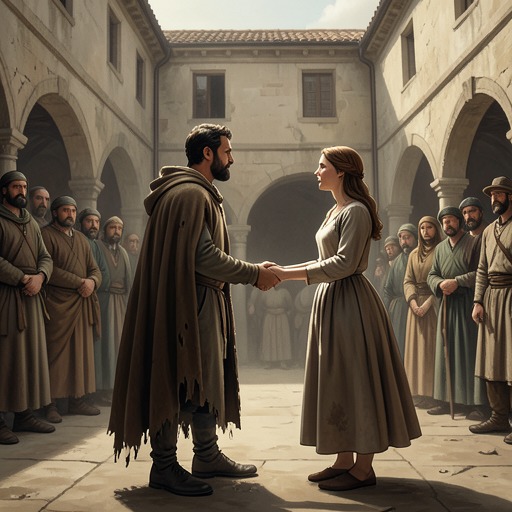
Jarifa has summoned Abindarráez to meet her, and he is traveling in hope of marriage when Rodrigo’s patrol intercepts him. Moved by the story and unwilling to obstruct what he recognizes as a worthy undertaking, Rodrigo offers him freedom on condition that he return to Álora as a prisoner within three days. He stakes his own word before his men, accepts Abindarráez’s promise as a knight, and provides a replacement horse because the Moor’s mount has been injured. His clemency is therefore not a release without terms: it depends on trust, and on the captive’s willingness to bind himself by honor.
Abindarráez reaches Coín and meets Jarifa, who declares that she intends to share his fate and accompanies him back. Rodrigo receives them both. Jarifa’s presence turns the promised return into a striking reversal: Abindarráez has kept his word, but he brings the woman he loves as a second captive. Rodrigo welcomes them rather than reproaching them, and arranges for Abindarráez’s wounds to be treated. After four days of care, the Moor is well enough to ask for Rodrigo’s help in resolving the lovers’ situation.
Pardon, Release, and Generosity
Rodrigo writes to the King of Granada, explaining that Abindarráez and Jarifa married without her father’s permission, that the Moor returned voluntarily to captivity, and that Jarifa chose to accompany him. He asks the king not to condemn Abindarráez merely for belonging to the Abencerrajes, and argues that the young man and his father were not guilty of the conspiracy. Rodrigo offers to relinquish the ransom and release Abindarráez, asking in return that Jarifa’s father forgive her and accept Abindarráez as a son.
The king, who esteems Rodrigo’s courage and character, grants the request and orders Jarifa’s father to forgive the couple. At Álora, the father receives them, pardons their marriage without his knowledge, and acknowledges that Jarifa has chosen a better husband than he would have selected. Rodrigo celebrates the reconciliation with feasts, then declares Abindarráez free to go wherever he wishes. He accompanies the couple to Coín, where their marriage is celebrated. Later, Jarifa’s father sends four thousand gold doblas, while Abindarráez and Jarifa also send horses, arms, and fine linen in gratitude. Rodrigo distributes the horses and weapons among the knights who rode with him, but returns the money to help meet the costs of the wedding; he welcomes Jarifa to his house as though it were her own.
Character and Narrative Significance
Rodrigo’s conduct links martial honor to restraint. He fights Abindarráez openly, recognizes his courage, tends his wounds, and then entrusts him with a freedom secured by a pledged return. The arrangement depends on reciprocal honor rather than force alone: Abindarráez keeps his promise, while Rodrigo uses his own reputation to persuade the king to show mercy. In the story’s frontier setting, Christian and Muslim identities remain distinct, but they do not prevent mutual recognition between men who value courage and fidelity.
The ending tests Rodrigo’s generosity as carefully as the duel tests his strength. He accepts the gifts as tokens of friendship but refuses the cash as personal ransom, redirecting it toward the couple’s wedding expenses. Felismena tells this story at Felicia’s house, where it offers a complete contrast to love narratives shaped by suspicion, betrayal, or separation: here, a captor’s clemency and a lover’s kept promise allow private devotion to receive public and familial recognition.