Montano
DianaMontano is a shepherd whose courtship of Ismenia becomes one link in the story’s shifting chain of desire among Ismenia, Alanio, Selvagia, and himself. Initially, he has long sought Ismenia without success; when she pretends to accept his love as a way to provoke Alanio, Montano’s devotion helps turn her strategy into a genuine attachment. His later attraction to Selvagia shows how quickly the pattern can reverse: the shepherd who had been Ismenia’s eager suitor becomes, for a time, the pursuer of someone whose heart is fixed elsewhere.
Identity and Setting
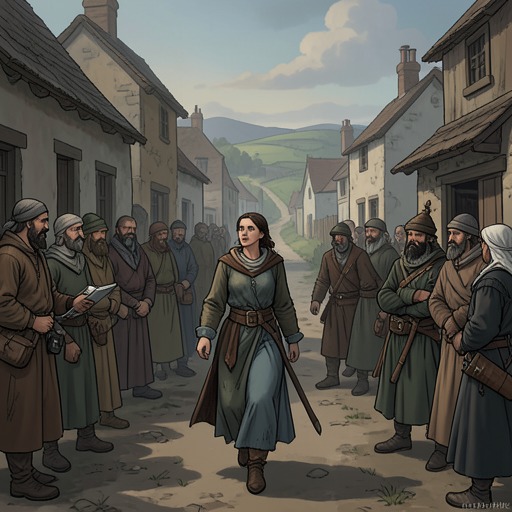
Montano belongs to the pastoral world recounted by Selvagia. Her home lies in a fertile province by the Douro River, where shepherds and shepherdesses gather for seasonal celebrations at the Temple of Minerva, but their apparently quiet rural lives are unsettled by love, family authority, and changing fortune. Montano is a suitor in this community, not a detached observer of its romantic conflicts: his own choices help give the four shepherds’ overlapping attachments their changing shape. His family is also connected to Selvagia’s by practical business. Selvagia’s father and Montano’s father, Felino, meet over matters concerning pastureland, and their visits bring Montano into contact with Selvagia. The plot thus places his change of affection within the same ordinary pastoral network of villages, grazing, and family dealings that also carries the lovers into one another’s paths.
Courtship of Ismenia
Montano has sought Ismenia for a long time before she decides to feign affection for him. Her purpose is to make Alanio, who has neglected her while loving Selvagia, feel the loss of a rival’s advantage. Montano, believing that Ismenia has at last chosen to return his love, responds with great joy. He serves her and takes on hardships for her, and these actions, together with Alanio’s wrongs against Ismenia, help transform her pretense into genuine love. Ismenia soon makes clear to Alanio that she has turned to Montano and no longer wishes to see him. Alanio is deeply troubled by the prospect that his rival has gained her favor, but his renewed attention to Ismenia does not restore their former arrangement. His visits to Selvagia diminish, and Selvagia remains committed to him even as his own attention shifts. Montano’s courtship therefore begins as the instrument of Ismenia’s attempt to change Alanio, but becomes a relationship that she values for itself.
The Four-Way Reversal
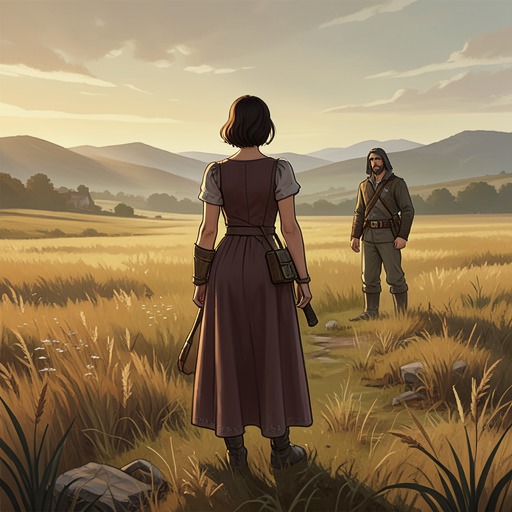
The attachments do not settle into a stable pairing. At a later point, while Selvagia is bringing her sheep to the fold, Montano sees her and begins to love her. The account leaves open why his ardor for Ismenia has cooled: it may be because her abundant favors have wearied him, or because he is jealous of Alanio’s efforts. Either way, his new interest in Selvagia adds another turn to a chain in which each shepherd seeks someone whose attention is directed elsewhere. The four movements can be traced through their pursuits: Selvagia loves Alanio, Alanio loves Ismenia, Ismenia loves Montano, and Montano comes to love Selvagia. Their paths repeatedly cross in the forest between their villages. When Selvagia arrives at one such meeting, she finds Alanio seeking Ismenia, who laughs at his tears and sighs. Selvagia confronts Ismenia about the earlier deception; Ismenia answers that Selvagia has also benefited from the confusion by taking Alanio from her and drawing Montano away from his former state. The encounter makes their rivalry more than a simple contest between two women: each person’s apparent gain becomes another person’s loss.
Marriage and Narrative Role
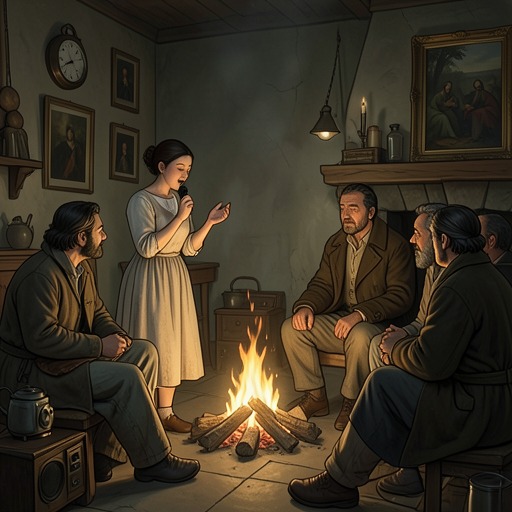
Selvagia’s account ends with a contrast between the lovers’ dispositions and their outcomes. After she has sung of her misfortune, her father takes her from their village without explaining why and brings her to stay with her aunt Albania. She later learns that Montano has married Ismenia, while Alanio is planning to marry Ismenia’s sister Silvia. Selvagia nevertheless wishes Alanio happiness with his prospective bride, a generosity that underscores the distance between her enduring affection and the changing attachments around her. Montano’s marriage to Ismenia closes the episode with a settled union, but it does not make the preceding shifts disappear: he had first been the rejected suitor, then Ismenia’s successful partner, then a lover whose attention turned toward Selvagia. His trajectory helps make the pastoral landscape a stage for social and emotional instability rather than an uncomplicated refuge. Family negotiations over land, village visits, sheep, and forest encounters all belong to the same world in which promises and affections change, and in which a contrived courtship can become real even as another love begins to fade.