Ismenia
DianaIsmenia is a shepherdess whose disguised courtship of Selvagia sets in motion one of the book’s most intricate pastoral love entanglements. Her prank brings Alanio into Selvagia’s affections, rebounds against Ismenia herself, and ends in a letter of confession and a later marriage to Montano. Through her, the pastoral world’s language of love and fidelity proves both powerful and precarious: words spoken in disguise can create real attachments and consequences the speaker cannot command.
Identity and Introduction
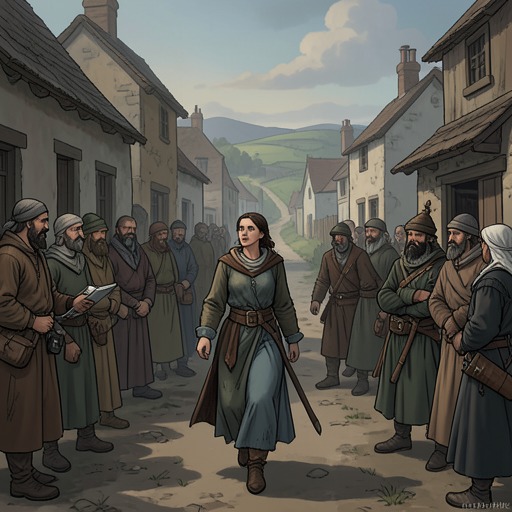
Ismenia first enters Selvagia’s account during the eve of a temple festival. The local custom leaves the shepherds outside after they have entered to pray, so the shepherdesses and nymphs can keep vigil and celebrate together. Ismenia arrives among a company of masked shepherdesses, her face covered by a white veil. Selvagia notices that the woman seated beside her repeatedly watches her, lowering her eyes whenever Selvagia looks back.
The disguise makes recognition impossible, but Ismenia turns that uncertainty into intimacy. She takes Selvagia’s hand and tells her, in a low voice, that she is devoted to her. When Selvagia wonders how a beautiful shepherdess could love another woman, Ismenia presents such love as enduring and sanctioned by fortune. Selvagia, moved by the encounter, answers with a promise of constancy. Ismenia’s concealed identity thus draws Selvagia into a bond before Selvagia knows whom she is addressing.
The Deception and Its Reversal
Ismenia continues to evade Selvagia’s requests to uncover her face and reveal her name. Selvagia’s desire to know her grows through the night, while Ismenia keeps changing the subject. The concealment is not incidental: it enables Ismenia to test and intensify Selvagia’s feelings while withholding the information that would let her understand the encounter.
The deception is connected to Alanio. Ismenia later recounts to him what happened, including that Selvagia believed the masked figure might be a man and had fallen deeply in love. Alanio hears the story, conceals his response, and draws from Ismenia a full account of the encounter. Eight days later, he appears near Selvagia’s village as she goes with other shepherdesses to a spring. She takes him for the person who had spoken to her in the shepherdess’s disguise and signals him to come over. Their conversation turns her attachment toward Alanio, whom she comes to love even after the deception is exposed.
Ismenia’s prank therefore reverses its intended direction. She had shared the episode with Alanio for laughter, but by telling him about Selvagia she gives him an opening to approach her. Selvagia’s feelings persist beyond the correction of her mistaken belief, while Alanio, in Ismenia’s view, does not show the love she thinks he owes her. The story distinguishes the playful contrivance that begins the episode from the serious attachment it unexpectedly produces.
Confession, Jealousy, and Marriage
When Ismenia learns that Alanio and Selvagia are secretly meeting, she recognizes that her own deception helped bring about the change. She sees herself as responsible both for misleading Selvagia and for giving Alanio the occasion to love her instead. She hopes that once Selvagia learns the truth she will forget Alanio; that hope fails, and Selvagia’s affection becomes stronger rather than weaker.
Ismenia responds by writing to Selvagia. Her letter does not simply accuse her rival: Ismenia admits that the fault lies with her, recalls that she began the affair for the sake of an hour’s laughter with Alanio, and fears that she may suffer for it all her life. She asks Selvagia to let the revelation be enough to relinquish Alanio and restore him to Ismenia. The appeal exposes the limits of Ismenia’s control. She can disclose the trick and plead her case, but she cannot make Selvagia’s love disappear or require Alanio to return her affection.
Selvagia later reports the subsequent pairings: Montano has married Ismenia, and Alanio intends to marry another of Ismenia’s sisters, Silvia. The account gives Ismenia a settled marital outcome but does not describe how her relationship with Montano developed. Nor does it say that Alanio’s intended marriage has already taken place. These distinctions leave the conclusion notably uneven: Ismenia is married, while the future of Alanio’s announced match is still expressed as an intention.
Narrative Role and Significance
Ismenia’s episode is shaped by layers of disclosure. First she conceals herself from Selvagia; then she tells Alanio what happened; finally she writes to Selvagia to undo the misunderstanding she set in motion. Each act of communication changes the relations among the three shepherds, but none restores the original situation. Her story turns a festival vigil, arranged to keep the women apart from the shepherds for the night, into the setting for a courtship that crosses the boundaries of identity and expectation.
The episode also complicates pastoral ideals of constancy. Ismenia speaks in the language of lasting love while acting under cover of a prank; Selvagia’s attachment, initially founded on mistaken recognition, survives the revelation; and Alanio’s response shifts the balance between the two women. Ismenia is neither merely a deceiver nor simply a rejected lover: her confession acknowledges the harm of her own device, even as her plea reveals how little power she has over the feelings it has released. Her plotline makes disguise consequential not because it remains secret, but because the truth arrives after affection has already taken hold.