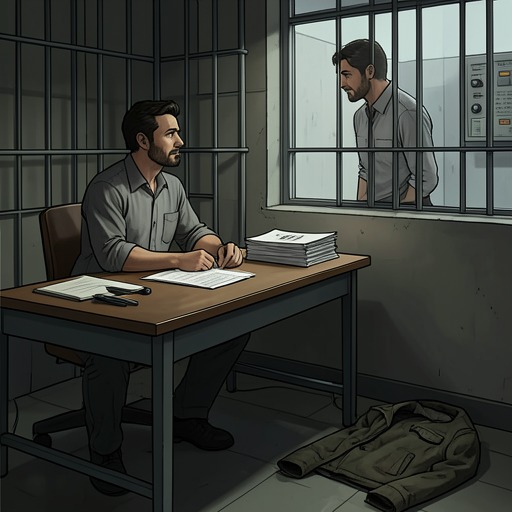
Virginia Department of Corrections
DopesickThe Virginia Department of Corrections is presented through a work-diversion initiative that sent nonviolent felons to employment at George’s Chicken. Its stated purpose was to keep people out of prison while helping them gain experience for life after their sentences; the account also shows how thin oversight and poor economic prospects could undercut that promise.
Program and Purpose
The Department’s initiative sought to divert nonviolent felons from prison into employment and give them work experience intended to ease their return to their communities after completing their sentences. At George’s Chicken, the program brought diversion workers into a plant whose workforce also included dislocated factory workers, young local residents living just above the poverty line, and immigrants with work visas or similar documentation.
Most of the people placed through the initiative came from urban centers such as Roanoke, Richmond, and the Tidewater region, or from outside Washington. Their presence at a rural poultry plant linked a state reentry policy to a workplace dealing with the practical demands of managing a varied and often transient workforce.
George’s Chicken and Local Conditions
The plant’s employment placements unfolded amid recurring problems that drew the attention of local police. Sergeant Brent Lutz said officers went to the plant at least weekly for fights, drug-related incidents, and overdoses in the company parking lot. He doubted that the company’s drug testing reliably prevented workers from submitting clean urine samples, and believed the plant’s priority was keeping workers coming in.
These conditions shaped the local view of the program, but they do not establish that diversion workers were responsible for every incident at the plant. The account instead places the program within a workplace where police encountered repeated problems and where the effectiveness of screening and supervision was questioned.
Oversight and Reentry
The county sheriff criticized the Department of Corrections for placing people in the program without supplying enough resources to monitor them. A local probation officer, one of two overseeing the diversion workers at George’s Chicken, said she was fortunate to check in with them once a month. The infrequency of those visits illustrates the gap between formal supervision and the limited contact available in practice.
The challenges extended beyond monitoring. Among workers who stayed at the plant after finishing their sentences, very few earned enough to cover their expenses independently. The probation officer described several possible outcomes: some committed new crimes, some gave up and returned home, and others absconded. Employment offered a route out of prison, but the account indicates that placement alone did not ensure stable income or successful reentry.
Role in the Narrative
The Department’s appearance is brief but revealing: its initiative represents an effort to replace incarceration with employment, while the plant’s limited oversight and low pay expose how fragile that alternative could be. The contrast is not simply between prison and work. It is between the program’s intended bridge back to community life and the insufficient monitoring and financial prospects described at its rural worksite.