FUBI heroin ring
DopesickThe FUBI heroin ring was one of Virginia’s largest heroin networks when federal agents investigated it in 2013. Informally named by investigators, it linked an interstate supply route to local dealers and users in the Woodstock area. Its story is also one of scale: heroin arrived in shipments far larger than those carried by commuter dealers, while the comparatively high returns in small towns made the region an attractive market.
Structure and Supply Route
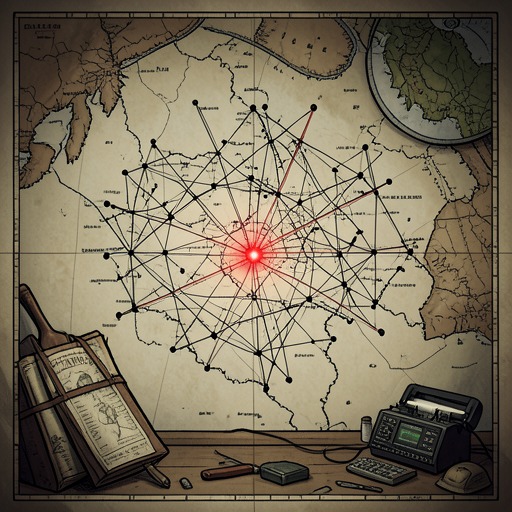
The network’s supply chain crossed state lines before reaching the I-81 corridor. By spring 2013, Sergeant Brent Lutz had assembled a profile of a supplier investigators knew as D.C., though he did not yet know the man’s real name or appearance. The heroin was reportedly packaged in Harlem and carried from New York on the Chinatown bus by young women, who earned between $300 and $500 per round trip. The packages travelled inside ordinary shopping bags and snack containers, concealing a commercial operation within routine travel.
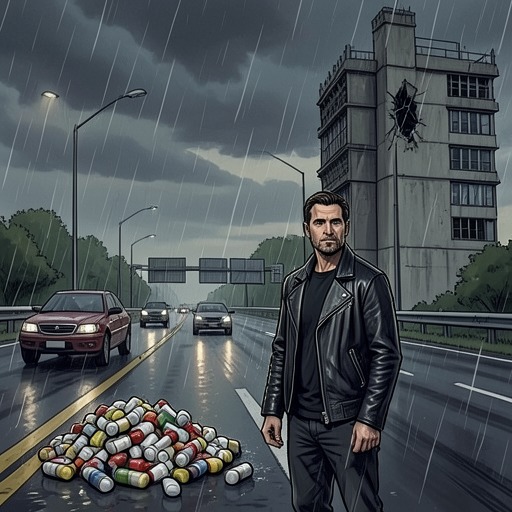
The packaging was systematic. Heroin was pressed into uniform disks weighing four ounces and hidden inside Pringles cans; the emptied cans were repacked with four disks, a few chips, and hot glue. Other emptied food packages, including Nilla Wafer and Pepperidge Farm cookie bags, were used to transport powder cocaine. These details gave investigators a material map of the route: familiar consumer packaging served as camouflage for drugs moving from an urban source to rural Virginia.
After the shipment reached Woodstock, D.C. hired two local associates, Smith and Butler, to break the large pieces into tenth-gram units for sale. D.C. reportedly feared the heroin enough to wear rubber gloves, goggles, and a face mask while they worked. His distance from the handling of the drug contrasted with the exposure of the people preparing and selling it, even as the business depended on their labor.
Profits and Local Distribution
The economics of the route helped explain its expansion. A dealer sent to sell a gram bought for $65 in Harlem returned from Woodstock with $800. Investigators described the small-town market as offering much higher profits and less competition than the city. D.C.’s shipments also dwarfed those of dealers commuting to Baltimore: the latter brought at most 20 grams, while his Pringles-can loads routinely contained 200 grams.
The organization’s reach depended on more than the person arranging supply. Local intermediaries divided the product into retail units and moved it through personal networks. In a related regional investigation, 15,000 text messages recovered from Ashlyn Kessler’s phone allowed federal investigators to trace a chain from a New Jersey source to dozens of young people in Cave Spring and at Hidden Valley High School. The messages recorded the practical details of transactions as well as the desperation surrounding them. They reveal how investigators could reconstruct a distribution network from repeated contacts, not just from a seizure or a single arrest.
Investigation and Scale
Bill Metcalf, an agent with the Bureau of Alcohol, Tobacco, Firearms and Explosives, spent much of 2013 investigating the ring’s members. During one late-night surveillance operation, he compared the investigation to the television series The Wire, a remark that registered the apparent complexity of the conspiracy as officers followed its connections. Brent Lutz was among the officers working the case; his surveillance and the details he collected helped make an otherwise obscured supply system legible.
The ring’s particulars were assembled from interviews with law-enforcement officers who worked the investigation, including Lutz, Metcalf, and Don Wolthuis, as well as users, their relatives, and Ronnie Jones. That range of sources reflects the different views required to understand the operation: officers traced routes and relationships, while users and relatives could illuminate the local consequences of heroin moving through those routes. The available account identifies the organization as a large conspiracy but does not describe every member’s role or provide a complete roster.
Network Effects and Significance
The ring’s commercial structure operated within a wider cycle of opioid dependence. In the book’s account of the region, people seeking to avoid the severe physical and psychological pain of withdrawal sometimes shifted from prescription pills to heroin, then sold part of what they had bought to finance the next purchase. Users could recruit new customers, who in turn drew others into the same pattern. This broader mechanism helps explain why a supply network could grow through ordinary social connections as well as through its central suppliers.
The FUBI investigation makes that multiplication visible at two scales: a carefully organized interstate route, and the many local relationships through which heroin could be divided and sold. The 200-gram shipments and the $800 return on a small-town sale show the financial incentive; the messages linking a source to dozens of young people show how far distribution could extend beyond the people investigators first encountered. The account presents the ring not as an isolated criminal enterprise but as part of a regional market in which supply, resale, and dependence reinforced one another.