Anti-Abortion Protesters
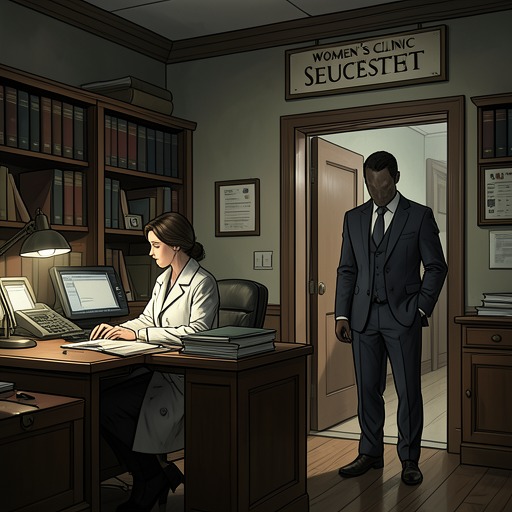
ErasureAnti-Abortion Protesters are the picketers who gather outside Lisa Ellison’s medical clinic, making the clinic’s work a visible and dangerous point of conflict. They are more than background demonstrators: their recurring presence shapes Lisa’s sense of safety, exposes the pressures on the clinic’s staff, and forms part of the context in which Lisa is later killed in a shooting that police suspect was ideologically motivated.
Presence at the Clinic
Lisa describes protesters stationed outside the clinic every day, carrying signs and frightening her. She also refers to a nurse shot through a clinic window in Maryland, an incident the narrator has read about. The book presents that earlier attack as part of the atmosphere of danger surrounding reproductive health care, without establishing that it involved the same people or location as Lisa’s later shooting.
Their presence is not constant at every visit. When the narrator accompanies Lisa to work, Lisa notes that there are no picketers that day and says they may be at church or a meeting. The temporary quiet offers a contrast, not a resolution: the clinic remains a place where the possibility of confrontation is understood, and Lisa asks whether the narrator will be all right while waiting inside.
Confrontation and Its Effects
On another day, the protesters have returned when the narrator drives Lisa to work. They shout accusations at her as she approaches the entrance. The narrator walks with her through the line, recognizing that Lisa faces this routine alone each day. The escort does not make him her protector in any lasting sense, and he understands that she does not need him to perform that role; Lisa accepts the gesture graciously and continues into the clinic.
The scene also marks the limits of what the narrator can do. He sees the demonstrators’ anger and a large poster, while one man shakes a fist at him. For an instant, he thinks the man may be someone he noticed earlier at a restaurant, but the possibility remains uncertain. The moment registers intimidation without proving a connection between the protester and any subsequent violence.
Pressure on the Clinic
The conflict extends beyond the daily encounters outside. Lisa’s clinic depends on grants and her part-time hospital work, while the costs of medical education, a new practice, and equipment weigh on its finances. After her death, a third of the Women’s Clinic Southeast belongs to the narrator, but the other two physicians are afraid they may be the next targets and will not buy him out. Their fear threatens both the clinic’s continuity and the possibility of resolving its ownership and financial burdens.
The physicians also describe the social pressure attached to the clinic’s work. One says that at parties, disclosing employment at a women’s clinic leads others to assume that the work involves abortions and to treat the physician as a villain. The same physician distinguishes between the relative acceptability of calling oneself pro-choice and the stigma attached to openly supporting abortion, then admits to being terrified. The protesters’ actions thus sit within a wider climate in which medical work is both politically contested and personally risky.
Violence and Narrative Significance
Lisa is eventually shot and killed. Her brother is told that a rifle was used, and that police suspect a zealot, one of the anti-abortion activists. The account presents this as the investigators’ belief, not as a confirmed identification of the killer or proof that any particular picketer was responsible. That distinction leaves the protesters’ role in the shooting unresolved while making the threat surrounding the clinic impossible to dismiss.
Across these episodes, the protesters’ repeated appearances link public hostility to practical consequences: fear for staff, strained clinic finances, and the loss of Lisa. The narrative does not reduce every opponent to a known perpetrator. Instead, it shows how a climate of intimidation can burden the people providing care even when individual responsibility for the final violence has not been established.