Thomas Tomad
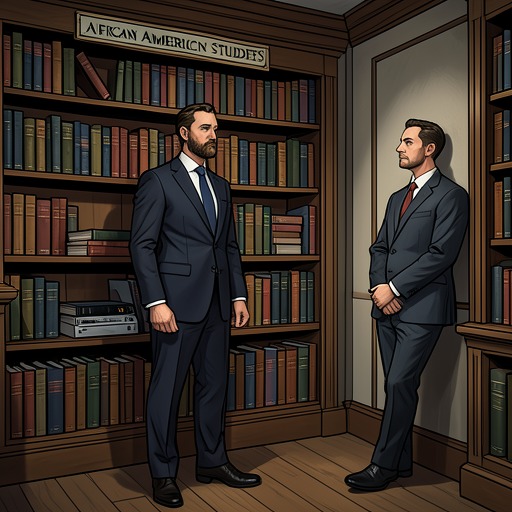
ErasureThomas Tomad is a writer, senior editor, and member of the National Book Association’s book-award judging committee. His authority across both publishing and literary criticism makes his judgment of Stagg R. Leigh’s Fuck especially consequential: he calls it the truest novel he has read and claims it could only have been written by someone who has done hard time. The confidence of that response turns Tomad into a vivid instance of the novel’s central irony, as a fabricated story is received as firsthand evidence about Black life.
Identity and Career
Tomad has published five collections of stories. The titles supplied include The Night They Came, A Night in Jail, and The Night Has Eyes; these are examples among his collections, not an exhaustive list. His work has been praised by the American Association of Incarcerated People Who Write, a detail that places his literary reputation in contact with writing associated with imprisonment.
He is also the senior editor of Living Cell Books, an imprint of St. Martin’s Press that specializes in books by lifers. The combination of a writing career and editorial work gives him a professional position on both sides of literary production: he makes stories and helps shape the publication of other writers’ work. He comes from San Francisco, California. The novel offers no further personal history, instead establishing him through his credentials, his editorial specialization, and his conduct among fellow judges.
The Judging Committee
At the committee’s first conference, the judges anticipate receiving roughly four hundred books. Tomad objects to the prospect of reading every word of every submission and insists that the judges have lives beyond their work; he does not want to be cooped up at home all winter. His complaint sets a practical, comic tone for deliberations that are supposed to weigh literary merit but must first contend with the scale of the task.
The exchange over reading continues when Jon Paul Sigmarsen jokes that he plans to do much of his reading while ice fishing. Tomad asks how much ice Sigmarsen usually catches, and the two laugh together. The joke turns the committee’s heavy workload into an occasion for camaraderie, while also making clear that Tomad is not a solemn arbiter detached from ordinary inconveniences. His impatience is specific: hundreds of books mean a winter of reading, and he is alert to the labor the judging requires.
Taste and Critical Judgment
Tomad’s committee role also brings him into disputes over what deserves recognition. During a telephone conference about the shortlist, he identifies himself as the speaker before dismissing Rita Totten’s novel Over My Body as “just so much fluff. Filthy fluff, but fluff none-the-less.” The self-identification is a small courtesy in a conversation where the judges cannot see one another; the blunt verdict that follows is not courteous at all. Tomad’s formulation concedes the novel’s provocative quality while denying that it amounts to substantial literary achievement.
His response contrasts with a judge who argues for Totten’s inclusion partly because she is a friend and partly because the New York Times gave her a scathing review. Tomad’s dismissal supplies a counterweight to that personal and reputational reasoning: he states an aesthetic judgment, however sharply. The scene does not establish that his taste is definitive, but it shows him willing to make an unvarnished case within a process shaped by competing preferences and practical pressures.
At a later meeting in New York, Tomad is among the judges most emotional in expressing likes and dislikes, alongside Sigmarsen. The narrator, Thelonious Ellison, sits between Ailene Hoover and Sigmarsen while the committee discusses book after book. Tomad’s strong responses mark him as an active participant rather than a merely credentialed presence. The committee’s judgments matter because they can direct attention and recognition toward some books rather than others; Tomad contributes to that consequential process through forceful opinions.
Reading Fuck
When Hoover raises Fuck at the New York meeting, Tomad becomes one of the novel’s clearest examples of a reader converting fiction into supposed social testimony. Sigmarsen says the book has taught him about Black people despite his limited experience with them. Ellison objects that readers will take the book as truth. Tomad answers with laughter, then declares, “This is the truest novel I’ve ever read. It could only have been written by someone who has done hard time. It’s the real thing.” Wilson Harnet agrees.
Tomad’s praise is not simply enthusiasm for a book’s craft: he treats the story as transparent evidence of an author’s life and of a social world he believes the novel faithfully records. That assumption matters because Fuck is presented under Stagg R. Leigh’s name, while Ellison’s concealed authorship makes its apparent authenticity part of a deliberate performance. Tomad’s certainty therefore sharpens the book’s irony. A reader who believes he has recognized the real experience behind the fiction instead confirms how completely a stereotype can govern the reading of a novel.
Narrative Role
Tomad’s career makes his misreading more pointed, not less. He edits books by people serving life sentences, has published stories himself, and participates in the committee that evaluates a large field of submissions. Yet his professional familiarity with writing does not prevent him from treating Fuck as an unmediated account by someone who has been incarcerated. The novel sets that error beside his confident judgments of other books, including his dismissal of Totten’s work, so that critical authority appears capable of both discernment and serious failure.
Tomad is not given a private reckoning with this contradiction in the supplied scenes. His significance lies in the contrast the narrative creates: the experienced editor and judge who speaks decisively about literary value accepts a false account of authorship and reads a manufactured persona as proof of lived truth. Through him, the committee’s response exposes the gap between judging a novel as art and consuming it as a ready-made explanation of Black life.