German Railways Train Schedule
FatherlandThe German railway deportation timetable is a wartime transport record that Xavier March reads as evidence of the machinery behind the Nazi deportations. Its dated routes and precise schedules connect Berlin and other points of departure to Auschwitz and Treblinka; read alongside a Reichsbahn telegram and other records, it reveals how routine railway administration served a system of mass murder. The timetable’s significance lies in the contrast between its ordinary columns of dates and train numbers and the human consequences those columns conceal.
Document and Administrative Context
The timetable survives on badly printed, yellowing wartime paper. Its entries use train codes and place names, recording journeys between destinations including Theresienstadt and Auschwitz. A January 29 entry, for example, lists train Da 13 traveling from Berlin to Auschwitz, departing at 17:20 and arriving at 10:48 the next day. Other lines document trains between Auschwitz and Theresienstadt. These clipped entries give no account of the people being transported; their administrative form makes the timetable a record of movements rather than a description of human lives.
The document is attached by a rusty paper clip to a telegram from the General Management, Directorate East of the German Reich Railways, dated January 13, 1943. Addressed to railway directorates and traffic offices, the telegram concerns special trains for “resettlers” between January 20 and February 28. It refers to a compilation of trains agreed upon in Berlin on January 15 and includes a plan for circulating the cars used in them. The language and procedures are those of transport administration: train formation is to be observed, cars cleaned and, where necessary, fumigated after a full journey, then prepared for further use. Numbers and kinds of cars are to be determined when the last train is dispatched and reported by telephone, with confirmation on service cards. The records thus join euphemistic policy language to detailed operating instructions.
Routes and Operating Pattern
In the timetable, journeys from Theresienstadt to Auschwitz and back are followed by routes linking Bialystok and Treblinka. In the second week of February, Treblinka appears as a destination, and the entries give more precise departure and arrival times. A February 11 train, Pj 131, leaves Bialystok at 9:00 and reaches Treblinka at 12:10; the return train, Lp 132, departs at 21:18 and arrives in Bialystok at 1:30. The next day, Pj 133 is listed on the same Bialystok-to-Treblinka route. What looks at first like a sequence of railway movements resolves into a regular circuit.
March uses the times and routes to reconstruct what the document does not state directly. A train could leave Bialystok in the morning, reach Treblinka around lunchtime, and return that night, with the cars prepared for reuse. A journey from Berlin to Auschwitz could take seventeen hours. On February 12, the usual pattern changes: rather than return directly to Bialystok, an empty train is sent to Grodno, waits there for two days, and then travels back to Treblinka before continuing westward to Scharfenwiese. That deviation makes the timetable more than a list of fixed routes: its sequence records a changing, coordinated transport operation.
The scale becomes legible through March’s calculations. Using an estimate of sixty people per car and an average of sixty cars per train, he calculates 3,600 people per transport. With transports running at about one per day by February, the implied rate rises to 25,000 people a week, 100,000 a month, and 1.25 million a year. These are March’s deductions from the timetable, not totals printed in it. He also recognizes that the estimates describe winter conditions, when frozen switches, snowdrifts, and partisan attacks impeded railway traffic; the records therefore point to the possibility of still greater capacity in spring and summer.
Connections to the Killing System
The timetable’s routes acquire their meaning in relation to the documents March is examining about the “Final Solution.” The Wannsee Conference minutes name the policy and describe Jews being directed east for labor, while concealing the outcome behind bureaucratic phrases. In the rough draft, a section on the practical difficulties of killing large numbers records discussion of shootings, gas trucks at Kulmhof, and Zyklon B experiments at Auschwitz. Reinhard Heydrich’s handwritten objection appears in the draft, but the corresponding section is reduced in the final minutes. The railway schedule supplies a different kind of evidence: not a policy formulation or a direct description of killing, but the repeated movement and timing that made deportation operational.
Other records make the connection between destination and fate explicit. In Wilhelm Stuckart’s affidavit, a ministry official recounts hearing that Jews deported from Berlin had been massacred in the Rumbuli Forest. In Martin Luther’s account of Auschwitz, a transport from France arrives at the camp; the people are divided, and many are directed away from the work camp toward a concealed killing installation. His description also records the removal and collection of possessions and human hair. Read beside the timetable, these accounts supply what its rows of train codes omit: deportees were not simply being moved between stations, and the schedules belonged to a system of persecution and murder.
A further document, an August 6, 1942 circular concerning cut hair, demonstrates how the administrative process continued beyond transport and killing. It orders that hair taken from concentration-camp prisoners be used for industrial felt and thread, with female hair assigned to products including socks for U-boat crews and felt stockings for the railways. It requires the hair to be stored after disinfection and the quantities collected each month to be reported. The circular is not part of the timetable, but it extends the same documentary pattern: people and their belongings are converted into categories, procedures, and usable material.
March’s Reading and the Timetable’s Significance
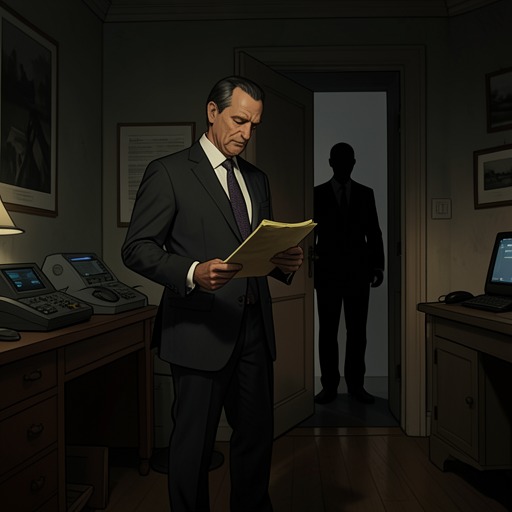
March does not treat the timetable as self-explanatory. He works systematically through a heap of papers, arranging notes by year and month, then returns to the routes and figures to decipher their implications. Place names such as Bialystok and Treblinka acquire force through recurrence; times that look like neutral scheduling data become evidence of frequency and capacity. The inquiry depends on reading a collection of administrative documents against one another, distinguishing what each states from what their combination allows an investigator to infer.
The timetable also marks the difference between bureaucratic precision and moral disclosure. Its entries specify trains and destinations; the associated telegram specifies car circulation, cleaning, and reporting. Neither needs to name mass murder for the transport system to be visible. March’s calculations and comparison with records of deportation and killing expose the violence carried by the euphemism of “resettlers.” In the novel, the timetable is therefore not merely a clue in an investigation: it is a fragment of the mechanism itself, and a document whose carefully managed ordinariness helps reveal the scale of the crime.