Suzhou preserved box woman portrait
FatherlandThe portrait in the Zurich safe-deposit box is a damaged but striking Renaissance panel, hidden inside a container labeled as a top-secret document from the Reich Foreign Ministry treaty archive. Its discovery gives March and Charlie a tangible glimpse of the valuable objects concealed behind the account, but not the clue March needs: he regards it as another stolen painting, and they leave it locked away again. The image’s brief passage from darkness into view, followed by its return to the vault, makes the portrait a concentrated emblem of beauty preserved amid theft, concealment, and uncertainty.
Discovery and Container
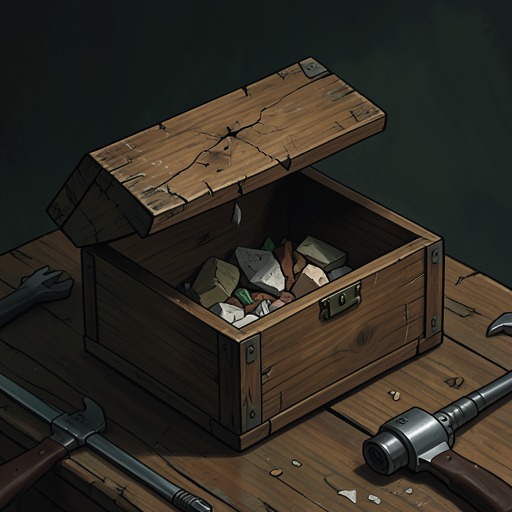
The box initially appears empty. Charlie reaches inside after inserting the key, her expression passing from puzzlement to disappointment; then she realizes there is something concealed and draws out a flat cardboard package, about fifty centimeters square and five centimeters deep. Red wax seals its lid. A typewritten label identifies it as the property of the Reich Foreign Ministry treaty archive in Berlin, while the Gothic lettering beneath it declares it a top-secret state document. The official description suggests a treaty, but the package contains an object whose presence exposes the label as a misleading cover.
March breaks the seal with the key and lifts the lid. Must and incense mingle in the scent released from the box. Inside, an oilcloth bundle protects a wooden panel, scratched with age and broken at one corner. The contrast between the archival label and the wrapped painting turns the package into more than a hiding place: it is a false documentary identity enclosing a work whose actual history remains unknown.
The Woman and the Weasel
The panel’s edges are splintered, as if it had been wrenched from its setting, yet the portrait itself remains perfectly preserved. It shows a young woman with pale brown eyes glancing to the right. Black beads loop twice around her neck; in her lap, held by long, aristocratic fingers, is a small white-furred animal, more like a weasel than a dog. The damaged frame and intact image make the painting’s survival feel distinct from the violence implied by its removal.
Charlie calls it beautiful. The narration shares her response, describing the portrait as seeming to draw in the light of the vault and radiate it back, while the woman’s pale skin glows like an angel’s. The description briefly makes the painting’s beauty overpower the oppressive setting in which it is found. When Charlie examines the costume, she identifies the square neckline and sleeves as Italian and Renaissance, and judges the work very old and genuine. Her informed visual assessment establishes the portrait’s apparent artistic and historical value, though neither she nor March can identify the woman or explain how the panel came to be in the box.
A Clue That Is Not Enough
March’s first response is to ask what the find means. He feels vaguely cheated: he had hoped the account would yield something more revealing than another painting from the treasure chamber associated with Buhler. He calls the panel stolen and tells Charlie to put it back. Her reluctance to surrender it does not change the practical problem: carrying an identifiable artwork through the Berlin airport would require a plausible explanation to the Zollgrenzschutz, and neither has one.
The failed search sharpens the distinction between evidence and explanation. March checks the oilcloth and cardboard, then turns the safety-deposit box on its end and shakes it. Nothing else is inside. The empty metal box mocks the expectation that the account would provide a better lead; the portrait is valuable and suspicious, but it does not explain the missing Martin Luther or the murders connected to the account’s joint holders. Its significance to the investigation is therefore real but limited: it confirms the presence of concealed, apparently stolen art without resolving who placed it there or what the account’s other secrets might be.
Photographed, Rewrapped, and Reburied
Before they leave, Charlie props the panel against its box, crouches, and takes half a dozen photographs. She then wraps the painting again, puts it back in its container, and locks the safe-deposit box. The photographs preserve a record of what they have seen, while the original returns to concealment. The distinction matters: they leave with images, not with the work itself, and those images do not supply the missing explanation.
When the guard slides the box back into its cavity and Zaugg locks the door, the woman with the weasel is returned to darkness. Zaugg remarks that some boxes have remained untouched for fifty years or more, prompting March to wonder whether it will be that long before this portrait sees the light again. Its brief appearance thus ends not in recovery but in renewed enclosure. The panel’s beauty, its apparent theft, the misleading document label, and its reburial converge in one unresolved object: visible long enough to testify that something has been hidden, but not long enough to tell March the whole story.