Ava and Ezra
FirebugAva and Ezra’s friendship becomes most visible when their usual teasing falls away: she washes his wounded back and holds him while he cries, while he insists that the dangers surrounding them belong to their whole chosen family, not Ava alone. Their bond is at once intimate and practical, forged in combat, care, and a shared dependence on a community whose protection comes at a cost.
A Bond Shown in Action
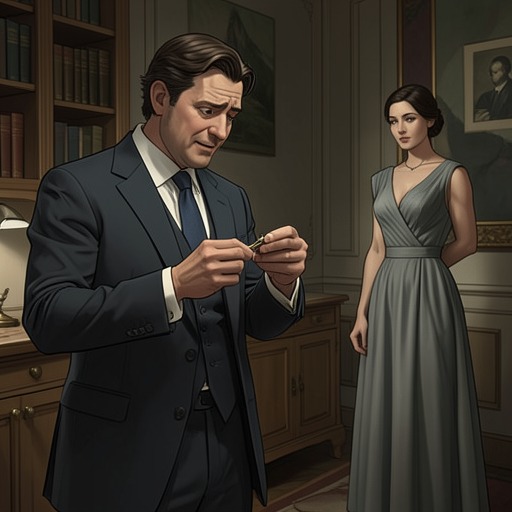
During a fight, Ava watches Ezra abandon his bow and tear off his suit, revealing that its expensive tailoring has been made for a quick escape. He drops to four paws, retrieves the small bow in his mouth, and darts through debris around the trees Lock has grown from pieces of wood. The scene gives their closeness a different register from private tenderness: Ava follows Ezra’s movements in the confusion and registers the resourcefulness behind his theatrical appearance. His fox skills are not just a boast; they let him move through the wreckage in a way she can scarcely track.
The account does not make their partnership depend on identical abilities or roles. Ezra is one of the fighters in a dangerous encounter, while Ava observes his particular speed and adaptability amid the larger struggle. That attention matters: across the relationship, she sees past the performance to the person beneath it, whether the performance is a polished suit, a sly manner, or a joke meant to protect his reputation.
Care When the Jokes Stop
After the violence, Ava sits by a fire looking at the dried blood on her hands and replaying the night. Ezra is in the shower, but his familiar singing is absent. When he calls her, she enters expecting a teasing invitation; instead, his hand reaches from behind the curtain with trembling fingers around a bloodstained washcloth. He cannot reach his back. The small request lands heavily because she has never heard him sound so diminished: she knows him as cocky, brash, sly, and arrogant, not afraid to ask for help.
Ava washes him with a soapy cloth and shampoos his hair. His wounds are already knitting together, the skin still pink and raw, and most of the blood has rinsed away; nevertheless, she understands that he still feels its weight and will not feel clean until someone has washed him and checked him over. The orange-and-spice scent of the soap and the ordinary work of tending him make care physical rather than declarative. She undresses to fit into the shower with him and reaches his hair as he leans back, attending to what he needs instead of making his vulnerability into a spectacle.
Ezra’s shoulders jerk as he cries. Ava pretends not to notice until he turns and buries his face in the crook of her neck; then she holds him until he pulls away. The restraint is part of the intimacy: she gives him room to break down without demanding an explanation, and waits for him to end the embrace. When he recovers enough to joke that she should later claim he made a pass at her, he frames the moment as a threat to his reputation. Ava answers in kind, turning the exchange back toward their familiar teasing. The joke does not erase the tears; it lets them return to a shared language after the immediate need has been met.
Fox Family and Chosen Family
Ava understands Ezra’s need for care through the habits of fox families. They may not form wolf-like packs, but mates and relatives groom one another; his family, despite its quarrels, closes ranks when threatened and destroys what lies outside that circle. Ava’s washing of Ezra therefore echoes a form of care he already knows, while also showing their friendship as an extension of family practice. The scene presents grooming not as sentiment alone but as reassurance: someone else can take care of a person who is hurt and feels unclean.
That family meaning extends beyond the shower. In a later argument about the Coterie, Lock reminds Ava that he and Ezra serve as tithes, and asks her to recognize what that status entails. Lock says his service means an entire forest of Dryads is left alone; Ezra’s service helps his little sisters go to school, live normally, and remain protected. Ezra adds that his lock-picking and general sneaking skills come from being a fox, distinguishing his inherited abilities from the training and resources associated with the Coterie. The exchange makes his place there more than a matter of personal allegiance: his family’s security is part of the bargain.
Lock also challenges Ava’s promise that she would protect her friends. He argues that her wish to defend them would not be enough against poachers and other people who might target her, just as their own wishes could not shield her. Ezra is present in this dispute not merely as the subject of Lock’s argument but as one of the people whose safety is being weighed. The Coterie offers protection and resources that weaker or less powerful supernaturals might not otherwise obtain, even as the tithe requires service. For Ava, who resists the organization’s control, Ezra’s circumstances expose the difficult difference between opposing coercion and dismissing the real needs that its system claims to meet.
A Shared Circle of Loyalty
When Ava and Lock clash over the Coterie, Ezra edges around her with a toothbrush, making a small joke about hygiene before stopping at the door. He tells her that he and Lock are frightened too, and that he called home to check on his family. His mother is making Cade a sweater; what matters to Ezra is that she has thought of someone outside her blood relations. Ava’s surprise at the gesture gives Ezra room to explain its significance. His instinct is to notice how care crosses a boundary, just as his own friendship with Ava crosses the line between comrades and family.
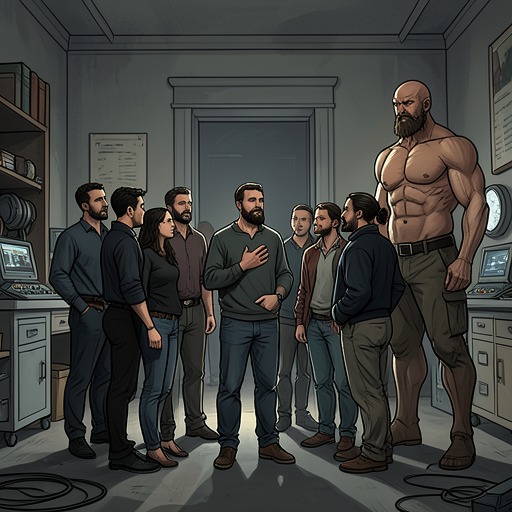
Lock later makes that belonging explicit. He says that he has joined Ava and the others for movie nights, spends more time with Cade than with his own mother, and considers Cade family. He insists that the group is a team and a family regardless of the title attached to it. Ezra might tell anyone outside their circle that he is involved for kicks, Lock says, but the bravado is only show. In the same conversation, Lock argues that the Were-hares have reason to defend Duncan, whom they regard as one of their own and whose loss would endanger their home. The wider crisis thus gathers different loyalties into a common circle rather than leaving Ava to carry responsibility alone.
The Meaning of Mutual Care
Ava and Ezra’s relationship is defined less by declarations than by the way each recognizes what the other needs: she sees through his bravado when he is shaken, and he insists that she cannot separate her struggle from the people who have chosen to stand with her. Their care is reciprocal without being identical. Ava offers direct, private comfort; Ezra and the wider group make the case that danger, protection, and family are shared obligations. Against the Coterie’s transactional tithe, their friendship offers another model of belonging—not a guarantee that they can protect one another from everything, but a reason to face the danger together.