Venus and Duncan
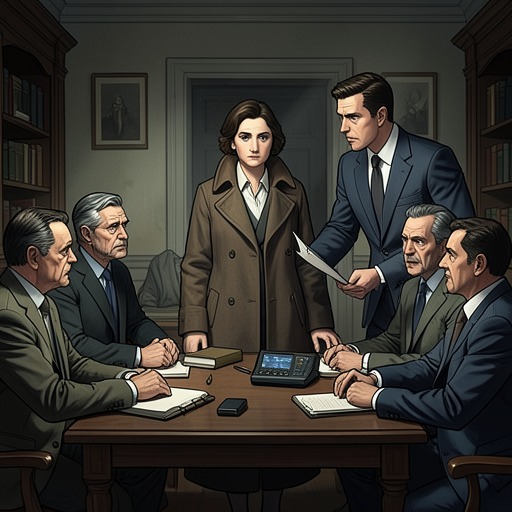
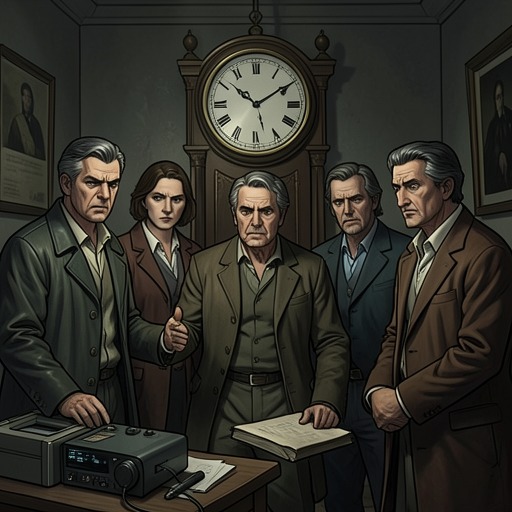
FirebugVenus and Duncan are connected by the Coterie’s contested succession: Venus secured its leadership after the previous leader’s sudden death, while Duncan, a former member who had retired, was approached as an alternative. Duncan’s refusal left Venus in power, but his account makes clear that he had once been a credible rival. To Ava, that history explains why Venus might still regard him as a threat—and why the Coterie under another leader could have become something other than the force she knows.
The succession crisis
When Ava asks Duncan who led the Coterie before Venus, he explains that the predecessor died suddenly and that no clear successor was ready to take over. Ordinarily, a lieutenant would have stepped into the role; this time, the circumstances produced a vacancy instead. Venus was already pushing for leadership, but she was unpopular with some of the organization’s higher-ups and had been with the Coterie for only a year or two.
Those senior figures approached Duncan and asked him to take over. His account establishes that the leadership contest was not simply a choice between Venus and an obvious heir: people within the organization saw Duncan as an alternative, despite his later description of himself as tired and old. The episode places the pair in opposition before Ava learns why the Coterie’s current leader might still consider him dangerous.
Duncan dates the offer to roughly twenty or twenty-five years earlier, though he is uncertain about the exact interval. The imprecision belongs to his recollection; the lasting point is that the approach occurred well before the immediate crisis Ava is facing. Venus’s rise, and Duncan’s decision not to step into her place, have shaped the organization for decades.
Two possible Coteries
Duncan is careful not to claim that the organization was benevolent under its earlier leadership. He says it was less lethal, and that with the right leadership it might have become something close to a new Council. In his account, Venus took it in the opposite direction. The distinction is not between a harmless organization and a violent one, but between a dangerous institution that might have been redirected and the more lethal Coterie that came to exist under Venus.
That counterfactual gives Duncan’s refusal political weight. Ava imagines that if he had accepted, the events now pressing on her might never have happened: Cade might not have been kidnapped, and Broken Spines might not have burned. These are her reflections, not proof that Duncan’s leadership would have prevented those events. They show, however, how the history changes her understanding of the present. What had seemed like an unavoidable expression of the Coterie’s nature may also have depended on who gained power.
Venus’s authority and Duncan’s shadow
Ava’s own blood-pact ceremony offers a direct view of the authority Venus wields. When Ava is barely thirteen, Venus’s people bring her into a room of thirty red-robed figures; Cade is excluded because he is neither Coterie nor an Associate. A blood witch wards Ava, Venus cuts her hand with a silver knife, and the blood and ash become part of the pact. Venus declares that the Coterie is Ava’s family and that her heart, thoughts, speech, and movements belong to it. The ceremony makes the organization’s power intimate and bodily, not merely political.
That scene does not establish what Venus thinks about Duncan in private. It does show the scale of the authority she came to exercise, sharpening the contrast with Duncan’s account of a less lethal Coterie that might have been reshaped. Ava initially treats Venus as synonymous with the organization: in her view, it begins and ends with its current leader. Duncan challenges that assumption, telling her that Venus wants people to believe there is no Coterie without her and no escape from it. The history of the succession gives his challenge substance: another person was once seriously considered for the role.
Rivalry and its consequences
After hearing that Duncan was offered leadership, Ava recognizes the danger in his past. If the higher-ups considered him suitable to rule, Venus could view him as competition even though he declined. Ava’s conclusion is that Venus will continue to see him as a threat until he is eliminated. The evidence supports this as Ava’s interpretation of Venus’s motives, rather than as a direct statement from Venus.
Duncan himself offers no ambition to renew the contest. Asked what he would do if the position were offered now, he says he is tired and old and has no desire to rule. He turns back to the unfinished carving in his lap and urges Ava to go to bed; the nearby drove will watch the cabin and what remains of Broken Spines and seek information. The small gesture of brushing a curl of wood away sits against the scale of the succession he once refused. Duncan’s withdrawal has not erased the political meaning of that choice: in Ava’s understanding, Venus’s authority still casts a shadow over the former member who might once have replaced her.