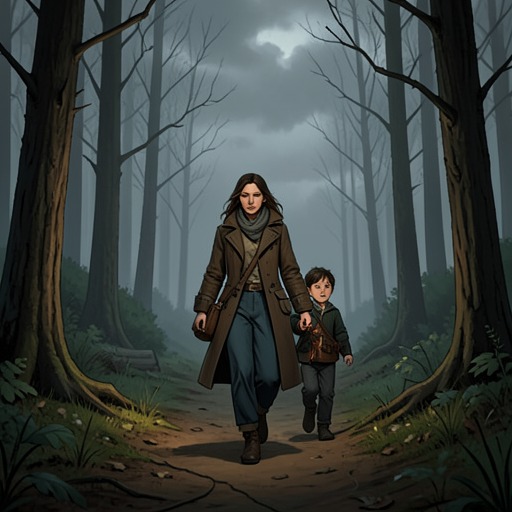
Cade–Lilia
FirebugCade and Lilia’s relationship is remembered as a lasting childhood love that shaped the family they made with Ava. Their bond survives separation and Lilia’s death not as an abstract romance, but through the home they shared, a necklace Cade worked to buy for her, and the parental care he continues to give their daughter.
A Love Beyond Labels
Ava describes Cade as her guardian and as a family friend whose place in their lives exceeded distinctions of blood or official status. He was Lilia’s childhood sweetheart and, in Ava’s understanding, the person she had loved all her life. Their affection seemed so complete that Ava likened them to an epic poem in motion, even while recognizing how sentimental that description sounded.
The relationship is presented through Ava’s memories rather than through a separate account from either adult. Its defining quality is constancy: Cade remains Lilia’s great love, and the bond between them continues to organize Ava’s understanding of family even when the two are no longer together.
Home, Separation, and Return
Lilia and Ava spent much of Ava’s childhood on the run. Even though returning to Currant put Cade in danger, Lilia sometimes slipped back to him; staying away seemed to demand an effort she could not sustain. For Ava, the reason was plain: home was where Cade was. Their returns make the relationship visible as a pull toward shared domestic life, not merely a remembered attachment.
One holiday visit became a weeklong stay after snow stranded them. Cade spoiled five-year-old Ava with candy, books, homemade cider, and new pajamas, then helped her string popcorn and cranberries for a Christmas tree decorated with paper snowflakes because he had no ornaments. Duncan joined them with a present for Ava. The scene gives the romance its familial setting: Lilia’s return brought her daughter into the warmth and ordinary rituals of a home centered on Cade.
The Necklace and Lilia’s Death
The clearest object linking Cade and Lilia is a small silver heart with an interlocking star. Cade gave it to her when they were both young, after earning the money through mowing lawns, washing cars, and chopping firewood. Ava remembers it as the only thing her mother valued besides her daughter. The necklace therefore carries both the history of Cade’s devotion and Lilia’s attachment to him into the next generation.
After Lilia’s death, Ava took the necklace from her mother at the hospital and wore it herself. When she later arrived at Cade’s door, soaked, exhausted, hungry, and overwhelmed by grief, he gathered her in, gave her blankets, and found dry clothes and warm food. He did not break down until he saw the necklace. Its sight exposed the grief he had tried to conceal, but did not interrupt his care for Ava.
A Bond Continued Through Care
Cade’s love for Lilia is inseparable from his commitment to Ava. He had taken his guardianship seriously even before Lilia died, treating care as a parental responsibility and turning daily life into lessons. After the loss, he continued to shelter and love Ava while carrying his own grief. The relationship thus remains present through what Cade does: the home Lilia returned to becomes the refuge he offers her daughter.
Later, Angela recognizes that Ava’s decision to protect Cade arises from the same family stakes that shape a mother’s concern for her son. Ava corrects the description of Cade as her father by calling him her guardian, preserving the distinction in language while affirming the depth of their bond. In the story’s account of Cade and Lilia, love is likewise larger than a label: it is remembered as a lifelong attachment, enacted in returns to home, and carried forward in the care that survives loss.