Ava–Cade
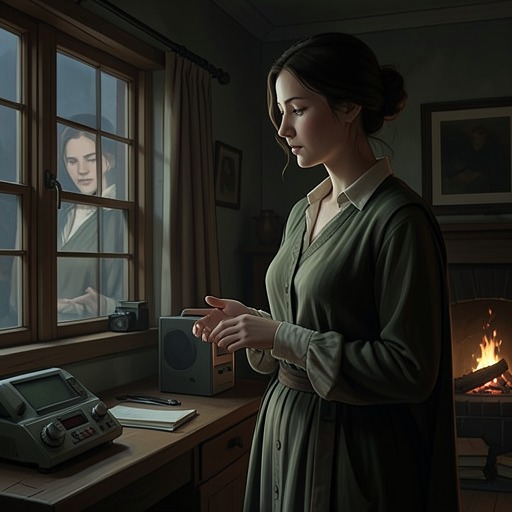
FirebugAva and Cade’s bond is first made through chosen family, not biology: he is her guardian, her mother’s beloved, and the person who gives her a home after years of flight and loss. Their relationship is expressed through ordinary work and intimate acts of care, but tested by dangers that make protecting one another a matter of life and death. When Ava learns that Cade is also her father, the revelation deepens a bond whose meaning had never depended on blood.
A Family Made Before the Revelation
Cade is Ava’s guardian and, as she understands the relationship, family in a sense that exceeds both genetics and the state’s label for him. He had been her mother’s childhood sweetheart and remained the great love of her life; Ava sees the way her mother looked at him as evidence that the two belonged together. She describes them as an epic romance, while recognizing that such language might sound sentimental from anyone else. For Ava, however, their love is part of the history that made her family.
That family history began under pressure. Ava and her mother spent much of Ava’s childhood on the run, and returning to Currant could put Cade in danger. Her mother nevertheless sometimes slipped back, unable to stay away from the place and person she regarded as home. Even at five, Ava understood that home meant where Cade was. Their bond therefore formed amid separation and risk, not simply through shared domestic routine.
Care in the Everyday
Cade’s guardianship is practical as well as affectionate. He treats daily responsibilities as lessons and trains Ava’s Firebug abilities despite being an ordinary human himself. Maple sugaring is one example of the household’s habits: he takes the work seriously, as he does the food they can make or grow for themselves. He supplements the modest income from his used bookshop, Broken Spines, by gardening, preserving food, and trading with Duncan. These routines make care something the household repeatedly does, rather than a role Cade holds only in name.
Ava, in turn, wants to contribute. After a night spent hunting an ice elemental, she resents waking to find Cade doing her chores; the work helps her return to a sense of normal life. Cade reads her exhaustion differently and reminds her that she already works hard at two jobs and helps around the house. When he puts a dab of dish suds on her nose, the small teasing gesture softens a disagreement about responsibility: he wants her to accept rest, while she wants to be capable and useful.
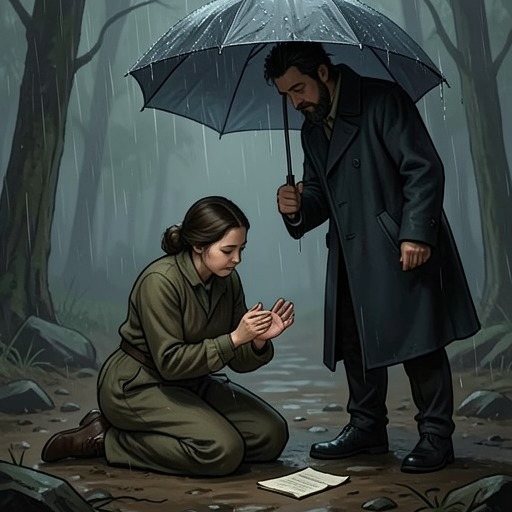
Their affection is equally visible in less practical moments. Ava greets Cade with a one-armed hug and says she loves him more than anything. He calls her Rat, a name whose tenderness comes from a specific memory. Before she lived with him, he called her Mouse for her small, squeaky voice. When she arrived at his door years later, soaked by rain and shaking with cold and grief after her mother’s death, he said she looked like a half-drowned rat, then brought her inside and wrapped her in a blanket. The nickname preserves the circumstances of her arrival while turning them into a familiar intimacy.
Loss, Refuge, and Protection
Cade’s home becomes a refuge when Ava returns alone after her mother’s death. She reaches his door exhausted, hungry, soaked through, and overwhelmed by grief, and collapses into his arms before she can explain what happened. He lets her cry, settles her on the couch beneath blankets, and finds dry clothes and warm food. The sight of the small silver heart-and-star necklace finally breaks through his own composure, but he continues caring for her. His grief does not displace his responsibility to the child who has come to him.
Ava’s memory of an earlier holiday at Cade’s house shows what that refuge had meant before the loss. She and her mother had returned for Christmas and been snowed in for a week. Ava remembers being spoiled with candy, books, and homemade cider; Cade gave her new pajamas and showed her how to string popcorn and cranberries for a tree. With no ornaments, they decorated it with popcorn chains and paper snowflakes. Duncan brought Ava four carved wooden animals, which he animated into a tiny parade across the house. The remembered details make home a shared creation: Cade provides safety and traditions, while the people who gather there add their own forms of care and wonder.
Love, Independence, and Danger
Cade’s protectiveness sometimes conflicts with Ava’s wish to experience an ordinary adolescence. When she imagines fitting the usual teen-girl pattern—down to buying Ryan a leather jacket and reading Hemingway—Cade understands that the longing is not really about those particular things. He tells her he will not lose her merely so she can feel like everyone else, and that her importance to him has nothing to do with her powers: she is his little girl. Ava is moved by his openness, even as emotional conversations make her uncomfortable and she tries to press her case. Their disagreement reveals the balance they have to negotiate: Cade’s fear of losing her against her desire to choose for herself.
The danger surrounding them makes that protectiveness more than a family mannerism. When Ava risks herself to save Cade, Angela recognizes that Ava was acting to protect family just as Angela would protect her own son. Duncan later explains that he did not want to lead the Coterie; he opposed Venus because he believed she would eventually kill Cade, either to spur Ava or punish her. He identifies Cade as his own family and says he could not be prouder of him. Ava understands Duncan’s choices through the same logic that shaped her own: when a loved one is at stake, protection can outweigh safer or easier alternatives.
Blood and the Meaning of Guardian
The later revelation that Cade is Ava’s father adds a biological relationship to the life they had already built together. During the conversation surrounding that discovery, Angela points out that Ava has no birth certificate and therefore has only her mother’s word for details such as her birthday. The missing document gives the revelation an added force: the official record that might have clarified Ava’s origins is absent, while the truth arrives through the people and relationships already around her.
When Angela refers to Cade as Ava’s father, Ava interrupts to call him her guardian. The correction does not erase the newly disclosed blood connection; it brings the older, lived identity of their relationship back into focus. Cade had already raised her, trained her, fed her, comforted her, and welcomed her home through grief. The fatherhood revelation changes what Ava knows about their origins, but the evidence of their shared life shows why the bond was family before it was ever confirmed as biological.