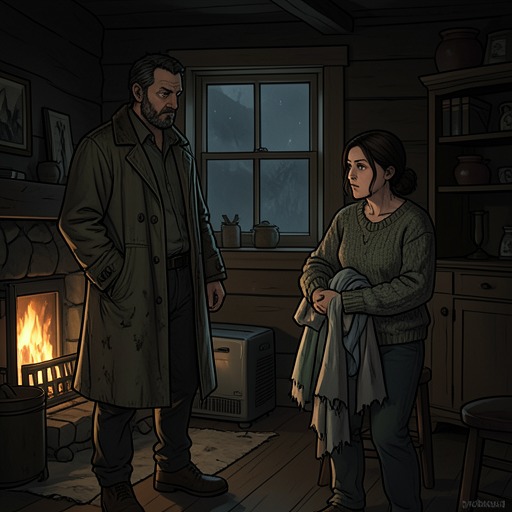
Granther McGee
FirestarterGranther McGee is Andy McGee’s grandfather, dead before Charlie McGee was born but still present in the family’s choices and memories. His inheritance gives Andy and Charlie a remote refuge at Tashmore Pond, while the lessons Andy recalls from childhood—about fishing, responsibility, violence, and promises—help frame the danger and moral weight of Charlie’s firestarting ability.
Identity and Family History
Granther McGee lived his whole life in Tashmore, Vermont. The place on the lake passed first to Andy’s mother when Granther died, and then to Andy when she died. The property might have been taken for unpaid taxes, except that Granther left a small trust to cover them. His legacy was therefore more than a remembered family home: the arrangement he made kept it available to later generations, including his grandson and great-granddaughter.
Andy and Vicky Tomlinson McGee had visited the camp once each summer before Charlie was born. By the time Andy and Charlie returned, the road lay far from a two-lane highway, through wooded, sparsely inhabited country, and the seasonal camps around the pond were empty. The camp’s isolation, once part of a family holiday, made it a possible shelter during their flight. Charlie, who had never known Granther, unexpectedly proposed going there; Andy was startled because he had dreamed of Granther that morning, although he had not consciously thought about him for a year or more.
The Camp and Its Inheritance
Granther’s cottage stands in Andy’s memory as a five-room wooden house on a fieldstone base, with a deck facing the lake and a stone pier reaching into the water. Three winters’ worth of leaves and fallen trees had accumulated, but the building itself seemed unchanged. Its green shingles, pine needles in the roof and gutter, and distant view across Tashmore Pond made the place feel continuous with Andy’s boyhood. He remembered having his own maple-paneled bedroom, waking to water against the pier, and learning to fish there with Granther.
That continuity was practical as well as emotional. Granther’s tools remained neatly arranged in the boathouse shed, and nearly two cords of split, seasoned wood were stored beneath it. Andy had split most of that wood himself before covering it with canvas. It would not last all winter, but clearing fallen trees could add to the supply. The pantry, too, remained stocked with canned soup, sardines, beef stew, vegetables, and dog food left from Granther’s dog, Bimbo. A hidden bolt-hole in the root cellar held four jars of homemade liquor. These provisions and tools helped Andy make the abandoned camp usable; they also show how Granther’s ordinary habits of storing, repairing, and preparing continued to serve the family after his death.
The camp became the setting for a difficult winter. The Willys Jeep froze, the snow deepened, and Charlie’s illness made Andy reluctant to take her outdoors. He found Granther’s old cross-country skis and, on several occasions, crossed the frozen pond to reach the Bradford Town Landing and the village beyond. He carried Granther’s knapsack and once returned just ahead of a severe snowstorm; Charlie’s relief at his safe arrival was followed by a troubling coughing fit. In these circumstances, the inherited equipment was not simply a reminder of the past but part of Andy’s means of keeping his daughter safe.
Lessons Remembered by Andy
Granther taught Andy small, concrete skills: how to bait a fishing hook and how to aim and squeeze a rifle’s trigger rather than jerk it. Andy’s memory of the rifle lesson, however, carries a painful complication. At nine, he asked to shoot a squirrel with Granther’s .22. Andy’s father began to object, but Granther quieted him with a small smile and allowed the boy to try. Andy wounded the animal rather than killing it cleanly. Confronted with its suffering, he felt horror and self-reproach, and swore to God that he would never again kill anything with a gun.
Granther’s response became inseparable from that vow. He told Andy that once an act was done, it could not be undone, and warned him against saying never: God, he said, liked to make a person break a vow, keeping that person humble about self-control and place in the world. The memory does not present the lesson as simple instruction. Granther had enabled the act that gave Andy his painful understanding, then gave him a way to think about the promise made in its aftermath. Years later, Andy recalls the episode when Charlie vows never to make fires again. He is tempted to urge her to take back the promise, fearing that the temptation to use her power may eventually return, but Granther’s warning makes him hesitate. The old lesson thus passes from Andy’s childhood into his attempt to guide his daughter.
Continuing Presence and Significance
Granther remains present in the story through the material traces he left and the memories those traces summon. Andy’s old ski boots are dusty and cracked; after oiling them, he finds that he still cannot fill them without stuffing the toes with newspaper. The fit strikes him as funny and ominous, and he thinks often that winter about what Granther would have made of their predicament. The boots make inheritance feel incomplete: Andy can use what his grandfather left, but cannot simply become the person who left it.
His influence also shapes Andy’s response to the camp itself. When he and Charlie first arrive, he expects, in memory, to see Granther in his checked shirt, calling him toward the cottage and asking about his fishing license. Andy recalls him as a boyhood mentor and as part of the three generations gathered around the wounded squirrel. When he and Charlie leave the cottage in early spring, he notices that they have kept it spick-and-span and thinks Granther would have been pleased. Granther is not an active participant in the present action, yet the refuge, the winter routines, and the warning about vows all carry his influence forward. His legacy joins care for a place with a harder inheritance: the knowledge that choices can have lasting consequences, and that good intentions do not make a promise easy to keep.