John Rainbird
FirestarterJohn Rainbird is a Shop operative, assassin, and principal threat to Charlie McGee whose apparent tenderness toward her is inseparable from surveillance, deception, and a plan to kill her. Exceptionally quiet and physically imposing, he can seem almost absent until he is already close. His pursuit of Charlie moves through several disguises: hired killer, patient listener, reassuring orderly, and finally armed opponent. The contrast between the gentleness he performs and the violence he intends drives his role in the story—and ends when Charlie’s power escapes her control.
Identity and Background
Rainbird is described as half Cherokee, and his father was full-blooded Cherokee. He is nearly seven feet tall, has one eye, and bears extensive scarring from a Claymore explosion during his second tour of the Vietnam War. He refuses plastic surgery or an artificial eye, saying that he wants to show his battle scars in the afterlife. His presence is unsettling not only because of his appearance but because of how little warning he gives: even people who know he is nearby may fail to sense him entering a room. Al Steinowitz once compared his quiet movement to walking without pushing air ahead of him, a remark that captures the unusual stealth Cap Hollister finds so frightening.
Rainbird’s private habits complicate the image of a man defined solely by violence. He owns a home in Flagstaff, Arizona, although he rarely visits it, and has his many shoes sent there. He takes pleasure in collecting and admiring them, keeping them on shoe trees throughout the house. Yet when alone he goes barefoot, connecting the habit to the memory that his father was buried barefoot after someone stole his moccasins. The details suggest a private life organized around ritual and remembrance, but they do not soften his professional conduct: he can be patient and attentive while preparing to kill.
Death occupies his thoughts beyond the requirements of his work. He hopes that his own death, unlike many sudden deaths he has witnessed, will give him time to prepare and experience it fully. He studies the faces of those he kills, searching their eyes for some secret visible at the end. This fixation makes his murder of Dr. Joseph Wanless more than an intelligence-gathering assignment: Rainbird listens to Wanless, watches him die, and treats the last moments as an encounter he wants to understand.
Wanless and the McGee Operation
After returning from Venice, Rainbird is still on leave when Cap offers him a small, volunteer assignment that may lead to something more interesting. Before approaching him, Cap wonders how much Rainbird knows about the McGee operation and whether the operative might eventually need to be eliminated himself. Cap regards Rainbird as effective but fundamentally difficult to control; that unease grows as the extent of Rainbird’s independent knowledge becomes clear.
At the Mayflower Hotel, Rainbird waits through the night for the moment when he can enter Dr. Joseph Wanless’s room. He wants Wanless to explain what he knows about Charlene McGee and the Lot Six experiment. Rather than taking money, Rainbird demands a complete account: the tests, the climactic experiment, and Wanless’s suspicions and theories. He promises that Wanless may live if he gives the lecture, then kills him after hearing it. The promise is therefore a tool for keeping Wanless talking, not an agreement Rainbird intends to honor.
Wanless’s account fills gaps in Rainbird’s understanding of the experiment and confirms that Charlie may possess extraordinary power. Rainbird listens closely, responding to parts of the explanation and encouraging Wanless to continue. After the doctor dies, Rainbird remains with the body to make certain he is dead, then thinks over what he has learned. His attention settles increasingly on the child herself. By the next morning, he has decided that Charlie will belong to him—a possessive conclusion that anticipates both his later intimacy with her and his plan to destroy her.
Bargain, Capture, and Charlie’s Trust
Rainbird’s proposal to Cap makes his aims explicit. He says he can bring Andy and Charlie to the Shop and enable the organization to conduct its tests, but requires that Charlie be given to him for disposal when the tests are finished. He argues that the drugs and reports Cap relies on may not be sufficient to control the dangers involved. Cap hears the proposal as evidence of Rainbird’s dangerous independence; for Rainbird, it is also a way to secure personal authority over Charlie’s fate while presenting himself as indispensable to the operation.
Rainbird takes part in the operation that captures Andy and Charlie at Tashmore Pond. From a tree about 150 yards from the cabin, he aims a specially modified rifle carrying an Orasin-tipped dart at Charlie as she and Andy emerge. The use of the dart, rather than a conventional bullet, suits the operation’s purpose: the Shop wants to take the pair alive and bring Charlie under its control. Later, Cap tells Andy that Rainbird was in charge of the operation and that the capture made it possible for the Shop to keep father and daughter apart.
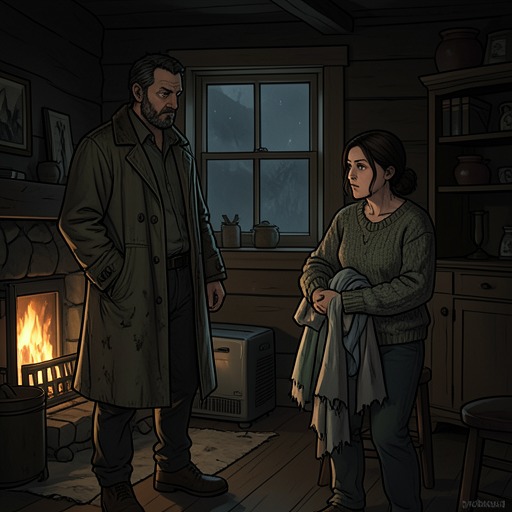
Once Charlie is confined, Rainbird recognizes that force alone will not bring her back to using her power. During a blackout caused by a storm, he sees an opportunity to reach her psychologically, entering her quarters at three-thirty with a cleaning cart and posing as an orderly. The cart and its ordinary supplies help him pass unnoticed. Charlie is still lightly medicated, but the dosage has been reduced, and the Shop’s psychologists believe her refusal to make fires is genuine. Rainbird instead sees her resolve as a barrier that can be approached through trust.
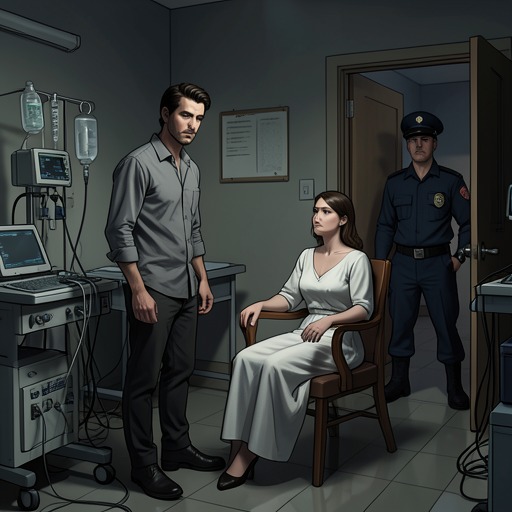
He offers Charlie the possibility of seeing her father by changing places with another worker and passing a note. The suggestion matters because the Shop has kept them apart and Charlie wants reassurance that Andy is all right. Rainbird presents himself as someone who can help her reach him, encouraging her to believe that he is an ally rather than the person who helped capture them. In this way he turns her attachment to her father into a route toward intimacy with himself, while continuing to serve the Shop’s testing program.
The Friendly Orderly and the Intended Betrayal
Rainbird’s relationship with Charlie is built on a contradiction he manages rather than resolves. He tells Cap that he will kill her when the time is right, intending to approach as the friendly orderly who has made her happy and then strike when she is least guarded. The plan joins apparent caretaking to a deliberate murder: he wants her to trust him and wants to be looking at her when she dies. Cap is unnerved by the calm, almost fatherly manner in which Rainbird describes this intention, but Rainbird does not retreat from it.
During the later escape crisis, Rainbird tells Charlie that the Shop cannot simply release her because she is dangerous and might be seized by another government. He then dismisses the organization’s interest in the Z factor and claims that he cares only about her. Charlie calls him a liar and identifies the deception beneath his friendliness. Her response exposes the limits of his performance: whatever tenderness he may feel, she now understands that he pretended to be something he was not and that his assurances cannot be separated from the coercive system holding her.
The difference between Rainbird’s private claim of tenderness and his actual conduct remains central. His interest in Charlie is personal, not merely institutional, but it is possessive and inseparable from his desire to control her ending. The Shop’s tests, his promise to dispose of her, and his plan to kill her are not incidental obstacles to a benevolent attachment. They are the actions through which his attachment takes shape, making his declarations of care part of the same pattern as his manipulation.
The Stable Confrontation and Death
Rainbird’s final confrontation with Andy and Charlie takes place in the stable during the escape. When Cap screams and rushes toward a rake, Rainbird’s concentration breaks for an instant and his gun shifts toward Cap. Andy seizes that opening, using the push to command Rainbird to jump. The effort is greater than any Andy has attempted before, and he experiences a blowout as Rainbird falls from the loft. Even after the fall, Rainbird keeps hold of his gun and turns it toward Andy.
Rainbird fires at Andy, and Charlie turns toward him when he speaks from the floor. He tells her that he loves her and fires again. The declaration arrives at the instant his violence threatens to kill her: whether it expresses genuine feeling or the final reach of his possessiveness, it cannot undo what he has chosen to do. Charlie’s power surges out of control. It destroys the bullet that would have struck her and engulfs Rainbird; the surrounding scene catches Cap as well. Rainbird’s attempt to keep Charlie’s eyes before him ends in the very fire he spent the story trying to awaken and direct.
Rainbird’s arc turns on the difference between controlling another person and understanding her. He can read Charlie’s isolation well enough to exploit it, and he can make himself seem like the one person who offers access to her father. But his plan depends on her remaining an object of his attention rather than an independent person able to recognize betrayal and act. In the end, the private claim that she is his gives way to the force he has helped provoke: Charlie’s uncontrolled power defeats the man who pursued, studied, and sought to possess her.